I told a paint store I needed a gallon in an exact match to a Pantone number. They laughed at me.
Great analogy there! The paint store would be correct in asking, "With whose eyes?". Just like a music store about tone would ask, "With whose ears?".


TalkBass has been independent since 1998. Add your voice.
Create a free account to reply to discussions, view embedded media, and browse with fewer display ads.
Join free Log in
Want zero display ads or expanded classifieds tools? Compare plans.
I told a paint store I needed a gallon in an exact match to a Pantone number. They laughed at me.
If one needs some very particular set of electronics to sound like oneself, I would argue that one is more technician than musician
Beyond being audible and balanced in the ensemble, I have no idea what "tone" even means. No amount of signal chain gadgetry can make up for tasteful note choice with good articulation.
Many of us are willing to go to great trouble and expense to find "that tone". Basses, amps, cabs, effects, strings - the list goes on. But how important is it really, and how realistic a goal is it?
I worked for a long time in the advertising and print industry, and I remember a repro guy who had been in the business for decades once telling me: "there's no such thing as accurate color reproduction". What he meant by that is that you can get in the ballpark, maybe even very close if you have total control of every aspect of the process, but that it was impossible to get it perfectly right every time, and there will always be variables that affect the result in various ways.
I've often reflected over the fact that bass playing is very similar. No matter how much we try to find the perfect tone, it really only gets us in the ballpark. As soon as we play live somewhere everything is pretty much out the window, because there are simply too many variables, and many of them are completely outside our control (this is of course a little different in a recording studio).
I actually don't mind too much. I'm quite happy if I can get my tone roughly where I want it to be, and I personally believe that the ability to get it 80-90% right in most settings is more important than chasing the last 10-20%, which I probably won't achieve anyway, and the audience won't care if I do. But I also realize that there are horses for courses here, and that YMM will, to some extent, V.
So is it crucial for you to have the tone exactly right, or do you adopt a more freewheeling attitude?
@JakobT
Plato, the philosopher of antiquity, is famous for exactly this reason. He proposed the so-called "theory of ideas", according to which there's the idea of a thing and there's the actual thing, which is a simulacrum of its idea. The actual thing will never reach the utter perfection of the corresponding idea. The maker of the existing thing can only try to get as close to the idea but will never get there. The more one becomes a philosopher (i.e. gets to know about things), the closer one will get to the ideas of things but even s/he will never reach them. Critics, like Friedrich Nietzsche, call this school of philosophy "dualism" because it introduces a division between two worlds: the world of eternal ideas and the mundane world of mortal existence, where the latter is doomed to forever strive to reach the former, which, alas, is a priori unattainable. The great drama, the tragedy I say, of western thought.
 I remember him from my philosophy classes in school. His concept of the Idea vs. the thing in reality kind of coincides with some of my own experience with instruments. (I realize this is not quite exactly what Plato had in mind, but hey, " ... on a roll, just go with it ... "
  ) Part of my pursuit in that area has been with putting instruments together from various parts, trying to get particular sound and playing qualities.
  And even still today. Another level achieved, Happiness! Yeah, it's worthwhile, imo.



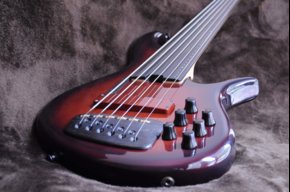
Agreed, no matter what you set in your home practice or rehearsal space, it will always require adjustment in a live venue. Find what works for the situation and get into the "play" zone.
My experience anyway.
I'm the best at sounding like me. That has taken years of loving care and playing live a lot to do. I get better at it every time I play.Agree with several comments in this thread.
Here's my log for the fire -- chasing great tone is futile because THERE ARE SO MANY GREAT TONES TO CHASE. For example...
1. Marcus Miller's hands + Sadowsky preamp
2. Will Lee on various Sadowky basses while on Letterman's CBS show
3. Jason Newsted on Garage Days Re-revisited
4. Geddy Lee with a Wal bass from Hold Your Fire
5. Justin Chancellor with a Wal bass from many Tool albums
6. Steve Harris with his Ps on just about anything
7. J.V. Collier with various basses on just about anything
8. Duck Dunn with his Ps on just about anything
9. Jaco's hands + his fretless
10. Eddie Jackson + Spector NS-2 on Operation:Mindcrime and Empire
I could keep going all day.

So is it crucial for you to have the tone exactly right, or do you adopt a more freewheeling attitude?


I'm the best at sounding like me. That has taken years of loving care and playing live a lot to do. I get better at it every time I play.
Coincidently I've been hired studio, stage, to join groups, by others who join me all based on me sounding like me.
No one has asked me to sound like anyone else. So I'm riding this horse into the sunset.