• TalkBass has been independent since 1998. Add your voice.
    Create a free account to reply to discussions, view embedded media, and browse with fewer display ads.
    Join freeLog in
    Want zero display ads or expanded classifieds tools? Compare plans.

The Hossenfeffer IV Build

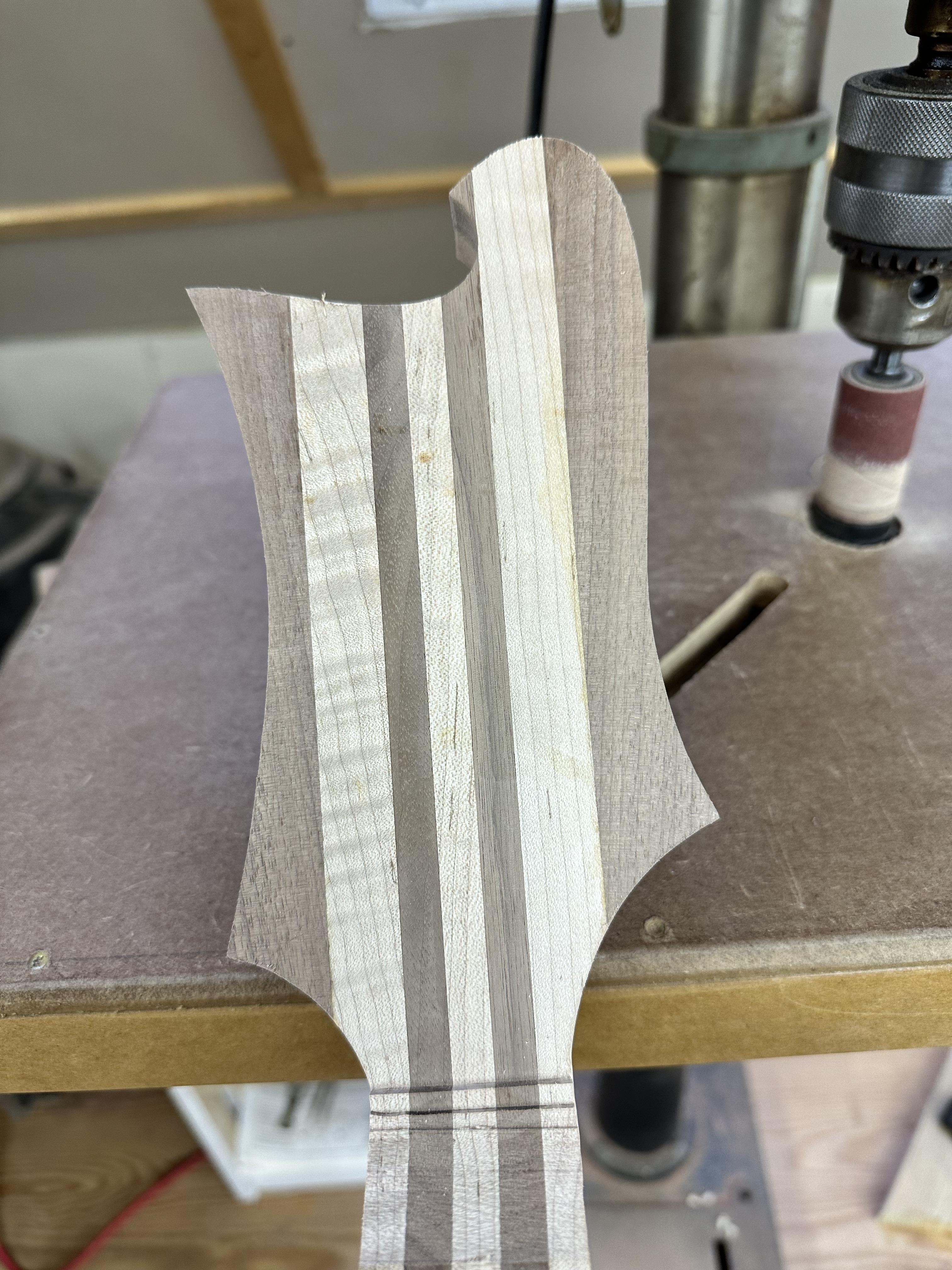
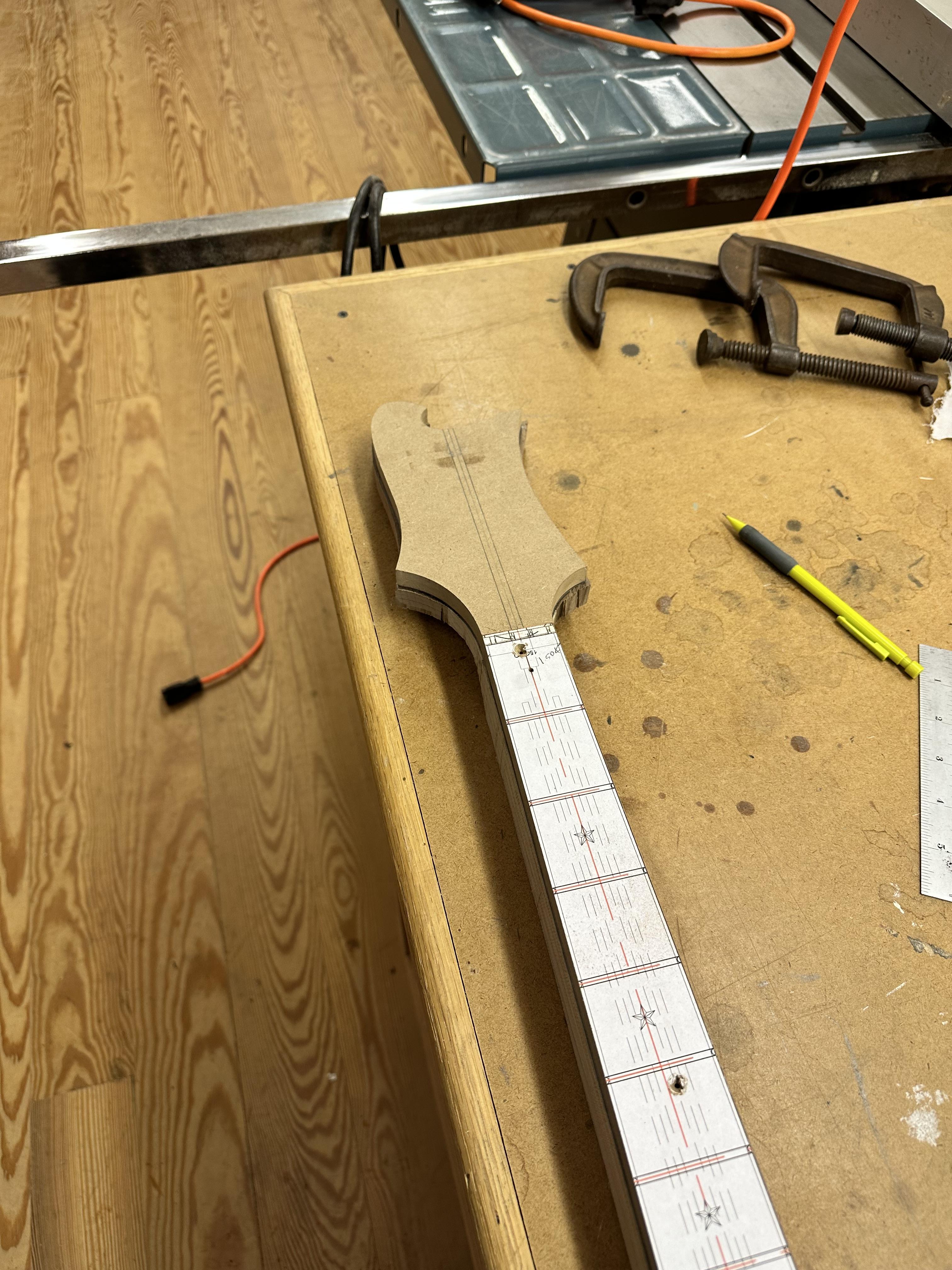
Templates CA glued on tape to the neck and headstock and bandsawed to rough line
0bwNpje.jpg


With all the changing grain on the headstock, I decided to play it safe and Robosand against the headstock template.
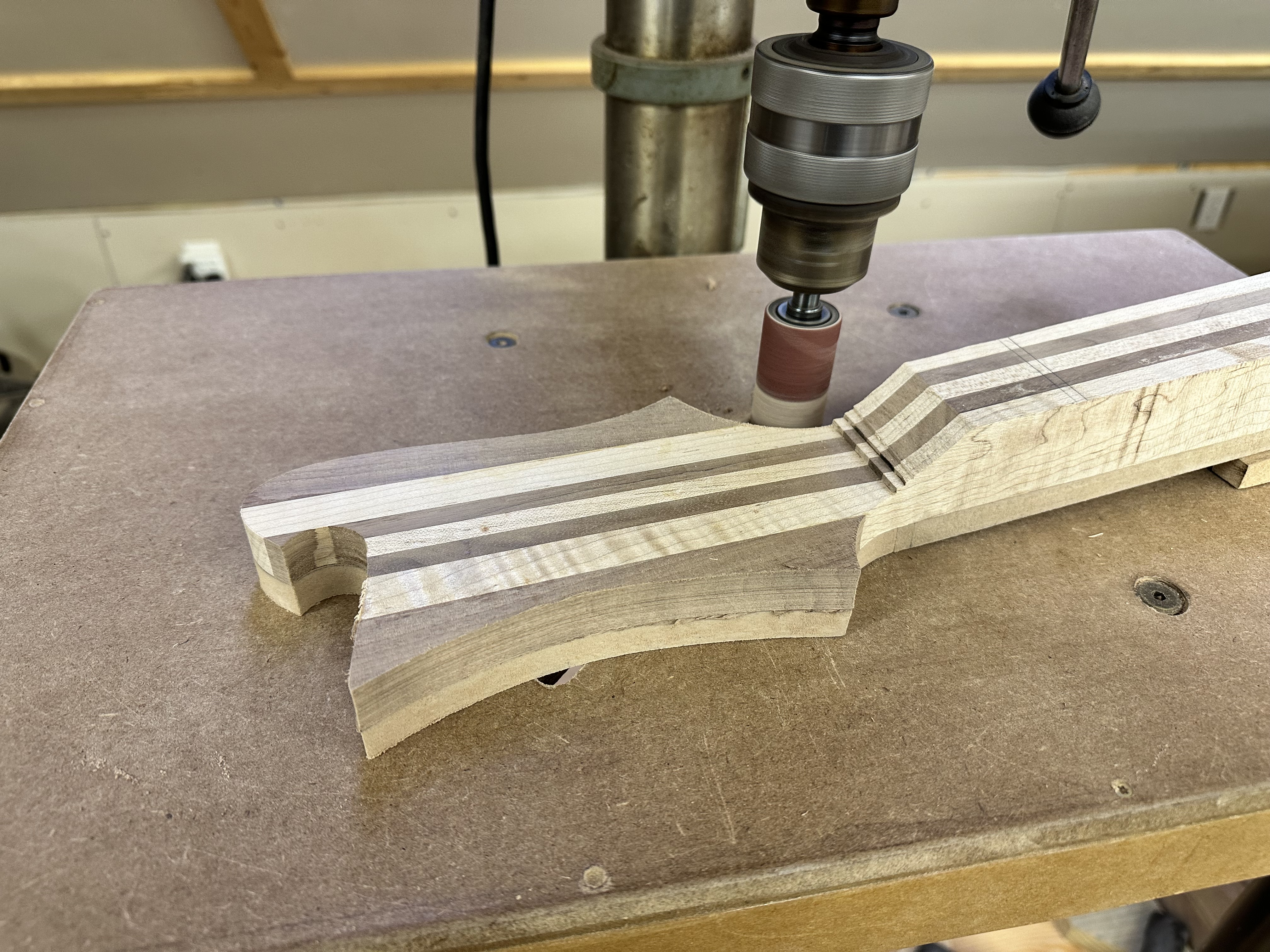
kICACDh.jpg

amPWemu.jpg


I template cut the neck beam with the Infinity sprial cut bit. Nice tool.
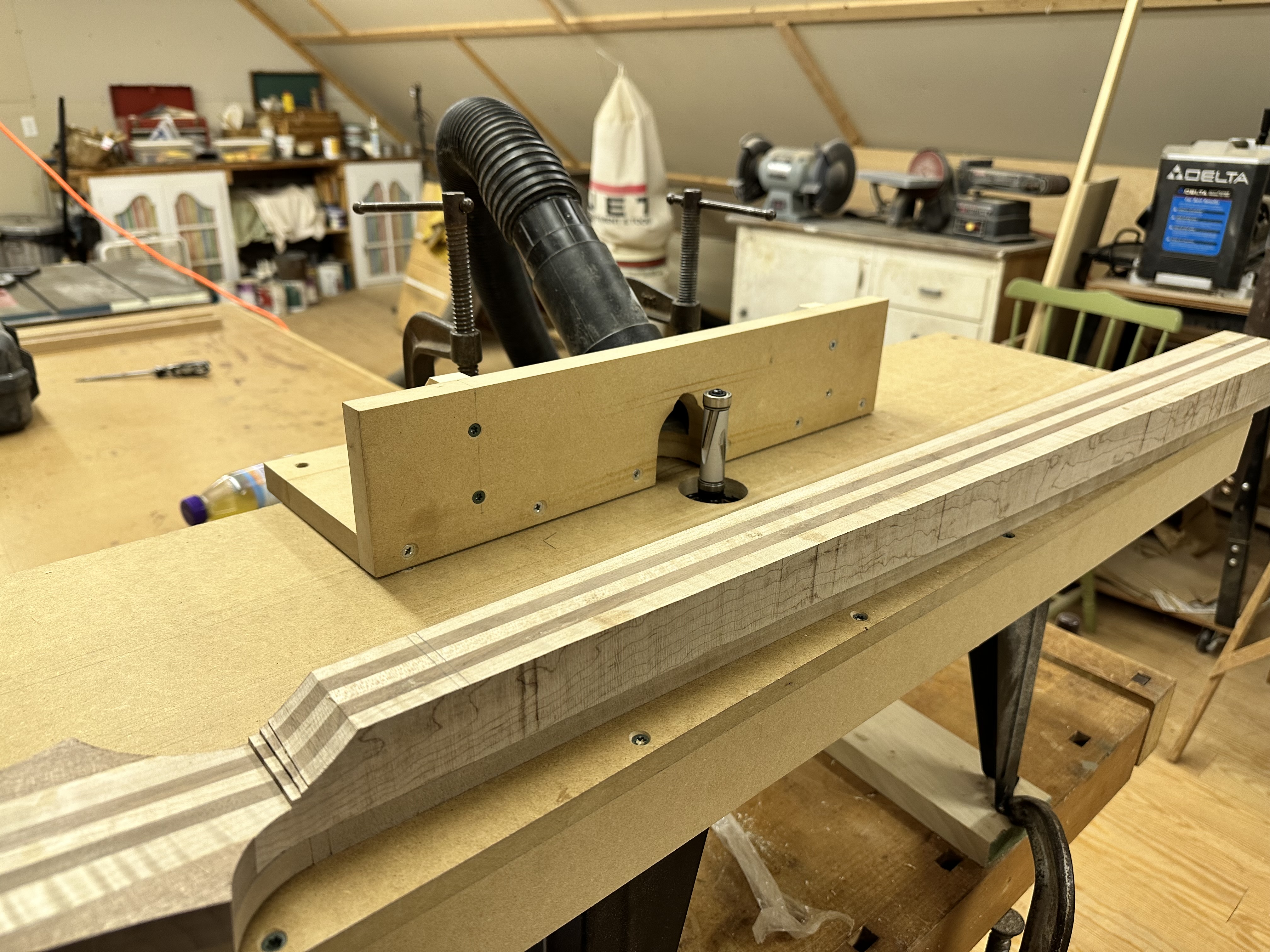
nLtYw6w.jpg


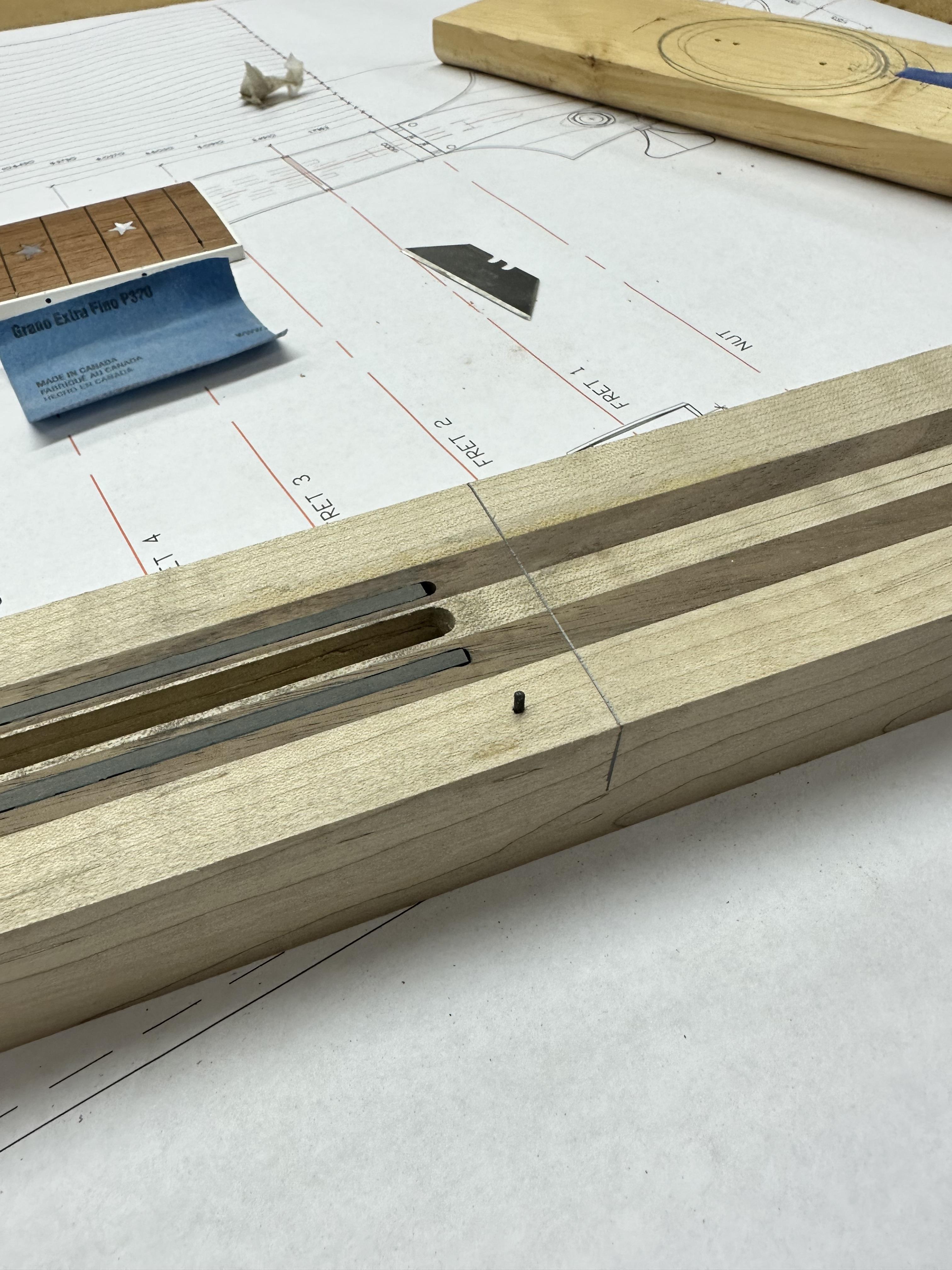
Fingerboard registering pins made from 1/16" fretboard dot rod, will keep the board from slipping during glue-up, and it's easy to cut back with a fret saw later.
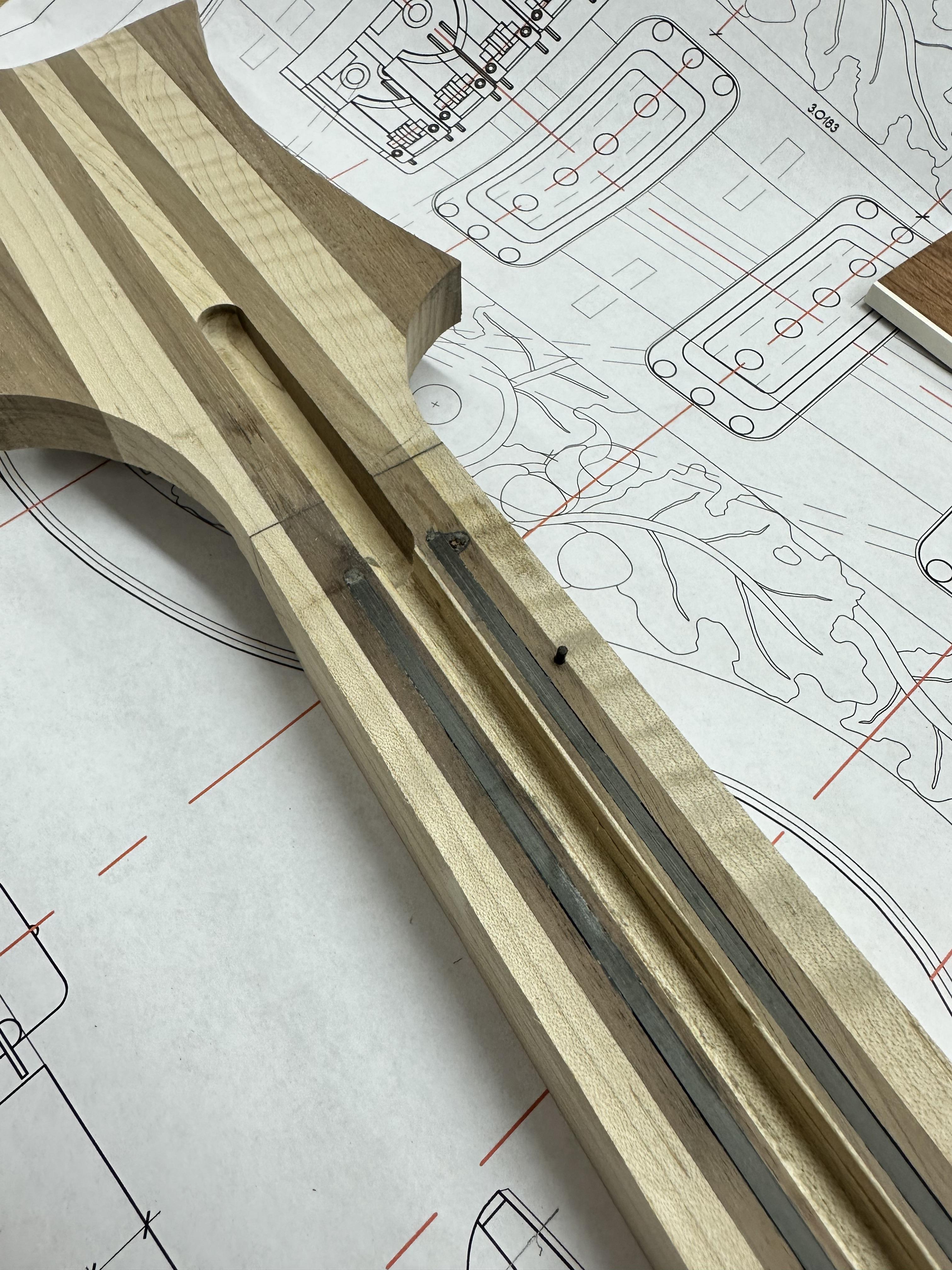
W9fQpbR.jpg

oPQBsTr.jpg


Into my crude router box to cut the neck beam down to 1-1/4" thick where it meets the body.
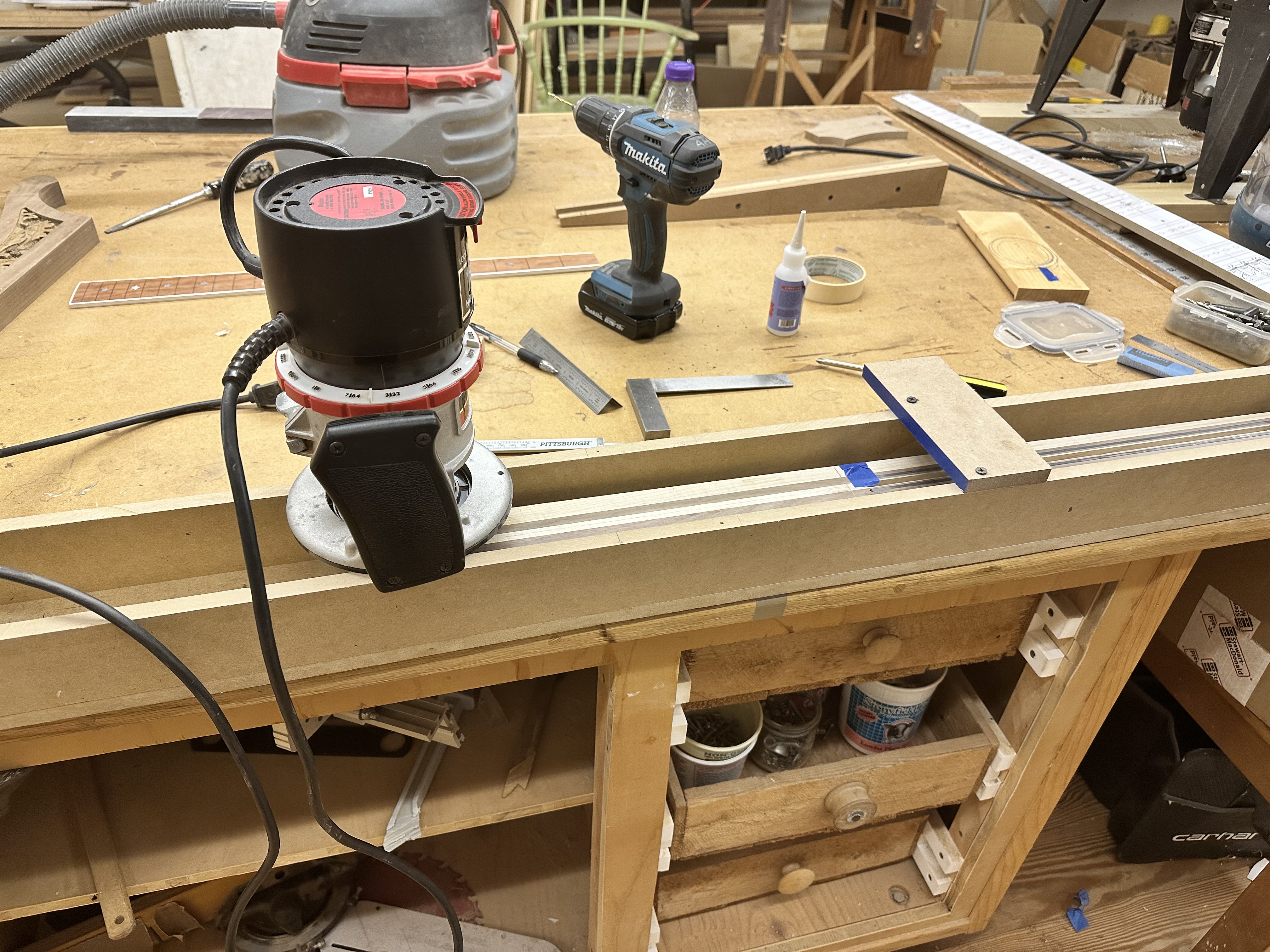
ZqeLFy7.jpg


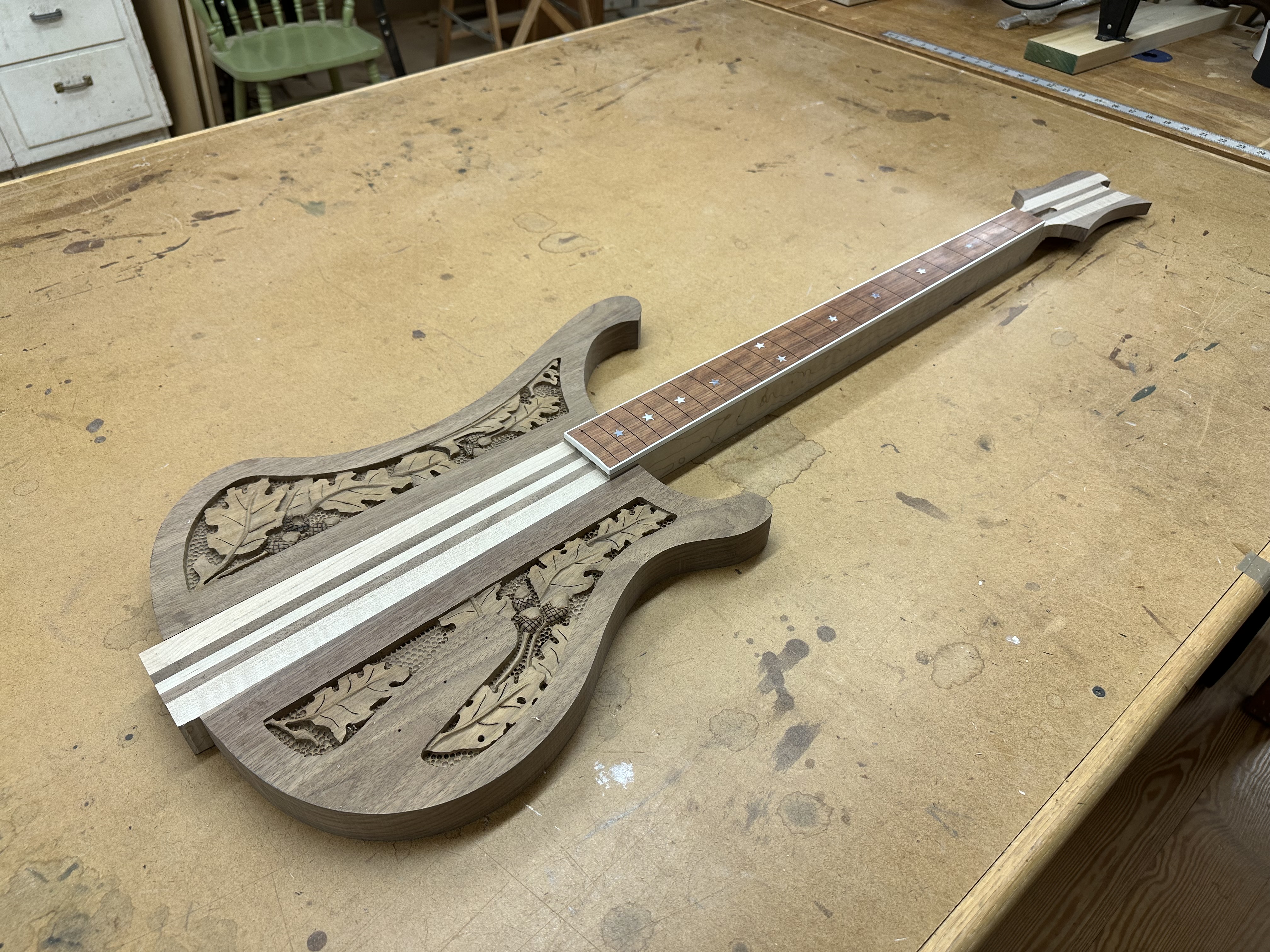
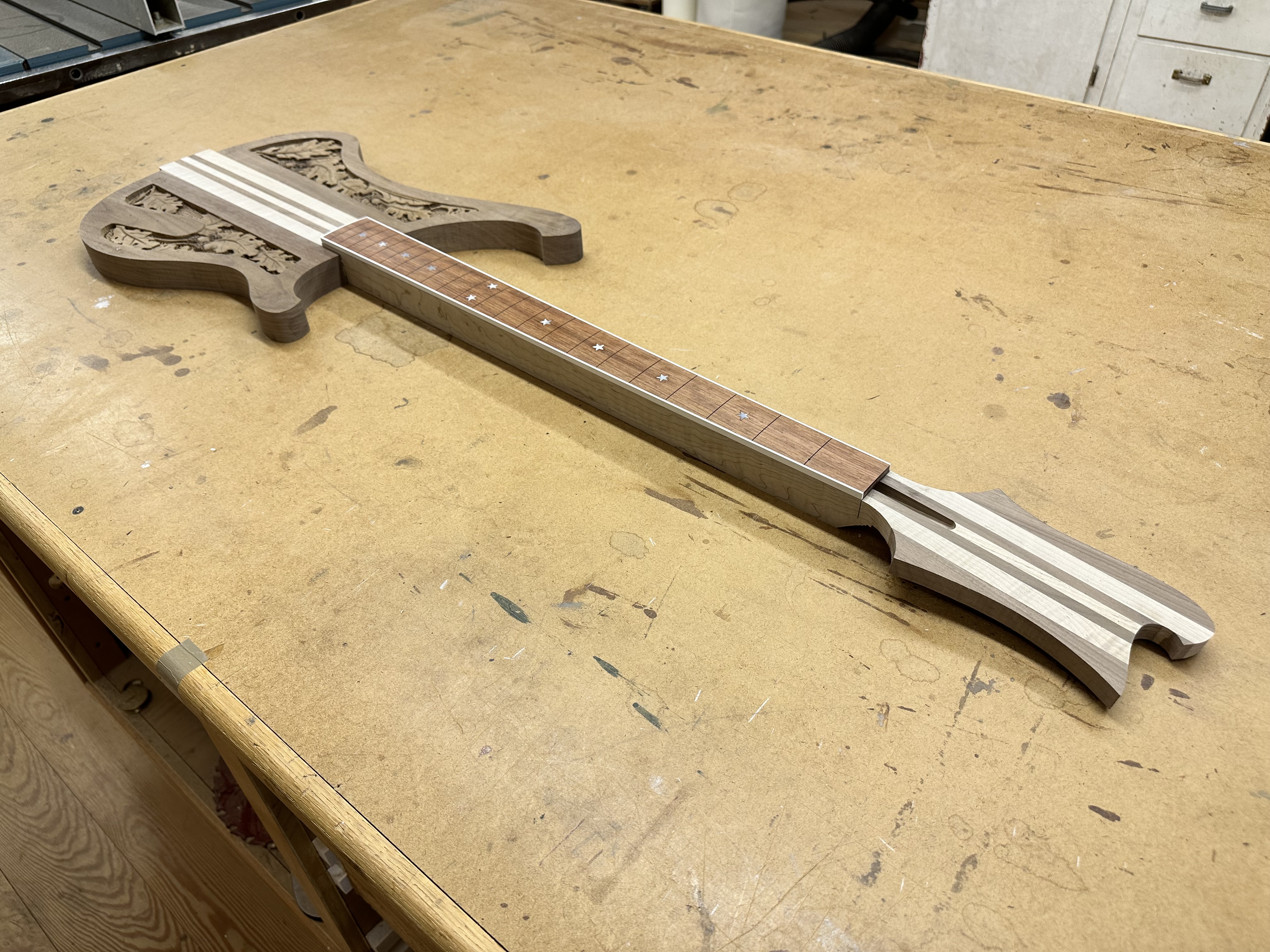
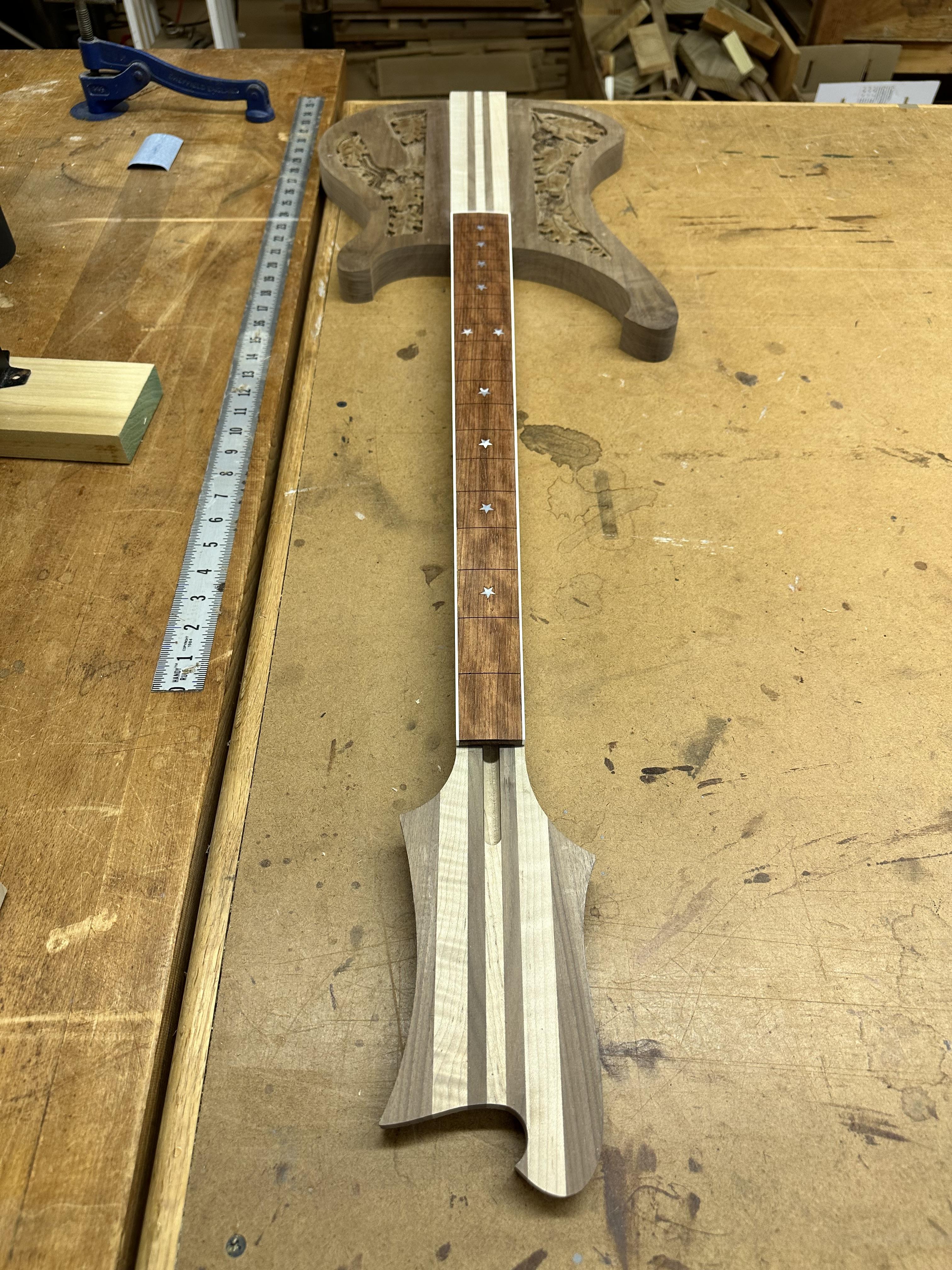
Starting to look like a bass.
dcgWnix.jpg

fAhN4MJ.jpg

kyHg8wc.jpg


Next up is doweling the body wings to neck beam and routing the body wings for the checker binding.
Excellent work! Very cool!

I know the Alembic build gave you a hard time…but it’s still very cool too! I’d like to see you complete that one too!

I admire your work! There are many fine woodworkers here on TB!
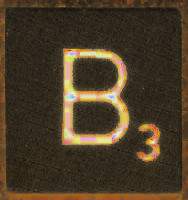
 
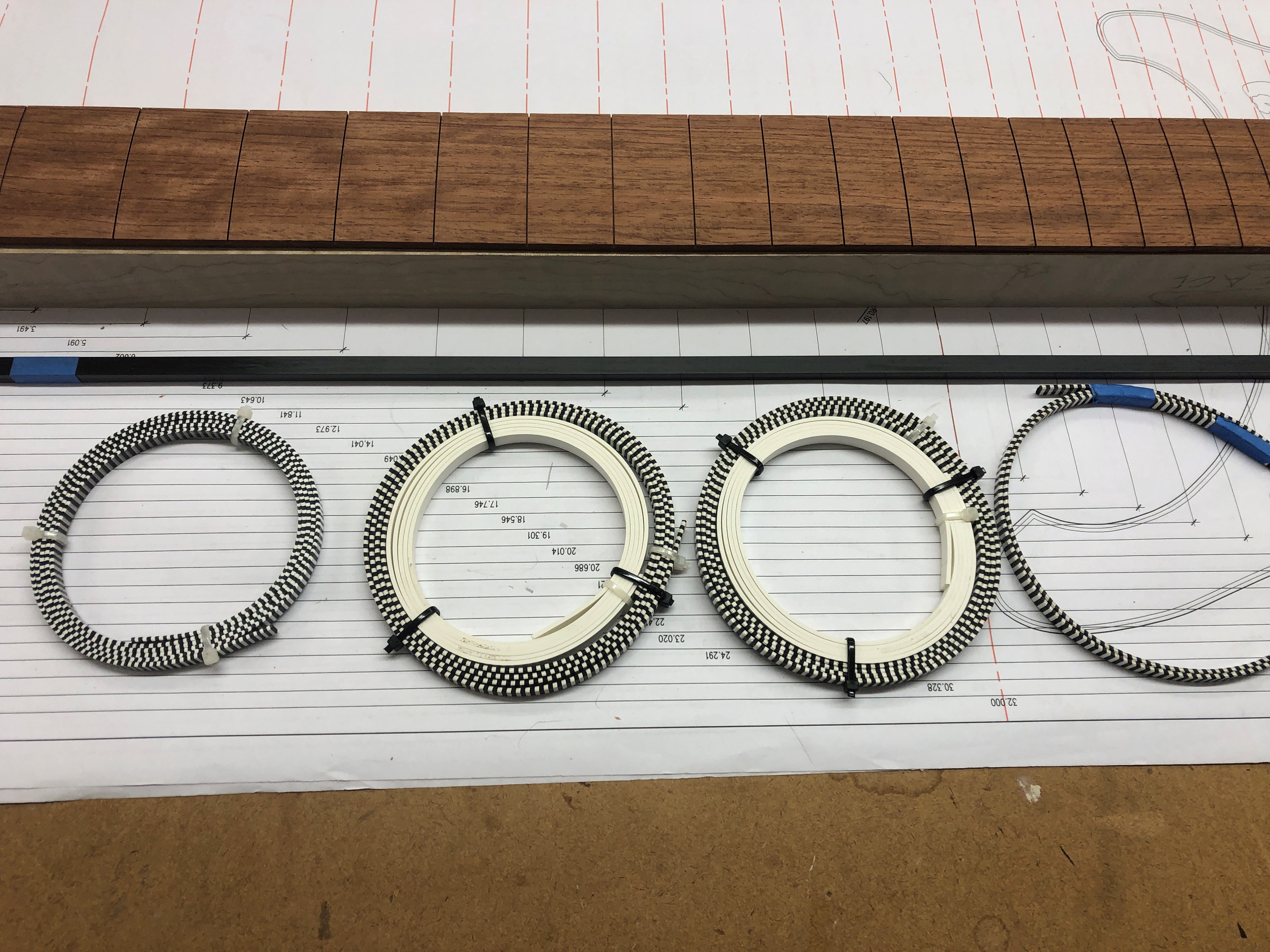
Binding, Checkered Binding.
That's just effing CRUEL. Ok, binding it is, but just one layer of .060" white on the headstock. That's going to be challenging enough. I used .040" on the other walnut bass, and it kicked my ass. I ended up having to use zip-ties through the tuner holes to have something to pull the binding in tight on the "hook". It's an iffy situation, because the amount of heat needed to bend the binding to those curves is about 2 degrees below where the binding self-destructs.
 
I still think checkered binding would look amazeballs and be an awesome upgrade to the concept as a whole. :thumbsup:

I found another supplier too, but they custom make it, and it's $2.60 per inch. :smug:
Believe me, i thought about it, but bending two layers of .060" celluloid around those headstock curves is beyond my current skillset. I think i still have this bending form kicking around. You can see what happens on the curvy bit to the right, just when you get it hot enough to bend... pfffffffftttttttt. It goes all wonky on you. I was doing this with a heat gun, I've since read most people just use a hair dryer, we'll see how it goes.
LRxuEHK.jpg
 
That's just effing CRUEL. Ok, binding it is, but just one layer of .060" white on the headstock. That's going to be challenging enough. I used .040" on the other walnut bass, and it kicked my ass. I ended up having to use zip-ties through the tuner holes to have something to pull the binding in tight on the "hook". It's an iffy situation, because the amount of heat needed to bend the binding to those curves is about 2 degrees below where the binding self-destructs.
Boiling water is your friend. Won't overheat the binding, and makes it plenty pliable. You'll want a dowel about the diameter of the curve to do several pre-bends.
 
Believe me, i thought about it, but bending two layers of .060" celluloid around those headstock curves is beyond my current skillset. I think i still have this bending form kicking around. You can see what happens on the curvy bit to the right, just when you get it hot enough to bend... pfffffffftttttttt. It goes all wonky on you. I was doing this with a heat gun, I've since read most people just use a hair dryer, we'll see how it goes.
LRxuEHK.jpg


Matches are always fun with celluloid binding. :D
 
I absolutely love how your brother dimpled the wood in the background of the relief. My Chickenbacker Lemmy copy does not have the dimples. I'm wondering if I can add them.
Would you mind telling me how he did the dimples?
 
  • Like
Reactions: Gilmourisgod
The real Lemmy's look like the background dimple is done with a leather punch or a big nail set, so you are effectively crushing the wood fibers around a dome of wood, if that makes sense. He did the opposite, which is just a ball-end cutter in a dremel, in other words "negative" dimples. Must have taken him hours. He did some of the patterning on the acorns with a wood burner. It might not be "correct", but I like how it looks. I don't feel any need to be too slavish to the original Lemmy, I guess only 50 or so were made by Ric, hand carved, so each one is unique. I copied the oak and acorn pattern from the one I found the best resolution photo of, that was the criteria. Most of the ones I've seen have a slightly darker stain in the dimpled area. This one is going to be a Tru Oil finish, so maybe I'll tint that. Anybody know how to tint tru-oil? Transtint?