
You can always resell a RIC but I still recommend playing one first.Yeah ebay is getting better, some of the prices vary so greatly though that it makes you wonder, 1.7k seems like the cheapest I can get on on ebay, I guess a lot of US sellers don't bother putting their ads up internationally so I can't see a lot of them. And I guess the other issue is I don't know if I actually want a ric since i haven't played one so I would be buying internationally because they look cool and I like the sounds I've heard on records haha.

Enjoy the benefits of a premium membership!
Upgrade Account
-
TalkBass has been independent since 1998. Add your voice.
Create a free account to reply to discussions, view embedded media, and browse with fewer display ads.
Join free Log in
Want zero display ads or expanded classifieds tools? Compare plans.
You are using an out of date browser. It may not display this or other websites correctly.
You should upgrade or use an alternative browser.
You should upgrade or use an alternative browser.
- Status
- Not open for further replies.
More options
Who Replied?
You can always resell a RIC but I still recommend playing one first.
If you can manage to play one of these at a local shop definitely do so! However... Rick basses can vary wildly from bass to bass. More so than your typical Fender whatever does.
I've been playing this brand on and off since 1978, so here is my take on how they feel in actual use compared to something more common...
They do have somewhat of a unique feel to them, but if you have ever played a mid 60s Fender Jazz Bass or a reissue of that neck style, that is probably the name brand model that would feel the closest to a 4001/4003 neck in terms of thickness front to back.
The neck thickness varied a bit between the 4001 and more modern 4003s too, but not by huge amounts.
In terms of modern examples...
I just bought a 2011 4003 and its neck is just a tad thinner from front to back than my 2013 Fender American Deluxe Jazz Bass. Rickenbacker fretboards don't taper towards the headstock like a J Bass does so that is one notable difference in terms of how they play at the headstock end of the neck. In that regard the amount of stretch on fret 1-3 on the E feels closer to a P bass in terms of fretboard width to me, but more comfortable personally than a P on my fretting hand.
Personally, I have no problem moving back and forth from a Jazz to a 4001/4003. Some of my more involved and complicated original bass lines were written, performed and recorded on a 1972 Rickenbacker 4001. I chose that instrument for the job over the 76 Fender Jazz Bass I owned at the same time. I just felt I could play faster and longer on my 4001 than on my J Bass, even though my Jazz was a killer bass in its own right!
Hope that helps a bit if you have never actually picked up a Rickenbacker bass before. Hopefully you have played a number of Fender Jazz basses before, because as I said, that neck is the closest over all to the feel of a Rick. Sounds wise too, a good J Bass comes the closest to a Rickenbacker sound without being one.

Yeah the issue is as far as I know, is that there is not a local dealer at the moment, or if there is, they don't keep any in stock, the vintage shop has them chained to the wall as they are his "high end stock" so I don't know what his rules are about playing them, its a bit of a distance for me to get there as well so I would hate to rock up to find out he won't let me play them...
I'm also a P bass sort of guy at the moment, so maybe I should invest some time in playing on some Js at some of the shops haha, thank for all the info guys, and if it comes down to it, the second hand ones are getting sold for heaps here, so hell, I might even turn a small profit buying one from ebay
I'm also a P bass sort of guy at the moment, so maybe I should invest some time in playing on some Js at some of the shops haha, thank for all the info guys, and if it comes down to it, the second hand ones are getting sold for heaps here, so hell, I might even turn a small profit buying one from ebay

Hey guys. My band had our first out of town tour this weekend. Here's a cool contrast shot of me playing my black on blue '85 Ric.
Link Removed
First day on the road and the handle on my '85 OHSC broke off. Some of the material broke off where one side of the handle connects, I'm assuming due to old age. So two questions...
1. Is there somewhere I can easily find a replacement handle?
2. Since this HSC is so damn heavy (might be close to 30 lbs with the bass inside), what are some suggestions for 3rd party cases to check out that will fit a 4003?
Link Removed
First day on the road and the handle on my '85 OHSC broke off. Some of the material broke off where one side of the handle connects, I'm assuming due to old age. So two questions...
1. Is there somewhere I can easily find a replacement handle?
2. Since this HSC is so damn heavy (might be close to 30 lbs with the bass inside), what are some suggestions for 3rd party cases to check out that will fit a 4003?

Anyone have any recommendations on who could change the trim on Mapleglo 4003 from white to black and do an amazing job??
Anyone have any recommendations on who could change the trim on Mapleglo 4003 from white to black and do an amazing job??
Not sure where you are from but there are many builders up North of me in Virgina that can do it. That would sure be a SWEEET Mod.
Not sure where you are from but there are many builders up North of me in Virgina that can do it. That would sure be a SWEEET Mod.
For sure! I'm in Utah so hoping to get this done in my neck of the woods! First the trim then all of the hardware!
I would think anyone who can do a RIC Re-fret should be able to change out the Binding.For sure! I'm in Utah so hoping to get this done in my neck of the woods! First the trim then all of the hardware!

Anyone have any recommendations on who could change the trim on Mapleglo 4003 from white to black and do an amazing job??
Go to the Rickenbacker Forum for basses (the company website, click on forums) and look among posters for a guy named Dale---or put the question up there. Dale, if I remember correctly, worked at Rickenbacker for many years and works on restoring Rics exclusively.

Anyone have any recommendations on who could change the trim on Mapleglo 4003 from white to black and do an amazing job??
You mean kinda like this? cause that would be f**king sexy
You mean kinda like this? cause that would be f**king sexy
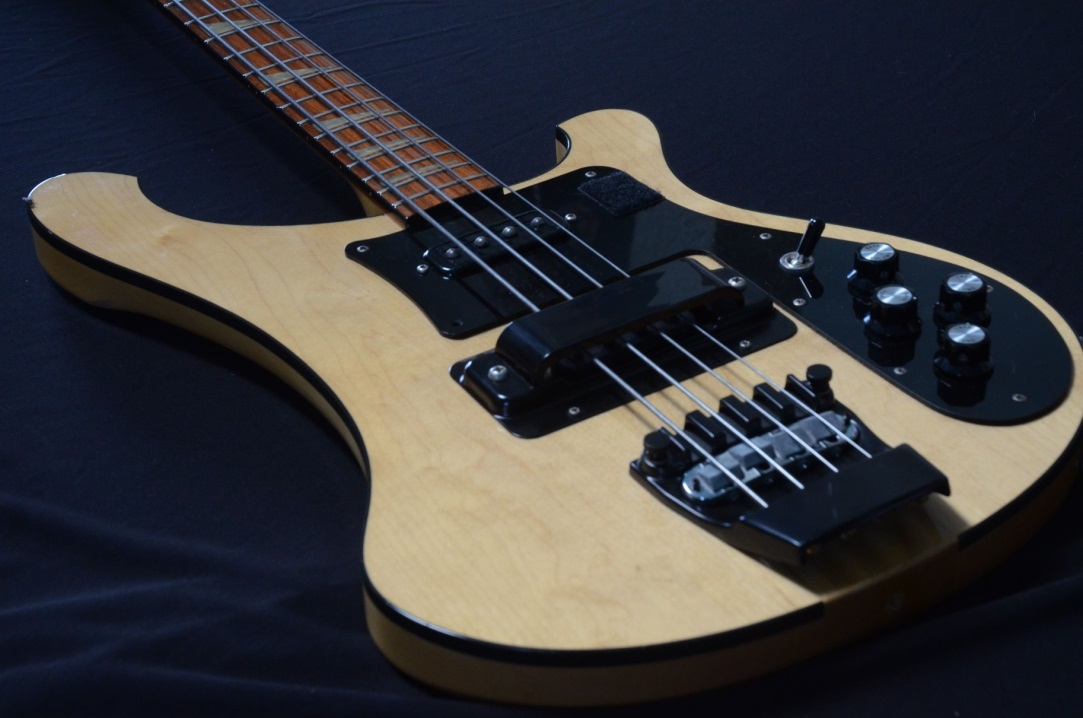
Exactly like that!!!!!
Now that is a classic shot of Rickenbacker tail lift! The black powdercoated tailpieces lift because of the heating process has changed the molecular structure of the alloy. These need the two extra screws, most of the time.
I've powdercoated the newer style tail pieces with good results.
I'm a sucker for black trim and hardware on a mapleglo!!
Sepp
I've powdercoated the newer style tail pieces with good results.
I'm a sucker for black trim and hardware on a mapleglo!!
Sepp

Jaymi
Pink Bass Man
- Feb 11, 2008
- 6,813
- 490
- Disclosures
- Endorsing Artist: Ampeg , Jaydee, Kalium
Sepp, you need another Blackstar!
Yikes! What, are you trying to get me divorced?? LOL!! I barely escaped being thrown out when I came home, with my latest, the 4002 project bass!!
If I come home with another instrument, except a kazoo, I'll be living in my back yard in a fort made up of guitar cases and the cardboard boxes they ship in. While it's will be real cool digs, I'll miss my comfy bed and hot meals!! LOL!!
Sepp

.......
First day on the road and the handle on my '85 OHSC broke off. Some of the material broke off where one side of the handle connects, I'm assuming due to old age. So two questions...
1. Is there somewhere I can easily find a replacement handle?
2. Since this HSC is so damn heavy (might be close to 30 lbs with the bass inside), what are some suggestions for 3rd party cases to check out that will fit a 4003?
As far as the case handle goes, I adapted a briefcase handle I found (on an old decrepit briefcase, naturally) at a flea market with very sturdy bits of hardware (I don't remember exactly what they're called) I found at the local Canadian Tire, so probably pretty easy to find at any decent hardware store.
They are kind of a D shaped thing with a small bolt through the open end to fasten to the case.
The handle on the OE case for my '76 4000 broke exactly the same way yours did some years back, and the repair has been in service for quite a while now, it's actually stronger than the original piece.
Jaymi
Pink Bass Man
- Feb 11, 2008
- 6,813
- 490
- Disclosures
- Endorsing Artist: Ampeg , Jaydee, Kalium
Yikes! What, are you trying to get me divorced?? LOL!! I barely escaped being thrown out when I came home, with my latest, the 4002 project bass!!
If I come home with another instrument, except a kazoo, I'll be living in my back yard in a fort made up of guitar cases and the cardboard boxes they ship in. While it's will be real cool digs, I'll miss my comfy bed and hot meals!! LOL!!
Sepp
Well ya know...figured I would mention it LoL
Yikes! What, are you trying to get me divorced?? LOL!! I barely escaped being thrown out when I came home, with my latest, the 4002 project bass!!
If I come home with another instrument, except a kazoo, I'll be living in my back yard in a fort made up of guitar cases and the cardboard boxes they ship in. While it's will be real cool digs, I'll miss my comfy bed and hot meals!! LOL!!
Sepp
don't be a baby; summer is just around the corner! call it an extended camping trip/bass sojourn


You mean kinda like this? cause that would be f**king sexy
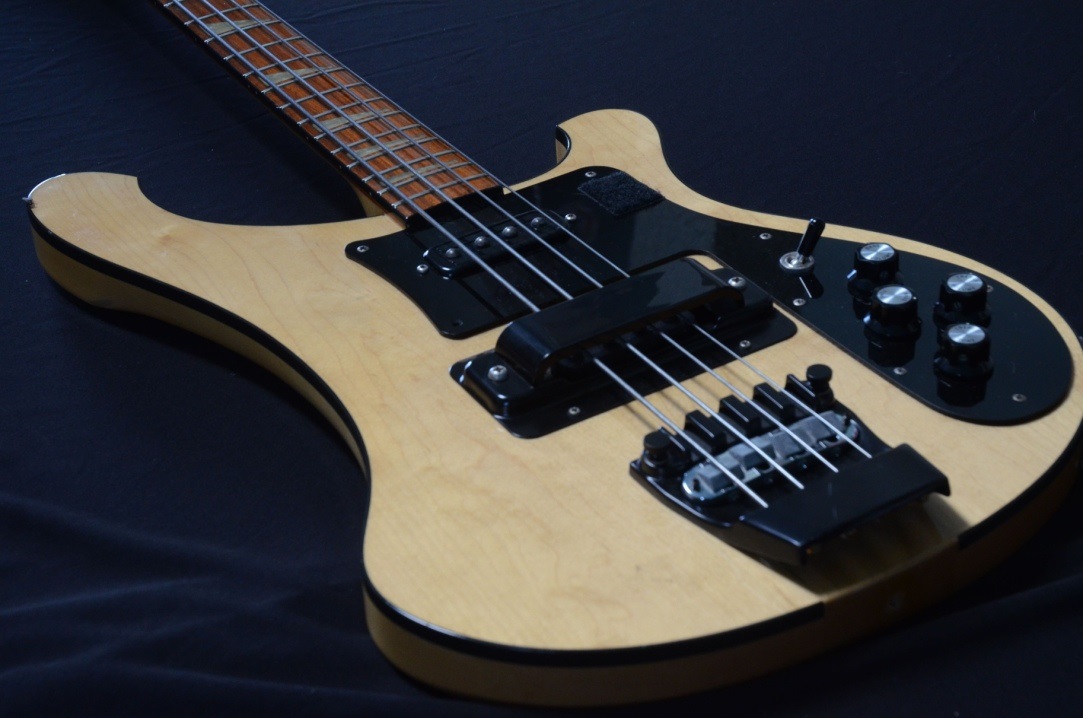
That is sweet. Id love to do that to mapleglow as well. I suspect you would need to be Jesus, Lemmy, or put a gun to someone to get black hardware/trc from Rickenbacker though.
That is sweet. Id love to do that to mapleglow as well. I suspect you would need to be Jesus, Lemmy, or put a gun to someone to get black hardware/trc from Rickenbacker though.
well, the TRC is simple enough; send them your old one, and they'll send you one in the colour you want. The hardware, I can't help you. Although it's pretty well-documented that the black hardware was somehow less sturdy than the standard chrome. So.... maybe some black spray paint and/or candy apple-style dipping?

well, the TRC is simple enough; send them your old one, and they'll send you one in the colour you want. The hardware, I can't help you. Although it's pretty well-documented that the black hardware was somehow less sturdy than the standard chrome. So.... maybe some black spray paint and/or candy apple-style dipping?
I picked up a spare set of Rickenbacker marked black tuners a while back on eBay. Hipshot makes replacements (non RIC marked), so that is an option. Yeah, you can paint the tailpiece but I'd have it powdercoated like the originals. It's much more durable. If you do this to the older non reenforced tailpieces, you should pre drill and countersink it for the two extra screws. The heat during the powdercoat process screws with the hardness of the metal. Your screwed when it comes to the treble pup cover. that is black plastic. Rare as hens teeth to see these for sale. i only have one that came with my Shadow, nope, it's not for sale either.
Sepp
- Status
- Not open for further replies.


