

Enjoy the benefits of a premium membership!
Upgrade Account
-
TalkBass has been independent since 1998. Add your voice.
Create a free account to reply to discussions, view embedded media, and browse with fewer display ads.
Join free Log in
Want zero display ads or expanded classifieds tools? Compare plans.
You are using an out of date browser. It may not display this or other websites correctly.
You should upgrade or use an alternative browser.
You should upgrade or use an alternative browser.
- Status
- Not open for further replies.
More options
Who Replied?
Jaymi
Pink Bass Man
- Feb 11, 2008
- 6,813
- 490
- Disclosures
- Endorsing Artist: Ampeg , Jaydee, Kalium

This one intrigues me. Is the fretboard new? The markers go side to side like the new ones. Forgive me if that is how they were done in 72.PaulBoyer said:I had Larry Davis (Atlanta, soon to be in Florida) redo this basket-case 4001. It's a '72 that was terribly beat up, and I bought it a couple of years ago as an on-going project. I opted for the brightest version of Azureglo, and the new tailpiece is a concession to a vintage restoration.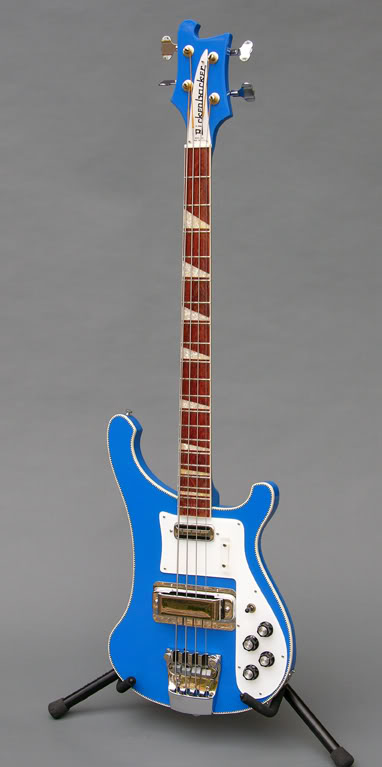


Ric5
Inactive
- Jan 29, 2008
- 29,772
- 30,452
- Disclosures
- I like 5, 8, 10, and 12 string basses
This one intrigues me. Is the fretboard new? The markers go side to side like the new ones. Forgive me if that is how they were done in 72.
The basses in the 60s and early 70s have full width inlays.
I would be interested but guessing that my wife would shoot me if I bought another Ric right now. But what the heck, PM the price to me!PaulBoyer said:Back to this bass. It was sold to another guy who started converting it to a five-stringer, but then he sold it to a guy who was thinking about making it an eight-string (or a 10-string!), but lost interest and sold it to me. Beautiful flame on this one. It was originally equipped with gold hardware, but that went away long ago. This one is for sale (again!) if anyone is interested.
Ric5
Inactive
- Jan 29, 2008
- 29,772
- 30,452
- Disclosures
- I like 5, 8, 10, and 12 string basses
The basses in the 60s and early 70s have full width inlays.

Thanks for the education Ric5. I did not know that. I've only had a Ric for a year and it is a 2001 so it has the narrower markers.
Ric5
Inactive
- Jan 29, 2008
- 29,772
- 30,452
- Disclosures
- I like 5, 8, 10, and 12 string basses
Jaymi
Pink Bass Man
- Feb 11, 2008
- 6,813
- 490
- Disclosures
- Endorsing Artist: Ampeg , Jaydee, Kalium
Jaymi, I want a number too!
(Lefty 78 4001)
no prob repost your pic here and I will hook you up

When I convert a Ric to a 5er I put the extra tuner on the other side.
I should send you my JetGlo for a conversion to a 5. But I'm not sure I really want to change it.

Jaymi
Pink Bass Man
- Feb 11, 2008
- 6,813
- 490
- Disclosures
- Endorsing Artist: Ampeg , Jaydee, Kalium
nice stuff here.....I'm not sure do you have to post in the new thread(done!) to stay subbed?
You have to Sub the new thread manually using "Thread Tools" at the top of the page.
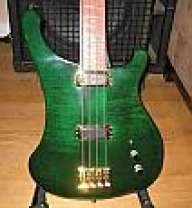
Off to a great start- I could spend hours looking at everyone else's Ric's, so many awesome looking basses. Not sure about the 5 string conversions, as to preference on which side the extra tuner goes- but I'm sure there's a reason to choose one side over the other. (?) edit to add- just went back to the last page of part 5, and saw all those gorgeous basses posted by Paul. Got me wondering, how different the 4004's sound with the neck pup backed off the neck some. Mine, (avatar) is an '08 with the neck pup right on the neck edge, and sounds "beefy". Does it lose that beef when backed off?
Jaymi
Pink Bass Man
- Feb 11, 2008
- 6,813
- 490
- Disclosures
- Endorsing Artist: Ampeg , Jaydee, Kalium
Ric5
Inactive
- Jan 29, 2008
- 29,772
- 30,452
- Disclosures
- I like 5, 8, 10, and 12 string basses
Jaymi
Pink Bass Man
- Feb 11, 2008
- 6,813
- 490
- Disclosures
- Endorsing Artist: Ampeg , Jaydee, Kalium
I have one other that may be coming up for sale/trade...it's a cool bass just not getting any playtime...2004
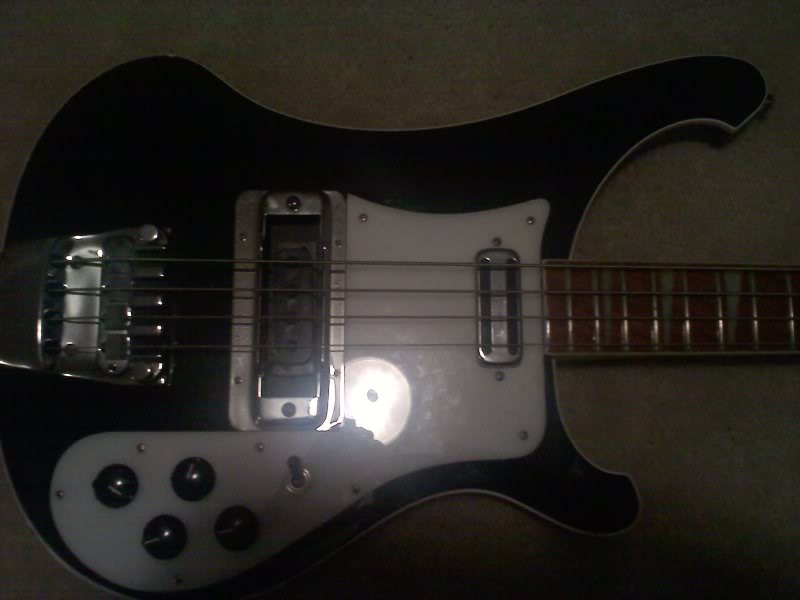
Inlays on Rick 4001/4003 have an interesting history. They started out (1962ish) with markers made from clear resin with a white paint swirled inside. This gave way to a special "Crushed Pearl" sparkly material in the mid-60s and that was used through 1972. Then they went back to a white/pearly appearance in 1973, but in late '73-74, they started cutting cavities into the fingerboard and poured clear resin with pearlescent powder mixed in. That was pretty much the standard until early 2008 when they started cutting pearlescent sheet material and gluing it into computer-cut full-width depressions in the fingerboards. That's what we get today.
- Status
- Not open for further replies.


