
• TalkBass has been independent since 1998. Add your voice.
    Create a free account to reply to discussions, view embedded media, and browse with fewer display ads.
    Join freeLog in
    Want zero display ads or expanded classifieds tools? Compare plans.

The Sushi Box FX Secret Society

Someone needs to take a leap of faith and reinvent the wheel with something new. I think something like resonance and Q factor could come into play. Its hard to do, there's only so many ways to cut, boost, passive cut, shelf, and bandpass our narrow bandwidth. But I believe there is something out there. Along with resonance, it would be nice to have a "EQ" that you taylor specifically where in the bandwidth your signal breaks up, and how much it does so.
Imagine being able to just make your signal break in a certain range, and then also be able to raise and lower the amount of breakup. Go even farther and change the type of breakup. THAT would be nice, not for everyone and all the time, but different, and useful. Ive built a similar plug-in for my DAW, but I wouldn't even imagine where to start with real hardware

Pretty sure the (out of production) Iron Ether QF-2 would fit most of this functionality. I found one on the classifieds here a couple months ago but I haven’t had a chance to really dig into it yet - it’s a pretty overwhelming pedal admittedly.
 
Pretty sure the (out of production) Iron Ether QF-2 would fit most of this functionality. I found one on the classifieds here a couple months ago but I haven’t had a chance to really dig into it yet - it’s a pretty overwhelming pedal admittedly.
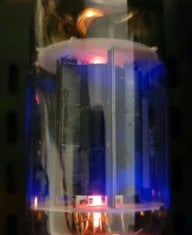
Sweet, that's a start. Have it switchable from tube buffer to jfet would be cool- kinda like a quadrafuzz
 
Ive built a similar plug-in for my DAW, but I wouldn't even imagine where to start with real hardware
Depends on how you want to do it ;) If I were to do it, I would probably split the signal with buffered slightly-overlapping bandpass filters, so you essentially have your sound split into isolated chunks by frequency. Then you can feed them through individual amplifiers and control how much each frequency band breaks up, then you would have a mixer at the end to blend it all back together. Granted this isn't the kind of thing you do with tubes, but with op-amps it would be pretty straightforward. Still not simple, but at least straightforward :P


Having pre and post gain stage EQ would be pretty sweet, but I can see how all the extra controls and complexity that would add could get overwhelming/impractical for some users.

It would let you drive your gain stage differently depending on how the Pre Gain Stage was EQ'd, but twice as many EQ knobs to deal with... LOL
That's exactly why I try not to do things like that, even my two-channel preamps usually share an EQ between the channels. If I were designing a rackmount unit sure, I'll give you all the knobs you want, but on a stompbox I think anything more than 5 controls starts to feel crowded.
 
Not sure if this has come up yet, but are the tube heaters powered independently of the on/off footswitch? Basically, is it ok to switch in and out like an effect, or best left engaged all the time?
That is an excellent question, all power is completely independent of the footswitch. Both heaters and high voltage are on as long as the pedal is plugged in, regardless of switch state.
 
That is an excellent question, all power is completely independent of the footswitch. Both heaters and high voltage are on as long as the pedal is plugged in, regardless of switch state.
I was gonna say the tubes glow orange regardless of the footswitch. That’s about the extent of my technical jargon.
 
So it would be better to unplug these pedals when they're not in use? Currently my pedals are plugged in all the time.

In a word: definitely.

For one, they do draw a lot of current, more than most solid-state and even digital pedals. For two, that's continued operation time on the microtube, and they don't last forever. It's better to have it powered on constantly than, say, plugged and unplugged frequently in a short span, but overnight? Unless you're using it as a space heater, it makes good sense to unplug.

Basically, when I'm using my board during practice, once I cut off the amp, I also cut power to the pedalboard. IME they enjoy getting the same sort of care.
 
In a word: definitely.

For one, they do draw a lot of current, more than most solid-state and even digital pedals. For two, that's continued operation time on the microtube, and they don't last forever. It's better to have it powered on constantly than, say, plugged and unplugged frequently in a short span, but overnight? Unless you're using it as a space heater, it makes good sense to unplug.

Basically, when I'm using my board during practice, once I cut off the amp, I also cut power to the pedalboard. IME they enjoy getting the same sort of care.


Really good to know. I’m glad I read this, otherwise I would have left mine plugged in all the time like my other pedals.
 
  • Like
Reactions: Real Soon
Yeah I didn't know the heaters were on 24/7. Put a standby switch lol. As long as there isn't literally damage done, throwing down a flight of stairs ect there shouldn't be an issue. Preamp tubes don't have a life like power tubes, Ive had them go bad but it was mainly from shipping damage, or a defect and they never worked at all. I do wonder if they're in a socket
 
So I've been wondering about those mini tube-things, which I never heard about before - how is their life expectancy compared with regular tubes?
Are they soldered directly to the board?
So as stated above these are robust military tubes, so they should have a much longer life than your typical 12AX7. But as also stated above, when was the last time you burned out a 12AX7? Preamp tubes generally aren't stressed as hard as power tubes are and tend to last longer. But per the datasheet 1000 hours is the factory guaranteed life, but again, how many appliances do you have that outlast the warranty? I've only been using these tubes for two years so I can't say for sure that they'll last forever, but I have every reason to expect them to, and if they don't for whatever reason then I'll swap them out for a new one. And as also stated above (thanks everyone for answering questions faster than me :P) they are not socketed, they're soldered to the boards. I haven't found a reliable way to socket them, but again since they should last nearly forever I don't see a reason to.
Hey @Sushi Box FX. I just saw you can pick the clipping diodes in the Lab Rat. What are the available diode options at the moment? Is there any way to have more than one diode with an additional switch or two?
I didn't remember saying you could choose diodes, so I went back and read the description, and I guess I did kind of imply that :P I recently got rid of most of my through-hole components since I hadn't used them in forever, so the only diodes I have on hand are 1N4148, typical silicon diodes found in RAT, Tubescreamer, DS-1, and just about every other diode clipping circuit out there. I do also have some LEDs, which are used in the Turbo Rat. It's possible to hook up a switch for multiple clipping options, I'd just have to make sure there's room in the box, which there should be if you have top-jacks in the bigger box.
 
I didn't remember saying you could choose diodes, so I went back and read the description, and I guess I did kind of imply that :p I recently got rid of most of my through-hole components since I hadn't used them in forever, so the only diodes I have on hand are 1N4148, typical silicon diodes found in RAT, Tubescreamer, DS-1, and just about every other diode clipping circuit out there. I do also have some LEDs, which are used in the Turbo Rat. It's possible to hook up a switch for multiple clipping options, I'd just have to make sure there's room in the box, which there should be if you have top-jacks in the bigger box.
You know me, Top Jack McGee!

I'll message you regarding the clipping diodes. I also have some questions regarding the Echosaurus.
 
You know me, Top Jack McGee!

I'll message you regarding the clipping diodes. I also have some questions regarding the Echosaurus.
Sounds good, answering questions is something I do ;)

Also before I forget, I got some current draw numbers, which is something I know people ask about a lot. These were taken on a 9V supply:

Single tube designs (Particle Accelerator, Slampegg Bee Pre, London Underground, Lab Rat) will pull around 650mA as it's warming up, and about 470mA steady-state when it's done warming up. You MIGHT be able to get them to run on a 500mA supply, but it's safer to go at least 600mA.

Double tube designs (Dr. Wattson, Sunnday Drive, Black Eye) will try to pull around 2000mA during warm-up. This does not mean you need a 2000mA supply, but a lower output supply will take longer to warm up. The pedal should drop down to about 770mA steady-state when it's done warming up. I would recommend at least 1000mA supply.

When in doubt just give it as much power as you can, I recommend a 1Spot which will do 1700mA. I've thought about developing a brick style supply for use with these so you don't need separate supplies for everything, but I haven't really committed to it for sure.
 
When will the Wattson recordings be posted? I can’t contain my excitement anymore haha.
Fine, I'll get them up today :P I actually already uploaded them to Soundcloud, I just haven't posted them to the website yet.