I want you all to know that you're a bad influence on me. You should be ashamed of yourselves.
View attachment 4048756
squeeeeeee! lol
5sg.

TalkBass has been independent since 1998. Add your voice.
Create a free account to reply to discussions, view embedded media, and browse with fewer display ads.
Join free Log in
Want zero display ads or expanded classifieds tools? Compare plans.
I want you all to know that you're a bad influence on me. You should be ashamed of yourselves.
View attachment 4048756

Sooo...if you go missing, should we suspect the wife?I want you all to know that you're a bad influence on me.


That would be pretty safe, yup.Sooo...if you go missing, should we suspect the wife?
That would be pretty safe, yup.
Unfortunately part of the deal for me getting all this equipment is that my wife gets to sell it when I die, so no luck thereI’m gonna need you to make a will and bequeath me that uv printer.
 I may be able to put in a good word for you though, maybe she'll give you a good deal.
 Actually of all the boards that were done last night there was only one mistake, and it was on one that I did
Yeah, sign me up.That can definitely be done. It should probably be limited-edition and crazy expensive too so everyone wonders what the hype is about.


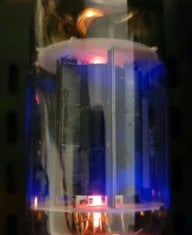
Well, it could be a magic eye tube indicating the level of the signal being muted.I think we need a tube-based mute pedal called "Black Hole". The only purpose of the tubes is to glow and say it has tubes.
So that still wouldn't be useful, but I could totally do it. Along that vein though, I could easily make a tube buffer with an LED bar VU meter. I had a solid-state one several years ago, but I sold it to a friend.Well, it could be a magic eye tube indicating the level of the signal being muted.

Currently I haven't released anything with a buffer in it. Deep Dish is also not buffered, it will be true bypass.Question Sushi - do your current designs have a buffer in them or no? And do you have any idea if the Deep Dish will be buffered or not? Would be awesome if it had the ability to turn the buffer on/off somehow, I’ve seen some pedals do this with an internal switch of some kind. Won’t make it or break it for me either way though - I’ll still be getting one!
So that still wouldn't be useful, but I could totally do it. Along that vein though, I could easily make a tube buffer with an LED bar VU meter. I had a solid-state one several years ago, but I sold it to a friend.

As a noob about this I would like to know more about buffers in pedals in general, why they would or wouldn't be included in a pedal and what kinds of pedals are better suited for buffers than others.Currently I haven't released anything with a buffer in it. Deep Dish is also not buffered, it will be true bypass.

As a noob about this I would like to know more about buffers in pedals in general, why they would or wouldn't be included in a pedal and what kinds of pedals are better suited for buffers than others.
The video above probably covers it (I haven't watched it yet, but I will later), but it's largely an impedance thing. An ideal circuit (dangerous words, I know) will have a high input impedance and a low output impedance. If the circuit going into it (be it preamp, super long cable, etc) has too high of an impedance that can be an issue, especially if you're trying to drive any kind of load, or if you're plugging into a pedal with a low input impedance (like a Fuzz Face), it can affect the tone. A buffer delivers a high input impedance and low output impedance without overly coloring your tone, unless of course that's the kind of thing you want. If you already have a pretty well set up rig and you add a buffer to it you may not notice a difference. If you're going to split your signal then a buffer is the ideal way to do it so wherever you send your signal it isn't affected by the impedance of what it's connected to. So if I'm splitting my signal to send one side to a VU meter and one side to the rest of my chain, I will definitely want a buffer so the VU meter doesn't affect the tone going to my amp.As a noob about this I would like to know more about buffers in pedals in general, why they would or wouldn't be included in a pedal and what kinds of pedals are better suited for buffers than others.
they explain it a lot better than I do though, so if you still have buffer questions definitely check out the video.