• TalkBass has been independent since 1998. Add your voice.
    Create a free account to reply to discussions, view embedded media, and browse with fewer display ads.
    Join freeLog in
    Want zero display ads or expanded classifieds tools? Compare plans.

Theory vs. Feel

That may indeed be true for formally trained classical players. (I don't know, I'm not in that realm at all).

But, for jazz players, in which the ability to improvise on the fly and often through complicated changes is expected, the direct opposite is true, in my experience. (That is: a formally trained jazz player won't be stuck on charts or scores).

What you are opining on is readers only, vs those who know music theory, whether jazz, rock or classical, and schooled or self taught. A lot of the old big band players, just like many classical players, are incredible at reading, but can't improvise. Sometimes it comes down to ears or eyes.
 
What you are opining on is readers only, vs those who know music theory, whether jazz, rock or classical, and schooled or self taught.

Not sure I agree. What I'm saying is accomplished jazz players are great improvisers and formal training does not hinder that for them, quite the opposite in fact.

This is what I was responding to:

One thing that always comes up in these discussions is the point about the 'uneducated' musician being able to adapt to unplanned musical changes better than those who have always played by charts or scores. There is some truth in this, and I think it is one of the few points where the so-called classical music training has a weak spot that should be remedied.
 
Point well made, as in most cases the "pro player" is very very over qualified for what he does.
When Nathen East for example plays Blues gigs, he is at the lower end of his abilities so to speak, so the job is about him using ( and his employer knowing ) he is using about 10% of his actual ability to play what is required of him with 90% in the tank, rather than him needing to use 90% with 10% to fall back on and bringing mistakes and unreliability to the fore.
As usual if you listen to his work with BB King, most competent players can play what he does....so why did they not get the gig?????;)

Stanley Clarke said in an interview that he quickly realized that he only needed 20% of his skills for most of his work. Of course, that was when he was a jobbing bassist and before Chick Corea, Return to Forever, and all those TV/Film Scoring gigs. I'm sure those are more challenging.
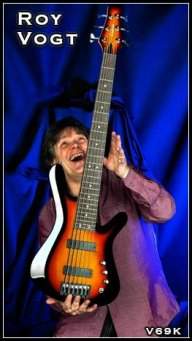
I'm certainly "over qualified" for most gigs I do. I was Jack Bruce in a Cream tribute gig Saturday night and while the bass was no problem, I'm glad I could relax on it while I attempted to sing and cover Jack's vocal range while playing (now that was the challenge!). Yesterday, I did a TV taping and read Nashville Number Charts. The idea was to come up with a great part that locked in with the band (which included a former Elton John sideman, a top call session guitarist and the leader who owns a Jingle House and Studio in Nashville and has worked with The Everly Brothers, Dr. Hook, and any number of Nashville Acts). I didn't need any extreme Bass Athletics for this, but knowing how to come up with a tasty fill as I went from the 6b to the 5 chord by knowing the key I was in and doing it in 15 seconds or less with a good feel didn't hurt. The more you can widen your Comfort Zone playing, the better. It certainly helps your "feel" when you're not blindly stabbing at notes in the dark or worrying about where to go next.
Again, the OP was asking about Pros and Semipros. It sounds like a good topic for a Poll, if someone wants to put one up. I'm curious, too.
 
Stanley Clarke said in an interview that he quickly realized that he only needed 20% of his skills for most of his work. Of course, that was when he was a jobbing bassist and before Chick Corea, Return to Forever, and all those TV/Film Scoring gigs. I'm sure those are more challenging.
I'm certainly "over qualified" for most gigs I do. I was Jack Bruce in a Cream tribute gig Saturday night and while the bass was no problem, I'm glad I could relax on it while I attempted to sing and cover Jack's vocal range while playing (now that was the challenge!). Yesterday, I did a TV taping and read Nashville Number Charts. The idea was to come up with a great part that locked in with the band (which included a former Elton John sideman, a top call session guitarist and the leader who owns a Jingle House and Studio in Nashville and has worked with The Everly Brothers, Dr. Hook, and any number of Nashville Acts). I didn't need any extreme Bass Athletics for this, but knowing how to come up with a tasty fill as I went from the 6b to the 5 chord by knowing the key I was in and doing it in 15 seconds or less with a good feel didn't hurt. The more you can widen your Comfort Zone playing, the better. It certainly helps your "feel" when you're not blindly stabbing at notes in the dark or worrying about where to go next.
Again, the OP was asking about Pros and Semipros. It sounds like a good topic for a Poll, if someone wants to put one up. I'm curious, too.

Great stuff Roy, and as ever for me on a personal note the stuff Glen Worf does with Mike Henderson, and Mark Knoppler etc, for me always proves that point...i just love what the man does with the material he has to work with.
 
Great stuff Roy, and as ever for me on a personal note the stuff Glen Worf does with Mike Henderson, and Mark Knoppler etc, for me always proves that point...i just love what the man does with the material he has to work with.

Thanks, Fergie. Glenn can do way more on the bass than anyone will ever know. He just plays the gig in the best right way possible. As we say, that's why he makes the Big Bucks.....
 
I believe that no matter what stage or standard you are at, there's always more stuff to learn. And so you either choose to keep learning, or you stop.

Although I've occasionally heard claims to the contrary, I've never known a single example of any musician on any instrument in any genre where learning something new has made them worse. Learning is never detrimental.

“Learn, or learn not... there is no try.” [/yoda paraphrase]
 
I believe that no matter what stage or standard you are at, there's always more stuff to learn. And so you either choose to keep learning, or you stop.

Although I've occasionally heard claims to the contrary, I've never known a single example of any musician on any instrument in any genre where learning something new has made them worse. Learning is never detrimental.

“Learn, or learn not... there is no try.” [/yoda paraphrase]

+1
 
You must learn some theory. If we're in a band together and you come up with a cool line, and I double it on guitar. It sounds fat and awesome. But having studied other music, be it at school or by reading guitar mags, you say to me 'Every 4 measures play something counterpoint cause it'll sound cool.'
Then whammo, because you and I studied, we have a common vocabulary we can use to describe the end goal and we write a killer song.

It was theory that helped Scot Joplin rise above the ranks of bar performers.
 
That may indeed be true for formally trained classical players. (I don't know, I'm not in that realm at all).

But, for jazz players, in which the ability to improvise on the fly and often through complicated changes is expected, the direct opposite is true, in my experience. (That is: a formally trained jazz player won't be stuck on charts or scores).

I realize that my use of the term classical was a bit confusing. Sorry. I wasn't referring to training in classical music, but to 'traditional' or 'formal' training in the realm of popular music, including jazz. I've played with a number of jazz musicians who were not very good at interacting with other players on the fly, and always stuck very tightly to charts whenever possible. As I said at the end of my post, this does not hold true for all players, not by a longshot, but I've seen well trained musicians with many reading gigs under their belts who couldn't stray from the confines of their charts and lock eyes with the rest of the band to save their lives. That, in my opinion, is a flaw in their training, just like not being introduced to theory at the time when it would accelerate your advancement.

As with many other things, qualities such as interaction or initiative varies more between individual players than between the types of education that they have received, but I still attribute some truth to the following idea: not reading the music every time you play will often force you to a new level of immediate awareness in any given musical situation, and will help you develop as a musician.

That being said, I strongly recommend learning theory at some point, knowledge is never a bad thing.
Fun thread, a lot of good points here.:)
 
Equally important but not necessarily connected. A lot of feel is just a natural instinct. While theory can be a natural instinct is also primarily an aquired knowlege.
The best players have both

it suprises me that there's even a debate going on. the title of this thread alone implies a misunderstanding of music and musicianship.

you aren't a musician if you don't have both. its like debating whats more important on a car, a gas pedal or a break pedal. only one is completely and utterly useless.

IMO, of course.
 
I think of it like this: If some divine entity were to intervene in your life and force you to choose one of two permanent options, which one would you choose?:

(a) Impeccable theory knowledge that surpasses 99.9% of all learned musicians, but feel that ranks below the lowest 0.1% of players

(b) Amazing feel that leaves 99.9% of other playing musicians in the dust, but only the most rudimentary theory knowledge that is no more than 0.1% of the total body of formal musical theory

Of course I think feel is important, and that knowing musical theory never hurt anyone and can provide great advantage to any musician. But if forced to choose one of those two, I would pick (b). But that's just what would make me happier in the long run. Other people may differ.
 
The guys that have a lot of technical ability and no feel? They didn't have any feel before they learned all that theory.

Feel is simply attention to detail. You hear the subtle nuances in someone else's music and can repeat it. You do that enough in a genre and you can mimic the style, with the right feel, when you make your own lines up.

People that are satisfied with just hacking through the notes? No feel. Not enough technique, so that you're struggling with the technical aspects of playing the music? No feel.

You have to have enough theory, meter, and technical ability to play the music fairly effortlessly so that you can concentrate on the subtleties and nuances that comprise the feel. Its the subtle timing shifts, on top of the beat or laying back, the little bends, the emphasis, the dynamics that comprise the feel.

It absolutely can be taught, you just have to a) listen intently to figure out what the "feel" should sound like, and practice enough so that you aren't struggling with the skeleton of the tune, the raw notes, so that you can add the nuances that make up the feel. Its not being satisfied with playing the tune 80% right. The last 20% is the feel.

Randy
 
it suprises me that there's even a debate going on. the title of this thread alone implies a misunderstanding of music and musicianship.

you aren't a musician if you don't have both. its like debating whats more important on a car, a gas pedal or a break pedal. only one is completely and utterly useless.

IMO, of course.

Like I said earlier, this thread is about making someone feel better about their lack of musical knowledge and their resistance to learning.
 
Like I said earlier, this thread is about making someone feel better about their lack of musical knowledge and their resistance to learning.

In what other professions would this attitude be considered a plus or even desirable?

Dentist.....Don't really understand all the tooth tooth and hygiene stuff, but i know my way around a mouth.

Surgeon.....Anatomy..don't need it, i'll just rumage around till we find something that should not be there.

Lawyer...But your honour i don't know much about the law, but my client is not liable... he told me so....and he has a trusting face.

And so on...nuff said.;)
 
A lot of people say that you don't 'use theory' when you play. They say that learning theory and performance are separate entities and one is done here while the other, there.

I don't necessarily agree. Certain basic theory should become a part of your DNA so that you don't have to 'load it into active memory' to use it - it's always there for you as a byproduct of playing. You understand dynamics, how to properly interpret your role and choose your notes, how to create tension and release through dissonance and harmonic resolution. Theory applied without a lot of conscious thought is called "feel". When theory become a part of your DNA it's now a part of how you play - not something you try to do - you do.

But how does all that theory become a part of your DNA? You have to apply it - consciously, as you play. As you learn that stuff you can go into your upcoming jam sessions with your mind 'pre-loaded' with some things you want to explore. The only way for that sort of stuff to become a part of your DNA and not to have to use your active memory to apply it in flight is to have tried it in practice. The only way to try it in practice before it's a part of your DNA is to load it into your active memory and consciously plan to use it - and to consciously use it.

Now it's important to say that there's a time and a place for everything - and I am lucky to have a band filled with music geeks who fully embrace the idea of exploring during our jam sessions. The last place I'd be 'experimenting' is in a performance, however. In performance I agree 100% that you should not be thinking 'theory' on iota. You should be executing your part as expertly as you can while being as expressive and dynamic as possible. You should be using what's in your DNA and not trying to add new links to your helix. In performance, it's 'use what you know' time.

But when you are in the jam room with your band mates and you have been filling your head with theory - by all means use it!

pretty much spot on.
*But* stop saying DNA.
there is absolutely no way music theory can be in your DNA