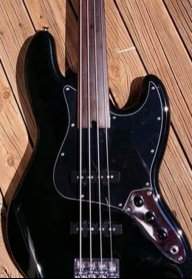
jive1
Commercial User
As a guy who does solo gigs.............
Even though the logistics can be quite simple in terms of setup and sound reinforcement, I find performing solo to be harder than performing with a band.
- You're entertaining a room of people alone, by yourself. It's a lot harder than you think. If you don't believe me, I welcome anyone to give it a try and see how it easy it is. I bet some of you are freaking out at just the thought of having to do that. As a solo musician, you alone are responsible for getting the attention of the folks in the room, entertaining them, getting them to stay and consume more. It's much easier when that is split among band members. IME, it takes a combination of skill and personality to pull it off, otherwise you're in for a very long night (even if it's just a 30 minute set).
- You always have to be on because there is no-one to fall back on when you're off. If your voice isn't feeling well, you don't have another band member to push additional songs onto. If your guitar playing is off, there's no bass player or drummer to get you back into the groove. If you are off, the whole show is off. But in a band, if one person is off, others can pick up the slack.
- If you're using backing tracks, they don't just come out of nowhere. Someone has to create them, and often it's the musician. The time and effort used to create and implement them can be significant and tedious. Even if the tracks are bought, borrowed, or stolen, you still need to implement them. And often that requires practicing with them so you don't mess up when using them. Quite honestly, I find using tracks nerve-wracking. If I make a mistake with a band, I can usually count on the band to cover for me and no-one in the audience notices anything. With a track, if I miss a single beat, I could wind up in a trainwreck with no way to fix it other than to kill the track (which is another embarrassment).
- You're keeping up with multiple things at once, all by yourself. When you're going solo, you're singing and playing an instrument while also covering sound. If you are using tracks that are not press and play, you'll need to be aware of those too. You'll also being doing front man/hype man/emcee duties, which means to be effective that you'll also need to pay attention to the audience while you are singing, playing, running sound, running tracks, etc.. You're probably also your own promoter and booking agent as well. Since there is no band, there's nobody to share in these duties.
- Solo acts are lonely experiences unless you know alot of people in the crowd. With a band, you have bandmates to commiserate with before/after the show, and during breaks. But for a soloist, you're usually alone for those things. Tiresome for an extrovert like me, but probably not so much for an introvert who looks forward to those alone times.
Even though the logistics can be quite simple in terms of setup and sound reinforcement, I find performing solo to be harder than performing with a band.
- You're entertaining a room of people alone, by yourself. It's a lot harder than you think. If you don't believe me, I welcome anyone to give it a try and see how it easy it is. I bet some of you are freaking out at just the thought of having to do that. As a solo musician, you alone are responsible for getting the attention of the folks in the room, entertaining them, getting them to stay and consume more. It's much easier when that is split among band members. IME, it takes a combination of skill and personality to pull it off, otherwise you're in for a very long night (even if it's just a 30 minute set).
- You always have to be on because there is no-one to fall back on when you're off. If your voice isn't feeling well, you don't have another band member to push additional songs onto. If your guitar playing is off, there's no bass player or drummer to get you back into the groove. If you are off, the whole show is off. But in a band, if one person is off, others can pick up the slack.
- If you're using backing tracks, they don't just come out of nowhere. Someone has to create them, and often it's the musician. The time and effort used to create and implement them can be significant and tedious. Even if the tracks are bought, borrowed, or stolen, you still need to implement them. And often that requires practicing with them so you don't mess up when using them. Quite honestly, I find using tracks nerve-wracking. If I make a mistake with a band, I can usually count on the band to cover for me and no-one in the audience notices anything. With a track, if I miss a single beat, I could wind up in a trainwreck with no way to fix it other than to kill the track (which is another embarrassment).
- You're keeping up with multiple things at once, all by yourself. When you're going solo, you're singing and playing an instrument while also covering sound. If you are using tracks that are not press and play, you'll need to be aware of those too. You'll also being doing front man/hype man/emcee duties, which means to be effective that you'll also need to pay attention to the audience while you are singing, playing, running sound, running tracks, etc.. You're probably also your own promoter and booking agent as well. Since there is no band, there's nobody to share in these duties.
- Solo acts are lonely experiences unless you know alot of people in the crowd. With a band, you have bandmates to commiserate with before/after the show, and during breaks. But for a soloist, you're usually alone for those things. Tiresome for an extrovert like me, but probably not so much for an introvert who looks forward to those alone times.