Commodore 64 with a floppy drive upgrade from a cassette.I still have my Sinclair ZX-80 (81?) somewhere. Not so the finnicky cassette recorder I used with it.

TalkBass has been independent since 1998. Add your voice.
Create a free account to reply to discussions, view embedded media, and browse with fewer display ads.
Join free Log in
Want zero display ads or expanded classifieds tools? Compare plans.
Commodore 64 with a floppy drive upgrade from a cassette.I still have my Sinclair ZX-80 (81?) somewhere. Not so the finnicky cassette recorder I used with it.

Eep.There’s this mutilated RD for sale locally. It’s as if they decided to change the lower bout to look like an NR. I’ve seen worse!
View attachment 7265269
View attachment 7265270
THE original Mac?I’m pretty sure my brother still has the original Mac. Want me to ask if he’ll sell it to you?
Especially for consumer electronics. They don’t care that the rest of the population is still mainly Luddite.That's nuts. People make firmware updates too difficult and/or too slow.
Yeah right. No. The first model.THE original Mac?
I preferred elm but that got dropped and mutt took over. It's good enough for me.I still use mutt to read root mail.
We've watched some of the shows they produced. Generally quality stuff.Acorn is pretty good for foreign stuff.
Mom had a Mac IIe she put in storage when she quit using it. When I found out, I asked if I could have it. The storage unit had flooded and they'd thrown it out.Especially for consumer electronics. They don’t care that the rest of the population is still mainly Luddite.
Yeah right. No. The first model.
When I worked for Philips in scientific equipment, we offered a 10mb HD for $5,000. Customers said it was well worth the upgrade from 8” single sided floppies.My first home computer was a Mac II way back in 1988 when they first came out. I got all the bells and whistles including a 120 meg hard drive, an Irwin Tape back up, a high res 14” color monitor, and a laser color printer/fax/copier. The Mac came with 2 meg RAM which I found to be limiting when doing CAD work so I sold my 1974 Corvette for $7000 and bought a total of 8 MEG RAM. Fast forward 10 years, the computer and associated devices had depreciated to about the value of a door stop and the Corvette about doubled in value.
Lesson learned, never pay premium prices for the latest high tech equipment, in just a few short years you can pick that same gear up at the local Good Will for peanuts. Likewise, if you own something collectible that isn’t made anymore hang on to it, it’ll likely go up in value.
And don’t get me started on the whole audio/video hifi rabbit hole that started in the mid 1980’s around the same time CDs and surround sound were introduced. I shudder just thinking about the tens of thousands of dollars I flushed down a toilet chasing the latest tech.
Yeah, I was on the cutting edge with my Mac back in ‘88. I was using my 8 MEG of RAM as a RAM drive which made CAD work and animated rotating view 3D designs a snap, something very few could do at that time from a home computer vs a room sized dedicated CAD station. Of course you had to back up to the hard drive every few minutes since even a power blip would cause you to lose everything on the RAM.When I worked for Philips in scientific equipment, we offered a 10mb HD for $5,000. Customers said it was well worth the upgrade from 8” single sided floppies.

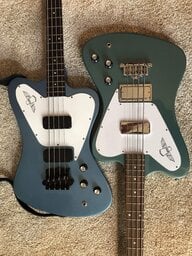
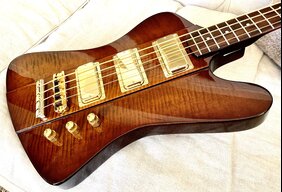
I still want to hear y'all play "White Bird" with you on a white Bird.

Absolute junk. I'll dispose of it for you and won't even charge a fee. It's a valuable service we provide around here.What could you possibly want with this old thing?
View attachment 7265271
Need to find out what could possibly go wrong? Find some boys. They will demonstrate.Bottle rockets in an iron pipe with a wooden handle taped on. Ah, surprised we all aren't blind.
My employer at the time (JHK & Associates) bought (one of?) the first PC(s) in Atlanta. It cost a fortune until you compared it against the minicomputers we had been working with. It was fully built out with 128KB RAM, two 1MB DSDD 8" floppies, printer card, serial card, audio (I think) card, graphics card, and color (?) IBM monitor. And of course a FORTRAN compiler. The traffic engineers were hoping to run Passer 80 and TRANSYT[1] 7 any time they needed to instead of waiting to run them on the customer minicomputers we were developing software on, or driving down to Georgia Tech in Atlanta to run them on the Cyber 74 supercomputer.When I worked for Philips in scientific equipment, we offered a 10mb HD for $5,000. Customers said it was well worth the upgrade from 8” single sided floppies.


That came much later. Cream was late 60s.... And he was an early Hartke guy. That had something to do with his sound. YMMV.

Played Birds too..That came much later. Cream was late 60s.
I should have noted that Papallardi's tone factors into this hunt, too. While known for the violin bass, he did play EBs as well.
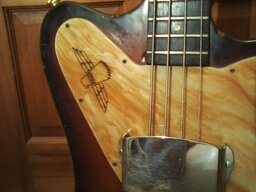
I bought one - the AlNiCo version. One of the screws had its hole drilled at a slight angle so the screw head doesn't match up with the holes in the cover plate. I'm going to try to make it work, but want a backup plan.
Ha. I'm thinking pliers. Set the screw heights without the cover, then bend the one screw straight and install cover.