
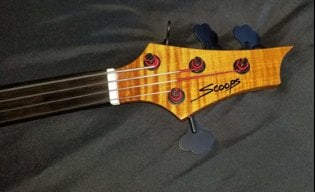
I really enjoyed the build thread that you shared with us here on TB, for this one as well.
Nice job!

Winter Build Off 2018 - Wallybird

TalkBass has been independent since 1998. Add your voice.
Create a free account to reply to discussions, view embedded media, and browse with fewer display ads.
Join free Log in
Want zero display ads or expanded classifieds tools? Compare plans.


There's this video of him playing it as well. Poor quality but it's all there is.
We'll make it a yes!
I'll bring the list forward later tonight or early tomorrow (I actually need to get in some practice!), meantime be comfy and hang out with us - Lovely build BTW!
Absolutely the case on electric guitars. Probably true to a lesser degree on basses. But if you're a purist, perfection is the goal. I suspect you have similar perfectionist preferences when it comes to making tea. And just looking at the Mods orderly shoe collection I'd guess he's like minded.
Which one? Or did you mean to make that plural?
OMG it's a two pick up bass!
I'm really happy to have some single pickup Thunderbirds, they're easy to use live and of course have their own tone going on, however I tend to lay my hand across the top of the bridge cover and play on top of the bridge pickup, so I tend to use them and like what they contribute to my tone. Certain 'Birds like '76s produce a lot more bass as part of what they do ( I eq them differently)and winding off the bridge pickup doesn't generate the same result as conventionally wired basses. Anywhooo, I'd love all your extra pickups, especially the originals from that rare as a White Rhino Orville
Have never used pedals. Where would you start? Compressor? Chorus?
With the signal chain, I reckon it's best to give the flanger the richest signal to work with before filtering out sub bass and excessive top, and also to take care of any unpleasant LFO artefacts.
If it were me the Fuzz would be first in the signal chain. Preamp/DI last.
 your sound. And like paints, the combinations that can be used are as varied as the colours themselves.
Like most 'things' when it comes to pedals (especially when it comes to pedals) there are few hard & fast nuggets of 'conventional wisdom'.
Pedals are like paint, in that they color (colour)
I tend to view the HPF, as the canvas itself- in that it helps define the boundaries of the soundscape.
And layer all the colours, as it were- on top of it.
Have never used pedals. Where would you start? Compressor? Chorus?
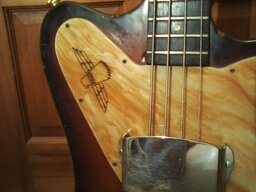
It would definitely find a market-right hereSilly Thunderbird Question: Were the first Gibson Thunderbird basses from, say, 1963 and 1964 strung with flat wound strings? I wonder since it has become such an icon Rock bass with round wounds. Also, THAT tone, it really sounds nothing like a Fender P or J, what was Gibson thinking??? I mean, I LOVE what they were thinking, I just don't know what it was. I thought if they were trying to compete with Fender, they would have replicated Fender's tone as much as possible. Someone needs to write a history of Thunderbirds history, with lots of color photos!

It would definitely find a market-right here
I know things are done differently in your area,but have I been spelling that last word wrong all these years?Yes, our pocket leopard had more muscles than are necessary on a housecat. He's a lovely lad but definitely looks like a cat with whom you would not want to fvck.

Any idea where to find it?It's been done........See here.
The Gibson Bass Book | An Illustrated Tribute by Rob van den Broek

Order from the website. The book is a beauty.Any idea where to find it?

Only if you want to express your true thoughts on TalkBass.... cause it changes it to shag (that was TB-corrected too)I know things are done differently in your area,but have I been spelling that last word wrong all these years?


