- Jul 1, 2005
- 4,291
- 21,932
- 79
- Disclosures
- CataldoBasses: Designer/Builder ThunderBuckerPickups:Consultant
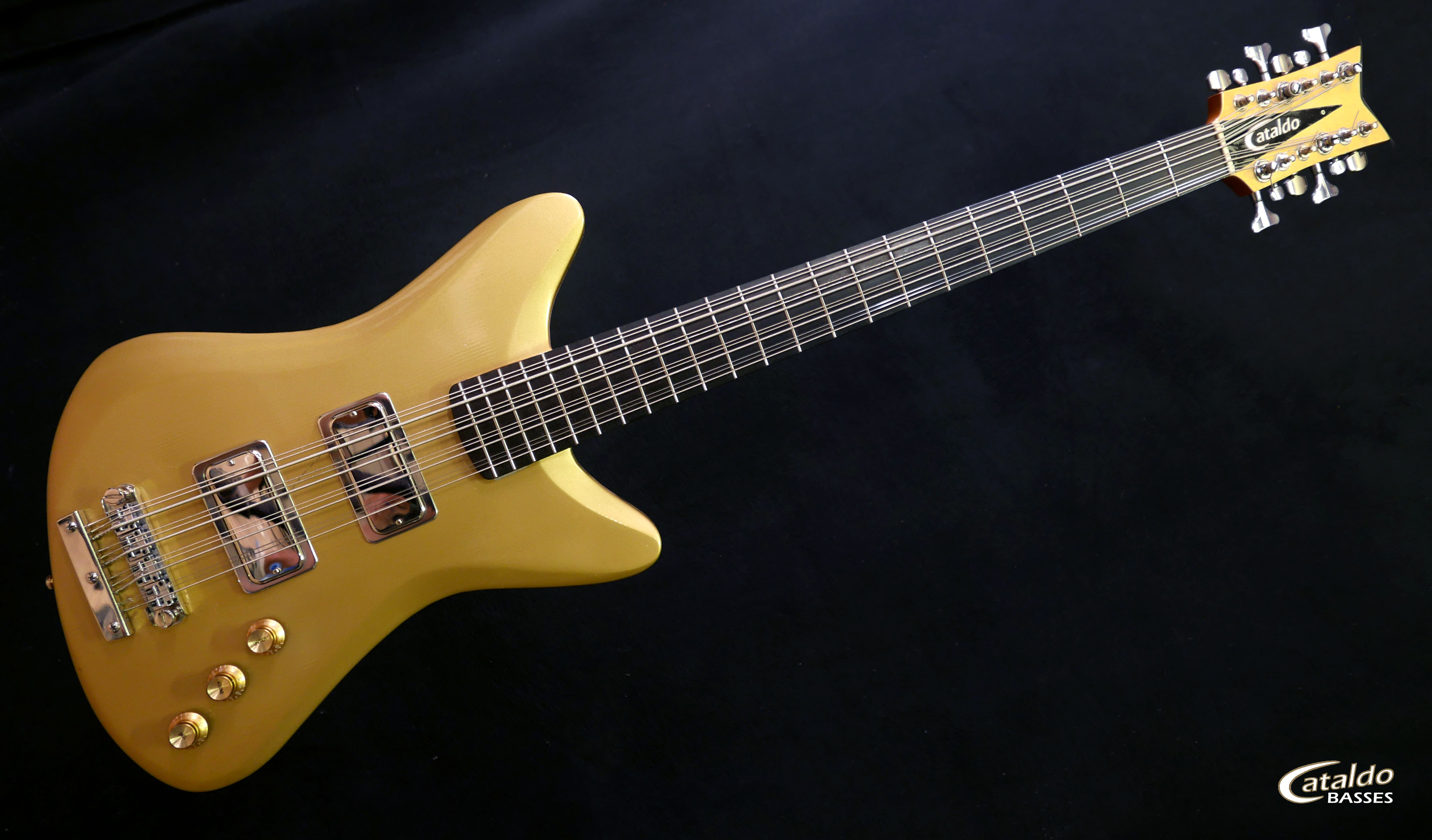
RNR 122...Reverse meets NR, throw in some Grabber contouring and triple the strings.

TalkBass has been independent since 1998. Add your voice.
Create a free account to reply to discussions, view embedded media, and browse with fewer display ads.
Join free Log in
Want zero display ads or expanded classifieds tools? Compare plans.

Totally agree. I work with all these guitarists that buy very expensive Bogners and Friedmans only to use cheap pedals in front of them. Clearly they are in it for the look because a tube Screamer is not going to make anything but a Peavey or Fender solid state amp sound better. I saw Howard (Alex) Dumble recently laugh at someone paying 110k for one of his amps to use it at the end of his effects chain...IMHO... what was learned by this video, was how to make expensive amps & pedals all sound like cheap pedals. All that gain is just ridiculous. Hey guitar players... GAIN IS NOT TONE!!! I would love to see them do the same thing with a mix of old school tube amps (Plexi, Bassman, etc.), and pedals that claim to sound like those same amps (with the pedals all running through a solid state power amp). Me thinks it would be a much shorter video...

 Then I started playing with a pick....SWEET CANDY!
Carlo, you have this certain "something" about the way your instruments present themselves, that really speaks to me. I get this feeling that you have a fairly thorough idea of what a finished piece is going to look like, before the saw first hits the wood. Every feature works with every other feature to create a "flow"...RNR 122...Reverse meets NR, throw in some Grabber contouring and triple the strings.
View attachment 3035550
View attachment 3035551
effects chain?Totally agree. I work with all these guitarists that buy very expensive Bogners and Friedmans only to use cheap pedals in front of them. Clearly they are in it for the look because a tube Screamer is not going to make anything but a Peavey or Fender solid state amp sound better. I saw Howard (Alex) Dumble recently laugh at someone paying 110k for one of his amps to use it at the end of his effects chain...
 This guy's just spending money cuz he can... not cuz he's concerned with "tone"
Single tubes in bass preamps are a marketing scam that folks have gotten used to expect. Even GK, a traditional SS manufacturer had to offer this option to compete. Yes, the transfer function of a vt is different from that of a transistor because they are such different animals in their construction methods. Harmonic content is not attenuated in free space as it can be in a crystal lattice, which puts the single tube in the preamp concept (imho) in a "enhanced filter" category.effects chain?
 Anyone who understands tubes, knows that although the tube will draw some plate current it is way off it's optimum operational MU (amplification factor) curve at these low plate voltages.. Not to worry, "It's got a tube! Look at it glow!"...

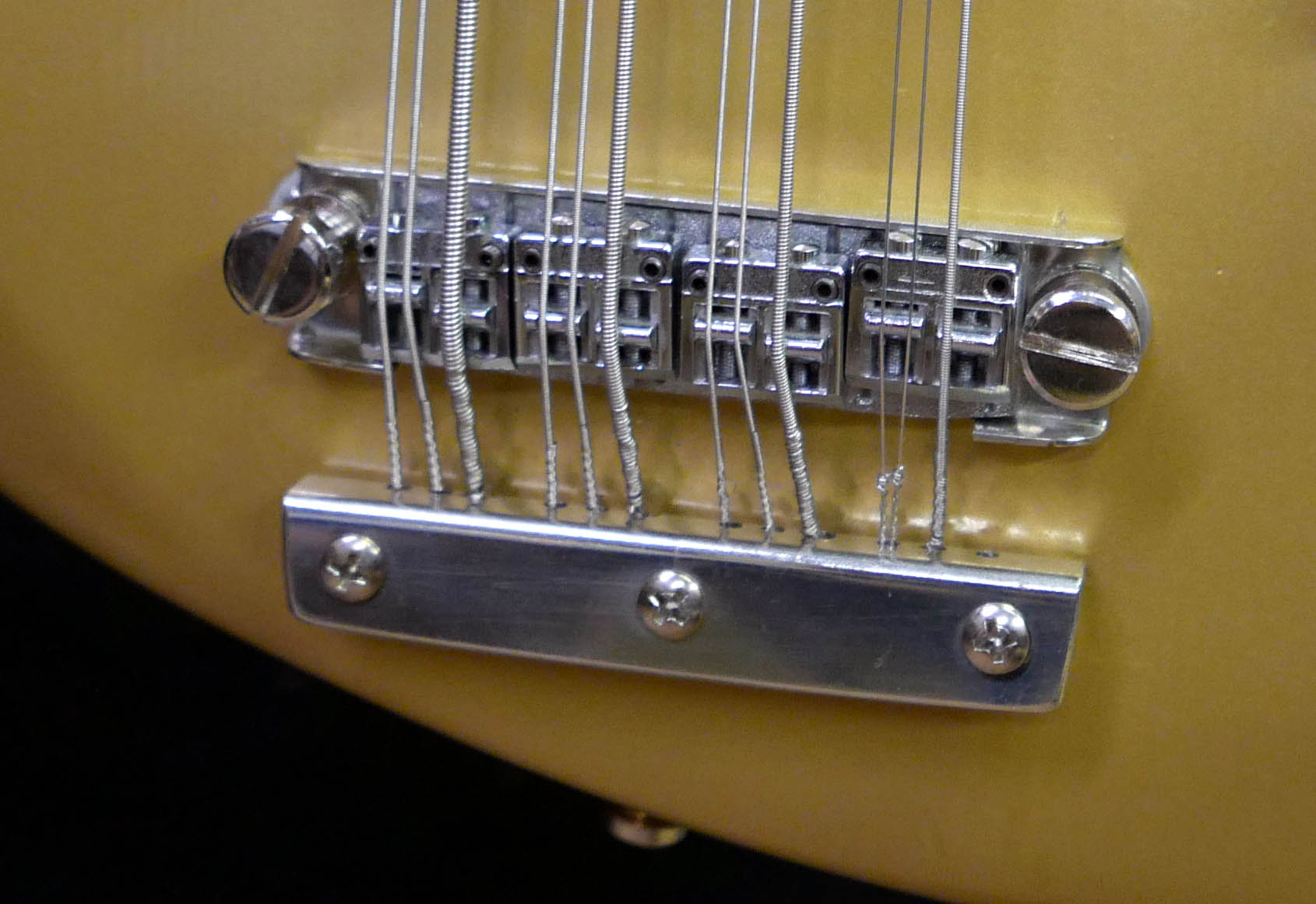
Those are nice bridges!
I put the similar 2 point Hipshot on my Mann Armstrong plexi. It did make a difference, but in that case the original was the worst excuse for a bass bridge I have ever seen. Literally a bass-bridge-shaped object!
I don't think there will be a perceivable difference in tone, but will be interested in your opinion.
On my Mann Armstrong I also appreciated the ability to adjust the string spacing. It allowed me to set it up perfectly.It appears that the Supertone bridge makes a bigger difference on the midtown than on the `bird. I have always loved playing the midtown, and its sound is great; the new bridge makes a substantial improvement, especially in sustain. On the `bird, it is not as big a difference. The sustain is a bit better, but perhaps that is due to new strings? I think I will lower the action a bit on the `bird. That might change things more. And I suppose that is where the real improvement is - each string is individually adjustable.
I am happy with the result in both cases and think that it was US$120 (each) well spent. I think I will put one on the Casady too.
Single tubes in bass preamps are a marketing scam that folks have gotten used to expect. Even GK, a traditional SS manufacturer had to offer this option to compete. Yes, the transfer function of a vt is different from that of a transistor because they are such different animals in their construction methods. Harmonic content is not attenuated in free space as it can be in a crystal lattice, which puts the single tube in the preamp concept (imho) in a "enhanced filter" category.
Believe it or not, I have seen manufacturers offer this option by feeding a say, 12AX7 with 12 or 24Vdc and placing the tube where it can be seen from the outside of the enclosure through a grill or whatever...
I know very little about tube and solid state amps from a technical standpoint. But I do know what I like, and I'll be the first to say the SS pre and tube power layout in my musicman HD150 hybrid amp is much better at giving me a very pleasant warm over drive than any tube pre and SS power hybrid that I've tried. I've always been under the impression that the tube warmth and smooth breakup comes from the power section of an amp not the pre amp. Is this wrong?Most "tube tone" distortion is a result of plate starving a preamp tube such as a 12AX7. Many will like that tone, many will not. But what amuses me is when people turn their nose up at it because you get "better" distortion out of an overdriven power tube - one that has been pushed into "sag" - which is actually plate starving.*
There is a mythology about tubes that is not born out by engineering and facts.
* It has been 30+ years since I have done work with tubes (or any electronics), so I am a bit rusty.

Not much in tube technology has changed in 30 years. The sag you mentiMost "tube tone" distortion is a result of plate starving a preamp tube such as a 12AX7. Many will like that tone, many will not. But what amuses me is when people turn their nose up at it because you get "better" distortion out of an overdriven power tube - one that has been pushed into "sag" - which is actually plate starving.*
There is a mythology about tubes that is not born out by engineering and facts.
* It has been 30+ years since I have done work with tubes (or any electronics), so I am a bit rusty.
You have hit on the holy grail of hybrid design. The HD 150 is probably the best sounding hybrid out there. Very often overlooked and unfortunately underpowered. Love them. No you are not wrong. This said, breakup can come from both preamp and output stages.I know very little about tube and solid state amps from a technical standpoint. But I do know what I like, and I'll be the first to say the SS pre and tube power layout in my musicman HD150 hybrid amp is much better at giving me a very pleasant warm over drive than any tube pre and SS power hybrid that I've tried. I've always been under the impression that the tube warmth and smooth breakup comes from the power section of an amp not the pre amp. Is this wrong?
Agreed. Tube power amp overdrive is a complex mechanism that involves the output transformer core saturation effects as well. Disagree on capacitor sizes as this applies to both SS and VT designs.I think a lot of what we hear is governed by the transformers and how big certain capacitors are. Just my absolutely ignorant opinion based upon observation. Some tube amps sound awful. Some solid state amps sound awful. And some of each sound outstanding. I'm very happy with the robust, round, juicy sound that comes out of an Acoustic 360. It's got a shiny dark blue quality that's unmatched. It's solid state. An Ampeg SVT has a scratchy sound with some dull yellow-orange in it by comparison. It's all tube. Then there are little guitar amps. I have heard a small Peavey that was fantastic. It turned out that it was solid state. I have a Gibson BR-9 that's all tubes and stays clean forever and sounds very good, too.
So, go figure. I don't have any answers except to say my ears are happy or not.
Me too! 9.08 lbs is pretty light for an all maple bass! I wonder how it actually plays?
Me three. Would love to hear/play it

I think a lot of what we hear is governed by the transformers and how big certain capacitors are. Just my absolutely ignorant opinion based upon observation. Some tube amps sound awful. Some solid state amps sound awful. And some of each sound outstanding. I'm very happy with the robust, round, juicy sound that comes out of an Acoustic 360. It's got a shiny dark blue quality that's unmatched. It's solid state. An Ampeg SVT has a scratchy sound with some dull yellow-orange in it by comparison. It's all tube. Then there are little guitar amps. I have heard a small Peavey that was fantastic. It turned out that it was solid state. I have a Gibson BR-9 that's all tubes and stays clean forever and sounds very good, too.
So, go figure. I don't have any answers except to say my ears are happy or not.
Not much in tube technology has changed in 30 years. The sag you menti
Agreed. Tube power amp overdrive is a complex mechanism that involves the output transformer core saturation effects as well. Disagree on capacitor sizes as this applies to both SS and VT designs.
Again, this is all very subjective. What you call "blue" to me may look as "brown". I will never know as I cannot see through your eyes. Human perception is a fascinating topic as for example; for a human to sense the doubling of an amplifier's volume, this amplifier has to have augmented it's power output by a factor of 10, not 2. This is why we use base 10 logarithms and calibrate power levels (not necessarily audio) in dB.
This topic has been beaten to death and I cannot agree with you more that it really boils down to what one likes or dislikes..