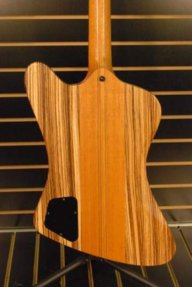
My '15 and EB are spectacularly versatile bass guitars. The EB is the most Fenderish Gibson I have ever picked up, but it still has the ferocity that Gibson bass guitars typically have. It's a little brighter, because it's alder or ash with a maple neck. The differences in sound between that one and the '15 are what overcame my skepticism regarding tonewood. It's subtle and probably doesn't translate to the average audience in a loud venue, but it's there.
One of the things I long ago realized is that everything affects everything else. This really came home to me with guitar amps. You change a bias resistor and it changes not just the gain structure and response spectrum for that stage, but how that stage interacts with the following stages.
Some things have more of an impact than others, obviously. but they all interact. Kind of a butterfly effect of systems.
The same is true of (bass and other) guitars, as well as their interactions with individuals. Body/wing/neck wood choice will matter less or more in a given instrument, and for an individual player. It may impact tone, attack, sustain, and/or decay. The differences may seem negligible or dominant depending on the bridge (material, configuration, mounting), the nut (same), strings, scale, etc. I've noticed differences others didn't, and vice versa.
My Epi IV and Pro-V are so different that I wouldn't dare hazard a guess how wood selection impacts them. I have noticed the difference in (apparently) otherwise identical Strats.
And yeah, in many cases it's only noticeable to the player- but that can make a big difference in the playing, which the audience can hear. The band and audience comprise a system, too, including the subsystem that is the band with its instruments, PA, etc.


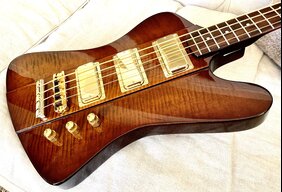

 Three songs later and it happens again, LOL.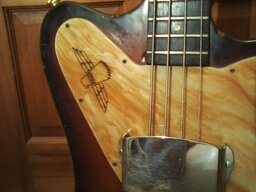

 ....
....