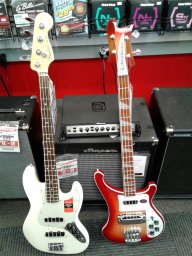
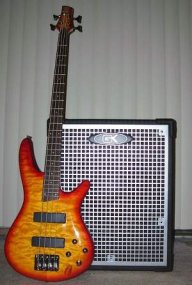
Non-reverse Thunderbirds have ojom. They're backwards, but in a good way.
Basses with 5, 6 or more strings have neither more nor less mojo than 4 string basses. The overall mojo is the same, but the mojo-to-string ratio is diminished.
Basses with rear-routed controls have neither more nor less mojo than front-routed basses. You just have to make sure that the pickguard or control plate is screwed down properly so that the mojo can't escape.
Left-handed basses have no more mojo than right-handed basses. Except when played by a right-handed player - then they have significantly enhanced mojo.
Headless basses have moj. That's just a different kind of mojo, without the end bit.
Old basses accumulate mojo. When you cut into them, you can count the mojo rings in the wood.
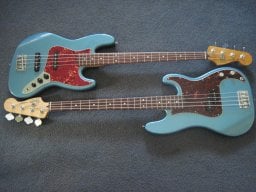
Paint does nothing to hold the mojo in. Artificially relic'd basses still have mojo.
Bootsy Collins' bass has
MOJO.
Ultralong and shortscale basses have mojo. The mojo-to-length ratio of such a bass is: mojox = (34*mojo34)/x, where x is the scale and mojo34 is the mojo-to-length ratio of a standard 34" scale bass.
Hollow-body basses have m--o.
Acoustic basses have
mojo. Unless they are also amplified, and then they can have mojo.
Active basses have iMojo.
Heavy basses have m