• TalkBass has been independent since 1998. Add your voice.
    Create a free account to reply to discussions, view embedded media, and browse with fewer display ads.
    Join freeLog in
    Want zero display ads or expanded classifieds tools? Compare plans.

"Tone" "Wood"

Unless you're playing a fretless, the strings don't actually contact any wood. Shouldn't we be talking about tone metal?

$_57.jpg

For example, this oversized lump of chromed pot metal serves no known purpose. * But it sure is shiny !!!

* I believe it is some sort of theft-deterrent device.
 
Last edited:
Luthiers use a "tap test" to determine if a piece of wood has good tone or not. To determine if your guitar has good tone or not, a modification of the "tap test" is used. First, remove as many of the metal parts as is practical. De-fretting is not necessary, but at a minimum remove the strings. Then, hold the guitar in a normal standing playing position, and let go, being careful of your feet. This is the so-called "drop test", and will evaluate the tone of the entire guitar as an assembly. Drop as often as necessary to get the result you want. Note that the drop test is not the same as the "smash test" pioneered by Pete Townshend and used by many punk luthiers. The smash test is generally conducted with all the metal parts in place, and this does not give accurate results.

Check local building codes before drop testing a Les Paul.
 
Last edited:
As long as you make sure the bridge assembly is as ridiculously hard to adjust as possible I think your tone woods should tone real good

You bet !

P8291654.JPG


And just look at all the useless shiny bits I've attached to this project. But none of that matters, because the body is alder, and therefore it will sound Fendery. Hence the Fender logo, that and they haven't sued me yet. I wouldn't trust RIC.
 
View attachment 1363890
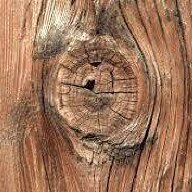
I got this pretty slab of wood for free ( underneath the Telecaster. ) I need to determine if it is a "tone" "wood", and would therefore have superb properties for luthiery, or if it is just a cutting board. I am not an expert on "tone" "wood", but I understand the "tone" properties of a "wood" can be ascertained by a "tap" "test".

I want to be as scientific as possible about this. I know that the "tone" of an electric guitar is 99% the wood and 1% everything else put together. I have already learned that the size and shape of the piece have nothing to do with the "tone" of the "tap" "test", as long as the "test" is properly administered. So, before embarking on this, I would like to pose a few questions to the high masters of "tone" "wood".

Firstly, which finger should one use for the "tap" "test"? Also, how many "tap" "tests" should one perform in order to objectively perceive the desired result? What happens if a "tap" "test" is performed on a piece of wood that is not "tone"? ( I don't want any accidental fires or explosions! ) And finally, how many "tap" "tests" can be performed on a piece of "tone" "wood" before it is "tapped" out?

There are many experts on "tone" "wood" here at TalkBass, so I hope someone can turnaround some answers for me. Also, I would appreciate if someone could perhaps recommend a fretboard wood with a nice midrange push, that also enhances the lows and the highs.

I ask all "tone" "wood" authorities to share their knowledge and expand on the subject begun here. Perhaps one day this humble thread could become a definitive resource on the subject.

P9051659.JPG


After all that soul-searching and legal issues, I've decided on this. ( The drawing on the wall, not the TBird. )

This build is going to be cheap and easy, everything off-the-shelf, as much as possible from stocks on hand. Most of the body contouring looks like belt sander work. The glued-up teak board is actually a pretty good approximation of the fancy-schmantzy Koa of the original.

I've ordered an Eden 32" neck, which is something I've wanted to try since they consulted me before bringing them out ( and didn't listen to a thing I said. ) I've used a few Eden necks, and with some work, every one has been quite acceptable. At that price point, you can't expect perfect out of the box. Still a lot less work than building from scratch, and cheaper too. The other big ticket is a pair of cream P-pickups. I expect the entire build to come in around $100 out-of-pocket.

I hope it turns out sounding woody, not tinny. GORN !!!

BTW, the TBird has a very sweet sound from its cherry body. I think that one is maybe my best mash-up:

Gibson Thunderbird body
Fender Jazz neck
Musicman pickup & bridge
Precision knobs in a Ric diamond

That board would make a real nice Tele too, but I've already done that ...
 
Last edited:
  • Like
Reactions: Leiria
Having finally settled the tonewood debate beyond any shadow of a doubt, I believe it is time to explore some other toneful matters. I would open the discussion with the tortoise pickguard effect.

I myself have replaced both white and black pickguards with tortoise, and perceived tremendous differences in tone. On TalkBass alone, you can find many others with mirrored experiences. Perception is fact, that's SCIENCE, b!tches, like it or lump it. The tortoise pickguard effect is not the product of wishful thinking or vivid imaginations, it is REAL. Any luthier worth his salt will tell you so while selling you the "upgrade".

I find that the tortoise pickguard is darker than the white pickguard, and lighter than the black one, so it is kind of in the middle, like lukewarm water. But exactly where does a pickguard derive its tone from? A single layer black or white pickguard is going to sound just like that - black or white, dark or light. A three-ply pickguard has a middle layer of contrasting tone sandwiched between two layers of primary tone. The middle layer cancels-out one of the outer layers, giving a three-ply pickguard a less pronounced tone than a single-layer pickguard. A four-ply pickguard may cancel itself out completely.

A tortoise pickguard is generally backed with a layer of white and a layer of black. These cancel each other out, leaving the wonderfully complex tone of the tortoise to ring out. That is why the tortoise pickguard effect is so widely perceived. A related matter is the pearl pickguard effect, which is similar to the tortoise effect, but much more subtle, and can only be heard by those with the most sensitive and experienced ears, like mine.

Another matter of great significance is the coupling between the pickguard and the body. This is typically accomplished with screws. Fender uses more screws than Gibson, and also larger ones, to achieve a tighter coupling between the pickguard and the body. That is why Strats and Teles sound so much brighter than LPs and SGs. ( Note: many know-nothing barbarians attribute this to the pickups, but as anyone with any tonewood knowledge knows, pickups have nothing to do with sound. ) In the bass world, count the number of screws on an EB-3, and on a Precision. It's pretty obvious now, isn't it?

So, the next time you are playing a gig, and the crowd is screaming, and the guitarist is trying to drown out the drummer, and the sound man is an imbecile, make sure you have the right pickguard for your genre. And of course, the right wood.

And finally, always remember, if someone says they can't hear the difference between maple and mahogany, or tortoise and black, that is because they are an idiot. The difference is real. Always shout-down differing opinions with the greatest possible force and determination.
 
Last edited:
What is the best tone for schmone?


Better yet, what's the best schmone for metal?

Well, obviously - cast iron. Although iron can be rather brittle; for speed metal, I would go with forged steel. Stainless steel for Glam. If you're playing Def Leppard covers, you can probably get away with aluminum. Brass is heavy but soft; not sure what genre that would fit. Bells are made from bronze, so a bronze pickguard would surely make your guitar ring.

It is well known that thin lacquer finishes have superior tone to thick nasty polyurethane. In the same vein, what about nickel vs chrome vs gold plating? Each of these must surely have its own special tone. This is a greatly under-studied subject in luthiery. Personally, I like stainless steel fasteners from the marine supplies store. Perfect for sea chanties.

Also, I don't think anyone has reported on the tonal effects of push-back braided insulation vs plastic. And all the various solder formulations. Fortunately, the tonal aspects of metallurgy are insignificant compared to wood.
 
  • Like
Reactions: rymiraflores

Latest posts