

Enjoy the benefits of a premium membership!
Upgrade Account
-
TalkBass has been independent since 1998. Add your voice.
Create a free account to reply to discussions, view embedded media, and browse with fewer display ads.
Join free Log in
Want zero display ads or expanded classifieds tools? Compare plans.
You are using an out of date browser. It may not display this or other websites correctly.
You should upgrade or use an alternative browser.
You should upgrade or use an alternative browser.
Tonewood Club
- Thread starter GodPlayedBass
- Start date
More options
Who Replied?
Defer any and all to this post.
Yet another tonewood post
haha, I see what you did there. Definition of a vicious circle

Play a instrument made out of poplar and you will realize tonewoods are real (and poplar isn't one of them)
Tell it to those who play EBMM SUB basses.
Sure, they sounded terrible

edit: absolutely not
Tell it to those who play EBMM SUB basses.
Sure, they sounded terrible
edit: absolutely not
Yeah, my '92 StingRay 5 is poplar and it is the freaking business. I'm going with Carl Thompson on this one: "I wouldn't have a clue. And nobody else does either".
Last edited:


Yeah, my '92 StingRay 5 is poplar and it is the freaking business. I'm going with Carl Thompson on this one: "I wouldn't have a clue. And nobody else does either".
I’ve got a MTD , Poplar/Maple/Wenge
It’s a great instrument

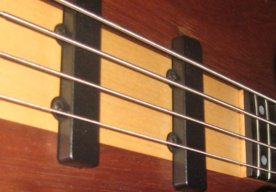
Consider MTD USA basses. Most of them use the same Bartolini pickup and preamp configuration. But the tone can really vary, depending on the woods that are used. For example, there is a distinct "wenge" tone that is usually recognizable by its strong dark lows and its natural compression. The ash basses usually have more natural midrange growl. These differences can be subtle, but they are definitely there.
No. Respectfully, please STOP using a term which applies to HOLLOW ACOUSTIC STRINGED INSTRUMENTS where 60, 70, or more percent of the sound is generated by a VERY THIN SOUNDBOARD, and NOT PICKUPS, incorrectly.
A thick slab of whatever wood may have some SLIGHT affect on tone of an ELECTRIC instrument, but in that context it is not a "tonewood."
A thick slab of whatever wood may have some SLIGHT affect on tone of an ELECTRIC instrument, but in that context it is not a "tonewood."
To @Taustin Powers: In that MTD USA context, do they use bubinga and do you or they have any wenge vs bubinga opinion?
Last edited:

did we settle it yet?
We have definitively concluded that; all of the time… some of the folks… may or may not find differences in some of the wood… some of the time. And I also learned that deniers eat their young’s placebo.
D
Anyone who don't believe in tonewoods should compare two otherwise IDENTICAL basses where one has a maple body and the other has something more traditional like alder or mahogany. Of course all pieces of wood are different so there MIGHT always be unexpected results but every single maple body bass I've ever played has been extremely bright sounding when comparing to a similar type of bass with similar pickups/bridge/etc. Even just a maple laminate in the body can brighten the tone noticably in my experience.
A quick experiment (that I will NOT recommend anyone actually doing) is to SATURATE a rosewood fingerboard with oil, like REALLY overdoing it and hear what happens. It won't be good (and please don't ask me how I know this...). The natural oil content in rosewood clearly has an affect on the tone but too much oil and your tone will suffer. Mass/density matters.
Personally I think tonewood matters even more with things that aren't really about "tone" but stuff like dead spots, sustain and most importantly having an even response along the neck. It's all about mass/density and the distribution of the mass in the body/neck. Different pieces of wood will have a different density and also a different distribution of mass.
Have you ever tried attaching a Fat finger to your headstock and hear the dead spots shift a couple of frets? This difference can not be explained in ANY other way than adding mass to the headstock. Density/mass DOES matter and different types of wood have different density. Even between two pieces of wood from the same species, which of course means that it's not just about different TYPES of wood but the QUALITY of the wood.
Some people seem to think you can mount the strings between a workbench and a shelf, stick a pickup under them and get the same tone as using the same pickup/hardware with a top quality guitar (someone posted a video about this a while back). I can only say I'm shocked that so many people didn't seem to hear the hideous, ringing overtones as the tones sustained with that "shelf guitar".
Of course the neck/body matters, even with a solid body electric. The body and neck affects how the strings vibrate and which frequencies are affenuated the most. Sure, it matters even more in an acoustic but acoustics are completely different designs. With an acoustic the soundboard is the "amplifier". With electrics is more about which frequencies are attenuated by the neck/body. That doesn't mean it won't affect the tone, or even that it's negligible. The pickup doesn't generate sound on it's own. It picks up the vibration of the strings and if anyone says the mass of the body/neck won't affect the vibration of the strings they need to learn a thing or two about basic physics.
A quick experiment (that I will NOT recommend anyone actually doing) is to SATURATE a rosewood fingerboard with oil, like REALLY overdoing it and hear what happens. It won't be good (and please don't ask me how I know this...). The natural oil content in rosewood clearly has an affect on the tone but too much oil and your tone will suffer. Mass/density matters.
Personally I think tonewood matters even more with things that aren't really about "tone" but stuff like dead spots, sustain and most importantly having an even response along the neck. It's all about mass/density and the distribution of the mass in the body/neck. Different pieces of wood will have a different density and also a different distribution of mass.
Have you ever tried attaching a Fat finger to your headstock and hear the dead spots shift a couple of frets? This difference can not be explained in ANY other way than adding mass to the headstock. Density/mass DOES matter and different types of wood have different density. Even between two pieces of wood from the same species, which of course means that it's not just about different TYPES of wood but the QUALITY of the wood.
Some people seem to think you can mount the strings between a workbench and a shelf, stick a pickup under them and get the same tone as using the same pickup/hardware with a top quality guitar (someone posted a video about this a while back). I can only say I'm shocked that so many people didn't seem to hear the hideous, ringing overtones as the tones sustained with that "shelf guitar".
Of course the neck/body matters, even with a solid body electric. The body and neck affects how the strings vibrate and which frequencies are affenuated the most. Sure, it matters even more in an acoustic but acoustics are completely different designs. With an acoustic the soundboard is the "amplifier". With electrics is more about which frequencies are attenuated by the neck/body. That doesn't mean it won't affect the tone, or even that it's negligible. The pickup doesn't generate sound on it's own. It picks up the vibration of the strings and if anyone says the mass of the body/neck won't affect the vibration of the strings they need to learn a thing or two about basic physics.

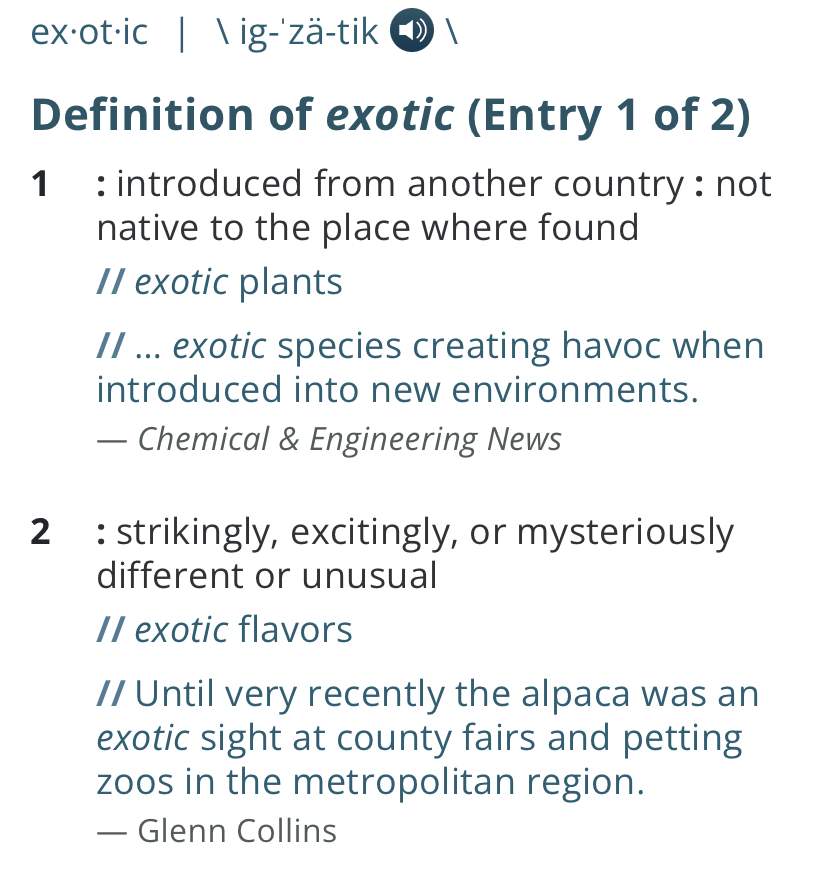
I prefer “exotic wood” to “tone wood”
It’s less divisive and generally describes that there may be the potential for unique characteristics, as in it’s not from here.
So I’ll motion that we should create an Exotic Wood Club too for those that appreciate the aesthetics of said woods.
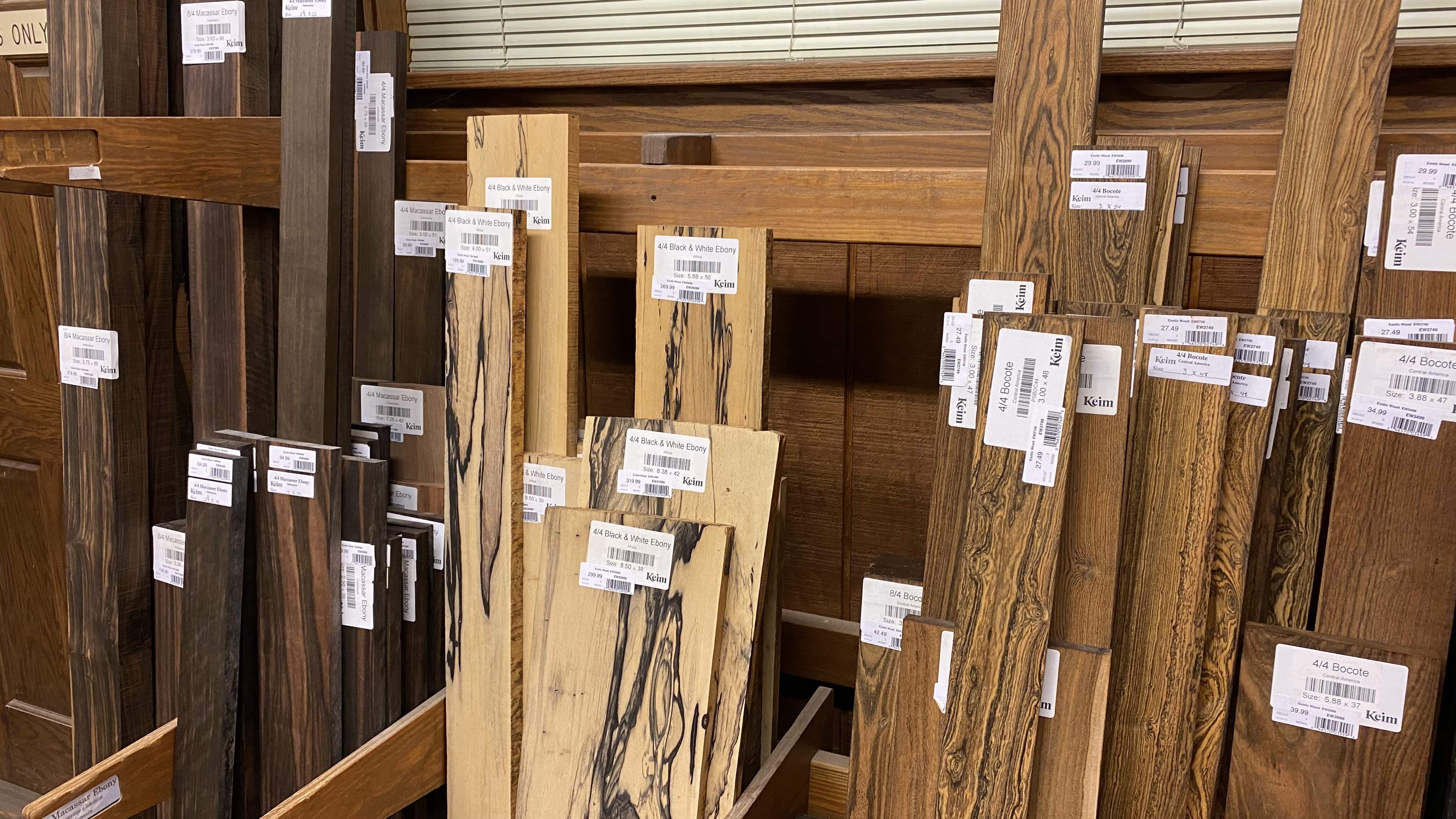
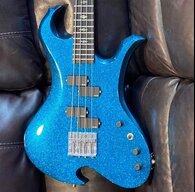
Here’s a picture of some, that can make no sound or tone on its own.
It’s less divisive and generally describes that there may be the potential for unique characteristics, as in it’s not from here.
So I’ll motion that we should create an Exotic Wood Club too for those that appreciate the aesthetics of said woods.
Here’s a picture of some, that can make no sound or tone on its own.
If the wood makes no difference in the tone, then how come two identical instruments can sound completely different? Hardware and electronics are pretty deterministic, IMO. If the only variable is the specific hunks of wood used, even within the same variety, then it seems to me that the wood had some impact.
But... if they sound different, they ARE different, ergo not identical.

So you’re telling me this guy is not real?!I'm not sure if you're intending to be insulting, but I'll give the benefit of the doubt.
Let's say you were in a group that believed the Loch Ness Monster were a real creature. If you explicitly disallowed anyone who presented any opposite evidence, such as the extensive sonar testing done in the Loch, and only allowed evidence to be included that reinforced what the members believed, there would be little benefit to it except as a social club. That's what I meant. As for flat earthers, just get on YT and look at some of the videos that twist physics into a Gordian knot, not just a pretzel.


I’ve never really dove into the flat earthers theories, & arguments for a flat earth, sounds like you are quite knowledgeable in that realm tho.
The Flat Earth stuff ranks right up there with Chemtrails.

Some people seem to think you can mount the strings between a workbench and a shelf, stick a pickup under them and get the same tone as using the same pickup/hardware with a top quality guitar (someone posted a video about this a while back). I can only say I'm shocked that so many people didn't seem to hear the hideous, ringing overtones as the tones sustained with that "shelf guitar".
Another person earlier in the thread said that the workbench/shelf configuration proved that tonewood matters, since dense wood was used in the workbench, resulting in what I believe that poster described as "glorious tone."
D
Another person earlier in the thread said that the workbench/shelf configuration proved that tonewood matters, since dense wood was used in the workbench, resulting in what I believe that poster described as "glorious tone."
LOL, it sounded AWFUL to my ears but I guess we all have different taste. Still, ANY noticable difference no matter how it is perceived does in fact prove that the body/neck matters, even with solid body electrics. The general consensus when the video was posted a while ago seemed to be that all the clips sounded more or less identical, including the shelf-guitar. I suspect part of the explanation must be that people listen on laptop speakers.
Or maybe some people are simply far less critical about tone than me. We are after all often looking at rather subtle differences when discussing tone. Personally I find that wood matters a lot more than the difference between for example two "vintage voiced" P-bass pickups from two different manufacurers. Of course people WANT to believe the pickup matters more because it can be easily replaced...

I hate that bleeper. He's why I didn't get my pony.So you’re telling me this guy is not real?!
Show me you can pick a bass with different woods used in construction, but otherwise identical without knowing what you're listening to, to a high statistical probability, ie, well beyond guessing. Then I'll believe you.We are after all often looking at rather subtle differences when discussing tone.

Mix in nitro vs poly to the tonewood discussion and then you got yourself a Club.
Wait, then you've got to add the 'no finish' option, because only 'no finish' allows the wood to 'breathe'.
Latest posts
-

-
Post a funnier picture than the one above - Parallel Universe Edition
- Latest: BassicJazzy
-

-

-