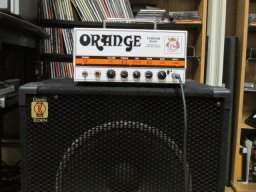
The whole point many of us are trying to make: they provided a certain metric. A number, with units assigned to it. However, the amp did not meet that published metric. It's not a case of saying "well it sounds just as loud as...." because they gave a specific metric, a measurable quantifiable unit.
If they had advertised it as "a 250 watt RMS amp that sounds like a 750 watt amp" then that's permissible--we could accept EQ or compression or transient-shaping or whatever, kinda fudging but hey they would've been upfront about it. When someone specifically says "this amp does 'X' of units 'Y' " and it doesn't, any other "after the fact" comparisons--"it's just as 'blank' though" are irrelevant to the reality that the manufacturer specifically claimed 'X' of units 'Y' .
Maybe the amp sounds great. Maybe it is bulletproof and 100% reliable. Maybe it's loud as all get out. Maybe its users are happier than a clam. For us engineers and tech geeks, though, we live in a world where numbers matter. 750 does not equal 250. Q.E.D.
If they had advertised it as "a 250 watt RMS amp that sounds like a 750 watt amp" then that's permissible--we could accept EQ or compression or transient-shaping or whatever, kinda fudging but hey they would've been upfront about it. When someone specifically says "this amp does 'X' of units 'Y' " and it doesn't, any other "after the fact" comparisons--"it's just as 'blank' though" are irrelevant to the reality that the manufacturer specifically claimed 'X' of units 'Y' .
Maybe the amp sounds great. Maybe it is bulletproof and 100% reliable. Maybe it's loud as all get out. Maybe its users are happier than a clam. For us engineers and tech geeks, though, we live in a world where numbers matter. 750 does not equal 250. Q.E.D.