I see your point but I would rather have a vintage Peavey I can play. I've had Cirri before and none of them had the problems this one does. Anyway, it's not as if it was a 60s P bass where you would have to put up with dead notes.My point is if it comes down to keeping a vintage peavey or finding a replacement, live with the vintage Peavey because the replacement will probably disappoint.

Enjoy the benefits of a premium membership!
Upgrade Account
-
TalkBass has been independent since 1998. Add your voice.
Create a free account to reply to discussions, view embedded media, and browse with fewer display ads.
Join free Log in
Want zero display ads or expanded classifieds tools? Compare plans.
You are using an out of date browser. It may not display this or other websites correctly.
You should upgrade or use an alternative browser.
You should upgrade or use an alternative browser.
U.S. Peavey Club
- Thread starter Soundchaser11460
- Start date
-
- Tags
- club
More options
Who Replied?
I hear you. I was just trying to make a clever point, in general, about Peaveys. But, I totally get it. At the end of the day, we want something we can play and not worry about.

I love all 5 of my vintage Peavey Basses. I shudder to imagine what equivalent quality replacements would cost these daze.

I agree, have you contacted that TB'er and let them know the condition of the bass?I just purchased it from a fellow TBer. I don't think I should have to just live with it.

@marinesci you are member #462Dude. I'd take one in each color.
Finally got around to getting photos of the previously referenced '87 Furys. The white body has the satin finish neck; the burst is gloss. Not sure if that comes through in the photos. In the neck closeups, the first one is the gloss.
Welcome to the club!!!
@KJMO you are member #463Here's all my Peaveys. Threaveys.
View attachment 5218830 View attachment 5218831 View attachment 5218834 View attachment 5218838
The last pic is the Patriot where the neck for the foundation originated. I was effing with it pretty heavily and had a dual-coil jazz pickup in it. The original pick guard is pretty thrashed and obviously didn't fit the jazz pup ;-)
The Foundation looks eerily like 58kite's. I got the body from someone who bought one of those "lots" of bass parts from Peavey in Meridian, MS. I think Peavey sprayed it the wrong color (red?), then resprayed it white, and it came out a little greenish. It was obviously never sold. I like it a lot though and use it in my 80's band.
I never noticed the Fury doesn't have the bilaminate neck. It doesn't feel quite as good. The Axcelerator does have the bilaminate, which seems odd to me. My favorite is the Patriot/Foundation neck. It's seriously bunged up, thick gloss, hardly any fret left, but it plays ridiculously nicely.
Welcome to the club!!!
@8xlaxx you are member #464Foundation falls into that crazy, gray zone on what to do with it,... is it worthy (refinish)?
Any/All feedback appreciated. Local CL find, price paid = buck seventy-five.
Included a black, light-weight material, no-name, un-padded gig bag. Seller was pro & cordial, a hobbyist who restored it to its current state. He secured it in a storage locker clean-out. That's all...
View attachment 5221700
View attachment 5221701 View attachment 5221702 View attachment 5221703 View attachment 5221705 View attachment 5221706 View attachment 5221707 View attachment 5221708 View attachment 5221709
Be sweet to see this instrument in Arctic White or Fender Olympic White that @58kites mentioned above. Anyone else have an alternative, 'conservative' color they would suggest if it is decided to go the refinish route? Ears are open,... Thank you in advance!
Welcome to the club!!!
(and I hope you didn't eat too much)
Seems to cool! Return in process!I agree, have you contacted that TB'er and let them know the condition of the bass?
For you experienced folks this is probably a no brainer. But for me it is the difference between choosing to focus on a 4, 5, or 6 string. My questions are exactly how useful are low B and high C strings? For example, would you use a low B string to play a Donald Dunn line if it makes shifting easier? Would you use a high C to play a walking bass line if it makes shifting easier? I know Donald Dunn didn't need 5 strings and Jaco or Ron Carter didn't need more than 4 but this isn't about not having these options to choose from when you were coming up, i.e., not readily available or desired at the time or for a particular style of music.

I'm all in on 5ers. They cover everything I want/need in playability and sonically. For me 5ers just make certain things easier to do. The US Millennium's have been my go to for over 20 years for several reasons. Great looks, great tone, perfect balance, perfect ergonomics for my body and hands, etc.For you experienced folks this is probably a no brainer. But for me it is the difference between choosing to focus on a 4, 5, or 6 string. My questions are exactly how useful are low B and high C strings? For example, would you use a low B string to play a Donald Dunn line if it makes shifting easier? Would you use a high C to play a walking bass line if it makes shifting easier? I know Donald Dunn didn't need 5 strings and Jaco or Ron Carter didn't need more than 4 but this isn't about not having these options to choose from when you were coming up, i.e., not readily available or desired at the time or for a particular style of music.


Little use to me.My questions are exactly how useful are low B and high C strings?
I did go BEAD for a while, also tried Rotos Drop Zone F#; bad idea

I got on better tuned DGCF.
Yeah, the thing I really like about 5ers is the symetry. From the B to G any Major arpeggio can be played root to root which comes in handy for walking bass lines.I'm all in on 5ers. They cover everything I want/need in playability and sonically. For me 5ers just make certain things easier to do. The US Millennium's have been my go to for over 20 years for several reasons. Great looks, great tone, perfect balance, perfect ergonomics for my body and hands, etc.
View attachment 5225638
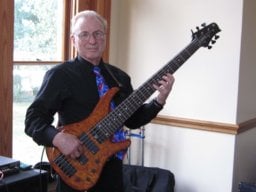

I love 5ers. IF I had a gun to my head and had to choose one type of bass, it would be a 5.
I use the low B as needed, mostly for the notes below E, but sometimes up the neck to save some sliding around to hit notes. The 5er is also great for those times you are at a jam and you need to switch it up to match a guitarist in Eb tuning. It's nice to just use the low B and slide down a fret vs a full retuning.
The high C of a 6er is not in my domain, though.
I use the low B as needed, mostly for the notes below E, but sometimes up the neck to save some sliding around to hit notes. The 5er is also great for those times you are at a jam and you need to switch it up to match a guitarist in Eb tuning. It's nice to just use the low B and slide down a fret vs a full retuning.
The high C of a 6er is not in my domain, though.
Last edited:

Anyone playing through a VK100? I have a chance to get one for $200 and I play funeral doom. So, I figure an all tube head would be good to use but short on funds.

- Apr 18, 2008
- 16,015
- 1
- 31,728
- Disclosures
- I'm highly opinionated and extremely self-assured
Any P/J ish case should work. Check Guitar Center if there is one in your area and ask specifically for a used Peavey case first. The bullet nosed or flat hard case will work. Check Face book marketplace too. Good luck.Need a hard case for said bass in post #28677.
An orphan Peavey case might be difficult to find.
Any recommendations for a decent, used or new off-brand case that would fit my '95 Foundation?
Yep. I also use an 80s era brown Ibanez case with my Foundriot. The Foundation is pretty easy to case with its flat geometry and standard shaped body.Any P/J ish case should work. Check Guitar Center if there is one in your area and ask specifically for a used Peavey case first. The bullet nosed or flat hard case will work. Check Face book marketplace too. Good luck.

For you experienced folks this is probably a no brainer. But for me it is the difference between choosing to focus on a 4, 5, or 6 string. My questions are exactly how useful are low B and high C strings? For example, would you use a low B string to play a Donald Dunn line if it makes shifting easier? Would you use a high C to play a walking bass line if it makes shifting easier? I know Donald Dunn didn't need 5 strings and Jaco or Ron Carter didn't need more than 4 but this isn't about not having these options to choose from when you were coming up, i.e., not readily available or desired at the time or for a particular style of music.
B -- super useful with 2 conditions
1-Tasteful --- used for build dynamics and not riding an open B all day long
2-Gear ---- some gear just will not handle a B.
Over the past like 10 years, gear has gotten a ton better... low end response and availability are now reality.
I play a ton of urban gospel (think CeCe Winans etc)... often the key is Eb or Bb
It's also useful in the country scenes to have a B string (can use a C or D..... many guys detune half step to Eb)
----
My upright... my 6 stringers (everything except my tele) are all B-B tuned..
... the upright is BEAD... so is my USA P... so is my stealth fury
I've never really gelled with a 6 string (was "almost" good enough - but not clear enough to chord with)
I gig often with a 7 string... it's rare and tough to find an extended range that eloquently morphs from bass to guitar.
----
I'll say 5 or 7 is easier with fewer position jumping etc.
I'll go on a limb and say the TL6 was the best 6er Peavey put out.


