• TalkBass has been independent since 1998. Add your voice.
    Create a free account to reply to discussions, view embedded media, and browse with fewer display ads.
    Join freeLog in
    Want zero display ads or expanded classifieds tools? Compare plans.

U.S. Peavey Club

By neck stability, I’m referring to how steady the neck is while playing it, I’m not referring to the integrity of the neck or the construction of the bass.
Ahhh, I know what you mean now. Yes, a heavy bass does seem more anchored. I am currently enjoying how lively the light ones are, though. They feel like a box of angry hornets, strapped to me. Every note resonates through the body and neck, it’s incredible!
 
Ahhh, I know what you mean now. Yes, a heavy bass does seem more anchored. I am currently enjoying how lively the light ones are, though. They feel like a box of angry hornets, strapped to me. Every note resonates through the body and neck, it’s incredible!
Thanks for clarifying, I used the wrong word, anchor is what I meant.
Please help with another issue. I’m getting string noise or “clack” I call it, the entire length of the fretboard particularly on the E string and progressively less on the other strings. I can’t hear it through the amp, but I use this Fury primarily for practice without amplification so the clack is annoying and interferes with hearing the tone of the notes.

It’s not the bass. The frets were just leveled, the relief is at .012”, and I’ve set the string height at 1.5mm then 1.75mm with little change. Also my Foundation which was professionally and fully refurbished does the same thing. The Foundation has GHS Boomers.

Tl;dr version: Is “clack” the proper term for what I’m describing? And what roundwound strings can I use to reduce/eliminate the clack, if any? I want to try Pure Blues but not if they’re going to clack.
Thank you.
 
  • Like
Reactions: Brocephus
Thanks for clarifying, I used the wrong word, anchor is what I meant.
Please help with another issue. I’m getting string noise or “clack” I call it, the entire length of the fretboard particularly on the E string and progressively less on the other strings. I can’t hear it through the amp, but I use this Fury primarily for practice without amplification so the clack is annoying and interferes with hearing the tone of the notes.

It’s not the bass. The frets were just leveled, the relief is at .012”, and I’ve set the string height at 1.5mm then 1.75mm with little change. Also my Foundation which was professionally and fully refurbished does the same thing. The Foundation has GHS Boomers.

Tl;dr version: Is “clack” the proper term for what I’m describing? And what roundwound strings can I use to reduce/eliminate the clack, if any? I want to try Pure Blues but not if they’re going to clack.
Thank you.

Pretty hard/impossible to remove the clack when you're playing unamplified. Between the build and bass frequencies, you have to play harder to get sound - hence 'clack'. Really recommend getting a headphone amp at least. Either that or get an actual acoustic bass. Will drive yourself crazy - and potentially hamper your ability/fun - basing your tone on no-amplifier.
 
  • Like
Reactions: MCF
I’d need a video to hear and see what you’re calling clack.
File will not upload... m4a extension???

But it sounds like a metal to metal clack, which I understand happens when metal collides with metal, but it seems much more pronounced with the brass alloy type frets as opposed to silver nickel frets. Just thought there might be a better string to reduce the clack.
 
If you are hearing the noise when you play a certain string, try raising the next lower string. For instance, if you hear the noise when you play the A string raise the E string. See if that works.
Thanks for the advice. The problem appears to be a bad E string. Perceptible less tension on the E and a clunk sound displacing the clack sound at the 15th fret. I replaced with a used string and it seems ok.
 
  • Like
Reactions: Chuck M
Hey guys, I had some questions about size/spacing/compatibility, concerning replacement tuners for my old Asian-made Milestone II.
As discussed earlier, I found that I'm missing the big screw that holds the gear on the tuner, but I've since also noticed that there's a spacer plate under the gears, that is also missing on this same tuner.
So now I'm thinking about just replacing it (or them) entirely. My attempt to find an exact match has fallen flat, so now I'm looking into a/some cheap replacements (like Squier or MIM).
I'm wondering how close a fit these would be? I found some pretty inexpensive MIM tuners on Reverb and ebay (same vendor), but their listed dimensions sound almost microscopic, compared to the ones on my Peavey.
Seems there are some wires crossed somewhere.
So, again, you get the idea (I think :D), any help is much appreciated.....
 
Thanks Blair (may I call you Kodiak ? :D) Those dimensions are pretty much what I got with my trusty tape measure (within a fraction of a mm, so it's likely my fault for any variance).
I realize I gotta deal with what I get, but I was wondering about the tiny screw holes in the mounting plates. Are those dimensions generally standardized, or are they all over the map, and I'd be looking at filling and re-drilling some holes, with most any replacement tuners?
 
  • Like
Reactions: kodiakblair
Are those dimensions generally standardized,
Those Wilkinson tuners have too large a back plate. The tuners you want have 19mm space at front 22m at back with 33mm between them.

Good news is generic ones like these fit that footprint.

[This invalid link has been removed]

Best get some glue and toothpicks as there will be a slight variation.
 
  • Like
Reactions: Brocephus
If you are hearing the noise when you play a certain string, try raising the next lower string. For instance, if you hear the noise when you play the A string raise the E string. See if that works.
I’m starting to think it’s a setup problem. I put another set of new strings on and the E is still clanky upon hitting the fret with buzz when lifting my finger off the fret. The micro tilt screw is backed out all the way thus having no shimming effect. The saddles are high. The neck appears straight and several relief adjustments between .012 and .015 seem to have little effect except requiring another saddle adjustment. String height adjustments between 1.25mm and 1.75mm don’t help but it seems higher is better although more difficult to play.
Also, the nut slot seems low .010 but the open E string does not buzz. A capo on the first fret does not help much.
Sounds like its time for a visit to the repair shop. Thanks for your help.
 
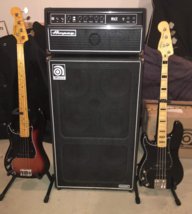
Just scored a second lefty Foundation for cheap on EBay! Same black body (Ferrites etc.) only this one has a rosewood neck. I haven’t received it yet but the body on the new one appears dramatically better than my current one (mine has a big gouge on the front that looks more “damaged” than “roadworn” and some other abuse issues). The plan is to swap my sweet maple board neck onto this better body and live happily ever after. Will post a side by side pic when it arrives!