
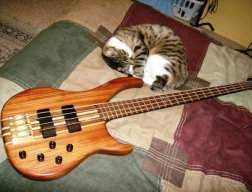
How are these Millennium 4 AC basses , slim fast neck ? decent quality ? Thanks
I have the 5 string version of that. I would say it is an excellent value for what I paid. I think its very comfortable and easy to play.

TalkBass has been independent since 1998. Add your voice.
Create a free account to reply to discussions, view embedded media, and browse with fewer display ads.
Join free Log in
Want zero display ads or expanded classifieds tools? Compare plans.
How are these Millennium 4 AC basses , slim fast neck ? decent quality ? Thanks

 The fellas are right IMO,it's not such a big deal on 4 strings. 5s and 6s would be a different matter.
1" is only half the distance from the nut to the first fret, and that 1" is distributed/spread across the entire length of the strings. Then realize that most 35" scale basses have the bridge shifted further toward the end of the body, to allow for the extended scale. This makes the "money" frets fall where they would normally be on a 34" bass. Only people that struggle with the lower note spread, or people that like to do string crossing patterns down low, would feel the few millimeter difference.I'd no idea I was playing a 35" scale bass until somebody told me
 Most of us know it takes a wee bit time settling into playing a different bass,Mr 6ft 2" just blamed the 1" then swore off 35" scale for life
Read the post I just wrote. Millenium 4s probably have comfortable string spacing...doubt they're wide 19mm models. You should be fine. String spacing is way more of a catalyst than people realize, not scale length.
1" is only half the distance from the nut to the first fret, and that 1" is distributed/spread across the entire length of the strings. Then realize that most 35" scale basses have the bridge shifted further toward the end of the body, to allow for the extended scale. This makes the "money" frets fall where they would normally be on a 34" bass. Only people that struggle with the lower note spread, or people that like to do string crossing patterns down low, would feel the few millimeter difference.
I'm tall with large hands and long fingers. But, I choose to spend most of my time between frets 4 and 12. For instance, I find the tone of a 7th fret E (A string) to be more appealing (fatter) than the 2nd fret D string. So, I tend to go up the neck rather than play the A, D, and G strings between frets 1 and 4.



WOW, GC Used had a Randy Jackson for $249 ; I went to buy it and it has already been sold. Smart buyer...
View attachment 3742841
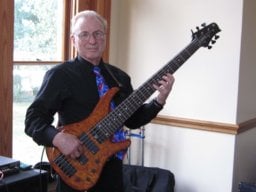
I really want to play it! That chrome logo is cool!

Lol!WOW, GC Used had a Randy Jackson for $249 ; I went to buy it and it has already been sold. Smart buyer...
View attachment 3742841
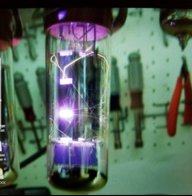
Wow, that's really clean. I have reoccurring nightmares about amps like this where I cant find replacement parts and the customer is mad.
I didn't even know Peavey was around in the 60's ! That amp is 1968. Man, the music that came out in '67-'68 was AMAZING !Wow, that's really clean. I have reoccurring nightmares about amps like this where I can't find replacement parts and the customer is mad.
Wikipedia says "Hartley Peavey founded Peavey Electronics in 1965, having built his first amplifier in 1957."I didn't even know Peavey was around in the 60's ! That amp is 1968. Man, the music that came out in '67-'68 was AMAZING !

GC Used had a Bquad and before I could even check it out it was SOLD !!!


