• TalkBass has been independent since 1998. Add your voice.
    Create a free account to reply to discussions, view embedded media, and browse with fewer display ads.
    Join freeLog in
    Want zero display ads or expanded classifieds tools? Compare plans.

Unusual Rock Trivia?

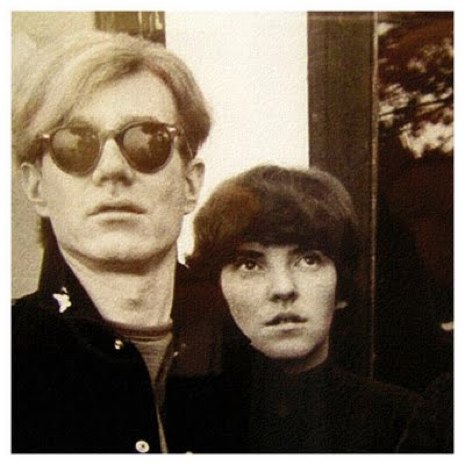
Maureen Ann "Moe" Tucker is an American musician and singer who was the drummer for the New York City-based rock band the Velvet Underground. The band's original percussionist, Angus Maclise, had left in November 1965 because he felt the band sold out when it took a paying gig.

Tucker was drafted because Velvets guitarist Sterling Morrison remembered her as the younger sister of his high school friend, Jim, who also played the drums.

mohol.jpg


Tucker's style of playing was unconventional. She played standing up rather than seated (for easier access to the bass drum), using a simplified drum kit of tom toms, a snare drum and an upturned bass drum, playing with mallets rather than drumsticks. She rarely used cymbals; she claimed that since she felt the purpose of a drummer was simply to "keep time", cymbals were unnecessary for this purpose and drowned out the other instruments.

Rock critic Robert Christgau said of Tucker, "Mo was a great drummer in a minimalist, limited, autodidactic way that I think changed musical history. She is where the punk notion of how the beat works begins."
 
Woody Woodmansey, David Bowie's former drummer and the last remaining Spiders of Mars member recently spoke about his experiences of working with Bowie on his iconic "The Rise and Fall of Ziggy Stardust and the Spiders from Mars" studio album and subsequent tour.
upload_2022-8-26_1-38-11.jpeg

Released in 1972, "Ziggy Stardust" became David Bowie's breakthrough album and served as a pivotal point in his development as an artist. Just as songs like "Starman", "Moongage Daydream", and "Suffragette City" saw Bowie come up with a particularly successful music formula, so did the persuasiveness with which he portrayed the titular character make swathes of fans instantly fall in love with the quirky, androgynous alien.

When we finished [the album], we were like, 'Wow, this is really cool, the record company are gonna freak over this.' And we got the message back saying, 'We're not gonna release the album.' 'Why not?' 'Because you haven't got a single.' It was like, 'You're joking!' Do you know what I mean?

Despite the lighting-fast recording process, the band knew they were onto something great, but Bowie's record label wasn't as impressed initially - and according to the drummer, it was because they felt that "Ziggy Stardust" lacked a proper lead single. As a result, Bowie would write the album's hit single "Starman" over the course of a weekend instead. He called us in and said, 'I've just written this,' and was like, 'That'll do it'.

“Ziggy Stardust" was famously met with a lukewarm response upon its release, and Woodmansey says that the audiences on the very first tour dates were equally passionless. However, the Ziggy Stardust hype eventually did start spreading like a wildfire.

Last Surviving 'Spider of Mars' Opens Up About Ziggy Stardust Gradually 'Taking Over' David Bowie on Tour
 
Donald Thomas Scholz (born March 10, 1947) is an American musician. He is the founder, main songwriter, primary guitarist and only remaining original member of the rock band Boston. He has appeared on every Boston album.

Scholz is an MIT-trained engineer who designed and built his own recording studio in an apartment basement in the early '70s. A rock fan throughout his teen years, Scholz began writing songs while earning his master's degree at MIT.

After graduating from MIT with a Masters in Engineering, he landed an engineering job at Polaroid, and used his salary to construct a recording studio in his basement, along with financing demo tapes at pro studios for the music he was making.

As Scholz began to kick out the jams in his new space, he found that much of the gear available did not achieve that sound he craved. So, like any engineer that builds his own recording studio, he went about building his own effects and guitar devices as well!

“When I put my own studio together, I wanted to have a place that I might be able to go and get my ideas down on tape. Once I started that, I discovered that I had to build devices to create certain sounds that I was looking for.”

The first Boston album was mostly recorded in his basement studio, mostly using devices he designed and invented.
R.08b5ff55788467c80e454893ce6797a6

After the success of Boston, he founded Scholz Research & Development, Inc. to develop and market his inventions, many under the Rockman brand. Scholz holds several patents related to his work at SR&D over the years.

He was described by AllMusic as an "un-rock n' roll" figure who did not enjoy the limelight of being a performer, preferring to concentrate on music, production, and inventing new electronic equipment. In more recent years, he has dedicated much of his money and time to charitable work.
 
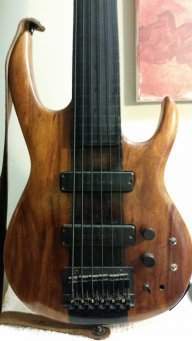
Stanley Clarke regarding his discovery of Alembic.

“I got a Gibson EB-O with black strings on it, I don’t know what they were, but they sounded dull, man. I played it in early Return to Forever, too, until Rick Turner came to a gig in San Francisco and politely said, “You’re a really good player, but your sound sucks.” Said it just like that! I was like, “Who the hell is this guy?” But, me and Lenny White, the drummer, talked to him more. We appreciated that he was so bold. Eventually, he said, “I have something…” and he went to his car and brought back one of the first Alembic basses. I played that thing, and it was like night and day; I could actually hear the notes I was playing. So, we gathered a bunch of money… Rick wasn’t there to sell it, but we were aggressive. I think we gave him $1,600, which was a lot of money at that time. He said, “Man, this cost me two grand to make.” (laughs) And it was such a great addition to Return to Forever. It changed our sound because the low-end up and everything was very clear. I was in heaven, man”.
8DA67F15-088D-4654-BC6D-A22FF9976571.jpeg
 
Last edited:
Stanley Clarke regarding his discovery of Alembic.

“I got a Gibson EB-O with black strings on it, I don’t know what they were, but they sounded dull, man. I played it in early Return to Forever, too, until Rick Turner came to a gig in San Francisco and politely said, “You’re a really good player, but your sound sucks.” Said it just like that! I was like, “Who the hell is this guy?” But, me and Lenny White, the drummer, talked to him more. We appreciated that he was so bold. Eventually, he said, “I have something…” and he went to his car and brought back one of the first Alembic basses. I played that thing, and it was like night and day; I could actually hear the notes I was playing. So, we gathered a bunch of money… Rick wasn’t there to sell it, but we were aggressive. I think we gave him $1,600, which was a lot of money at that time. He said, “Man, this cost me two grand to make.” (laughs) And it was such a great addition to Return to Forever. It changed our sound because the low-end up and everything was very clear. I was in heaven, man”.
View attachment 4793814
Great trivia. I had no idea Stanley Clark helped form Alembic Basses!
$1600 was a wise investment.
 
Great trivia. I had no idea Stanley Clark helped form Alembic Basses!
$1600 was a wise investment.
Stanley was the right player for Rick Turner to approach at the right time. A match made in heaven. :thumbsup:

I almost got one myself (a used John Entwistle model) back in ‘84, but decided against it. It sounded great, but couldn’t shine up to the body shape.
 
Stanley was the right player for Rick Turner to approach at the right time. A match made in heaven. :thumbsup:

I almost got one myself (a used John Entwistle model) back in ‘84, but decided against it. It sounded great, but couldn’t shine up to the body shape.
I’m sure they were a lot less expensive in ‘84 but wow the prices online now are insane!
upload_2022-8-26_11-59-13.jpeg
 
On this day in history, August 29, 1966, the Beatles played their last live paid concert
Angelica Stabile
Mon, August 29, 2022 at 12:02 AM

The Beatles came together for their final live performance on this day in history, August 29, 1966.

The concert at Candlestick Park in San Francisco was never announced as the band’s last dance, but there was plenty of speculation that the boys were looking to call it quits, according to The Beatles Bible.

Although the Fab Four made a surprise appearance on the rooftop of the Apple building in London on Jan. 30, 1969, Ringo Starr wrote in an anthology that it was clear the Candlestick Park performance would be the band's official finale.

"There was a big talk at Candlestick Park that this had got to end," Starr wrote in the anthology.

"At that San Francisco gig it seemed that this could possibly be the last time, but I never felt 100% certain till we got back to London."

Starr revealed that bandmate John Lennon was itching to give up more than the others.

"He said that he’d had enough," he wrote.

Even though The Beatles have been recognized all over the globe — including in the Rock and Roll Hall of Fame — as one of the most influential bands of all time, the group’s final performance was not particularly show-stopping.

While the park's capacity was 42,500 people, only 25,000 tickets were sold, according to The Beatles Bible, which left large gaps in seating sections.

The Beatles’ fee to play was about $90,000 — while fans paid $4.50 to $6.50 per ticket.

f907c8f3ae6d4453b67b0195216728c8

The Beatles pull up to perform at Candlestick Park in San Francisco on Aug. 29, 1966. Bob Campbell/San Francisco Chronicle via Getty Images
The show turned out to be a financial loss for promoter Tempo Productions, due to low ticket sales and the arrangement that 15% of sales would go to the city of San Francisco.

Candlestick Park was originally the home of Major League Baseball’s San Francisco Giants.

The stage was located on the field, just behind second base. It stood five feet high.

The Aug. 29 show began at 8 p.m., starting with supporting acts The Remains, Bobby Hebb, The Cyrkle and the Ronettes.

The show’s emcee, "Emperor" Gene Nelson of KYA 1260 AM radio, described the August night as "cold, foggy and windy" in the book "The Beatles Off the Record" by Keith Badman.

2fd03aaee0aa9b8cac11657cad159f30

A poster advertising The Beatles' final concert at Candlestick Park in San Francisco, California, on Aug. 29, 1966. GAB Archive/Redferns
"The funniest thing this night was one of the warm-up acts, Bobby Hebb. He stood up on the stage at Candlestick Park, with the fog, and the wind blowing, and he was singing ‘Sunny’!" he said.

Nelson remarked that emceeing the event was difficult, especially since The Beatles were "taking their time" backstage.

"The dressing room was chaos," he said. "There were loads of people there. The press tried to get passes for their kids and the singer Joan Baez was in there. Any local celebrity, who was in town, was in the dressing room."

"They were having a party in there. They were having a perfectly wonderful time, while I was freezing my buns off on second base!"

854d4c29ea4d444ff184b6422dc36bca

George Harrison, center, Ringo Starr, partially obscured, and the rest of The Beatles walk onto the infield of San Francisco's Candlestick Park for their last paid public concert on Aug. 29, 1966. Robert Stinnett/Oakland Tribune; Digital First Media Group/Oakland Tribune via Getty Images
The band finally hit the stage at 9:27 p.m. and played an 11-song setlist, according to The Beatles Bible.

This included the tracks "Rock and Roll Music," "She’s a Woman," "If I Needed Someone," "Day Tripper," "Baby’s in Black," "I Feel Fine," "Yesterday," "I Wanna Be Your Man," "Nowhere Man," "Paperback Writer" and "Long Tall Sally."

As the group realized the performance would be their last, Lennon and McCartney brought a camera on stage to document the moment.

They took pictures of the crowd and of themselves in selfie-style — well ahead of their time.

In "The Beatles Off The Record," George Harrison recounted setting up the camera with a "fisheye, wide-angle lens" on top of an amplifier.

b36b89cf94e13d750a5e26b02908e8f0

Police officers clear the field of enthusiastic fans as The Beatles perform at Candlestick Park, San Francisco, California, on Aug. 29, 1966. Bettmann/Contributor via Getty Images
"Ringo came off the drums, and we stood with our backs to the audience and posed for a photograph, because we knew that was the last show," Harrison said.

McCartney was set on fully memorializing the moment, asking Beatles press officer Tony Barrow to capture the concert on audio cassette.

"I remember Paul, casually, at the very last minute, saying, ‘Have you got your cassette recorder with you?’ and I said, ‘Yes, of course,’" Barrow said in "The Beatles Off the Record."

"Paul then said, ‘Tape it, will you? Tape the show,’ which I did."

Barrow went on to describe the performance as "nothing special" in comparison to other shows, except for some extra musical ad-libs.

Barrow recorded 30 minutes of the show on one side of the tape, which cut off during the last song, "Long Tall Sally."

Only two copies were made — one for McCartney and one for Barrow — but bootleg recordings have been widely surfaced since.

"If you hear a bootleg version of the final concert that finishes during ‘Long Tall Sally,’ it must have come either from Paul’s copy or mine," Barrow wrote in his book "John, Paul, George, Ringo and Me."

"But we never did identify the music thief!"
 
On this day in history, August 29, 1966, the Beatles played their last live paid concert
Angelica Stabile
Mon, August 29, 2022 at 12:02 AM

The Beatles came together for their final live performance on this day in history, August 29, 1966.

The concert at Candlestick Park in San Francisco was never announced as the band’s last dance, but there was plenty of speculation that the boys were looking to call it quits, according to The Beatles Bible.

Although the Fab Four made a surprise appearance on the rooftop of the Apple building in London on Jan. 30, 1969, Ringo Starr wrote in an anthology that it was clear the Candlestick Park performance would be the band's official finale.

"There was a big talk at Candlestick Park that this had got to end," Starr wrote in the anthology.

"At that San Francisco gig it seemed that this could possibly be the last time, but I never felt 100% certain till we got back to London."

Starr revealed that bandmate John Lennon was itching to give up more than the others.

"He said that he’d had enough," he wrote.

Even though The Beatles have been recognized all over the globe — including in the Rock and Roll Hall of Fame — as one of the most influential bands of all time, the group’s final performance was not particularly show-stopping.

While the park's capacity was 42,500 people, only 25,000 tickets were sold, according to The Beatles Bible, which left large gaps in seating sections.

The Beatles’ fee to play was about $90,000 — while fans paid $4.50 to $6.50 per ticket.

f907c8f3ae6d4453b67b0195216728c8

The Beatles pull up to perform at Candlestick Park in San Francisco on Aug. 29, 1966. Bob Campbell/San Francisco Chronicle via Getty Images
The show turned out to be a financial loss for promoter Tempo Productions, due to low ticket sales and the arrangement that 15% of sales would go to the city of San Francisco.

Candlestick Park was originally the home of Major League Baseball’s San Francisco Giants.

The stage was located on the field, just behind second base. It stood five feet high.

The Aug. 29 show began at 8 p.m., starting with supporting acts The Remains, Bobby Hebb, The Cyrkle and the Ronettes.

The show’s emcee, "Emperor" Gene Nelson of KYA 1260 AM radio, described the August night as "cold, foggy and windy" in the book "The Beatles Off the Record" by Keith Badman.

2fd03aaee0aa9b8cac11657cad159f30

A poster advertising The Beatles' final concert at Candlestick Park in San Francisco, California, on Aug. 29, 1966. GAB Archive/Redferns
"The funniest thing this night was one of the warm-up acts, Bobby Hebb. He stood up on the stage at Candlestick Park, with the fog, and the wind blowing, and he was singing ‘Sunny’!" he said.

Nelson remarked that emceeing the event was difficult, especially since The Beatles were "taking their time" backstage.

"The dressing room was chaos," he said. "There were loads of people there. The press tried to get passes for their kids and the singer Joan Baez was in there. Any local celebrity, who was in town, was in the dressing room."

"They were having a party in there. They were having a perfectly wonderful time, while I was freezing my buns off on second base!"

854d4c29ea4d444ff184b6422dc36bca

George Harrison, center, Ringo Starr, partially obscured, and the rest of The Beatles walk onto the infield of San Francisco's Candlestick Park for their last paid public concert on Aug. 29, 1966. Robert Stinnett/Oakland Tribune; Digital First Media Group/Oakland Tribune via Getty Images
The band finally hit the stage at 9:27 p.m. and played an 11-song setlist, according to The Beatles Bible.

This included the tracks "Rock and Roll Music," "She’s a Woman," "If I Needed Someone," "Day Tripper," "Baby’s in Black," "I Feel Fine," "Yesterday," "I Wanna Be Your Man," "Nowhere Man," "Paperback Writer" and "Long Tall Sally."

As the group realized the performance would be their last, Lennon and McCartney brought a camera on stage to document the moment.

They took pictures of the crowd and of themselves in selfie-style — well ahead of their time.

In "The Beatles Off The Record," George Harrison recounted setting up the camera with a "fisheye, wide-angle lens" on top of an amplifier.

b36b89cf94e13d750a5e26b02908e8f0

Police officers clear the field of enthusiastic fans as The Beatles perform at Candlestick Park, San Francisco, California, on Aug. 29, 1966. Bettmann/Contributor via Getty Images
"Ringo came off the drums, and we stood with our backs to the audience and posed for a photograph, because we knew that was the last show," Harrison said.

McCartney was set on fully memorializing the moment, asking Beatles press officer Tony Barrow to capture the concert on audio cassette.

"I remember Paul, casually, at the very last minute, saying, ‘Have you got your cassette recorder with you?’ and I said, ‘Yes, of course,’" Barrow said in "The Beatles Off the Record."

"Paul then said, ‘Tape it, will you? Tape the show,’ which I did."

Barrow went on to describe the performance as "nothing special" in comparison to other shows, except for some extra musical ad-libs.

Barrow recorded 30 minutes of the show on one side of the tape, which cut off during the last song, "Long Tall Sally."

Only two copies were made — one for McCartney and one for Barrow — but bootleg recordings have been widely surfaced since.

"If you hear a bootleg version of the final concert that finishes during ‘Long Tall Sally,’ it must have come either from Paul’s copy or mine," Barrow wrote in his book "John, Paul, George, Ringo and Me."

"But we never did identify the music thief!"
Interesting Trivia...especially The Beatles. Good stuff!

Do you have a copy of this photo? In "The Beatles Off The Record," George Harrison recounted setting up the camera with a "fisheye, wide-angle lens" on top of an amplifier.
 
I’m sure they were a lot less expensive in ‘84 but wow the prices online now are insane!
View attachment 4793981

Here is Alembic's current price list. Prices do not include custom features or upgraded woods, etc.

I've owned four Alembics: Seriess II (paid $2,400), Stanley Clark Deluxe (paid $3,200), Exploiter (paid $1,700), and Essence (paid ($1,000).
I wish I'd kept the first three. Can't afford one now - and I make more money than I did then.


upload_2022-8-30_14-0-1.png
 
You might not know who Terry Knight was but he had a very interesting career in music.

Terry Knight and the Pack (also known as The Pack and The Fabulous Pack) was an American garage rock band formed in Flint, Michigan in 1965. The band was signed to the Lucky Eleven label through most of its brief recording career. They produced one national hit with their cover version of the song, "I (Who Have Nothing)".


A former DJ, Knight was tenured in several radio stations before trying his hand at a solo musical career in 1964. As a DJ, he was an early advocate of The Rolling Stones, and imitated their style as soloist and later when he joined the band. He promoted the Stones heavily in North America and was known as the 6th Stone.

His initial efforts, which included an unsuccessful single and local performances, were not met with much success, so Knight persuaded a band known as The Jazz Masters to accept him as their frontman in 1965. The group, impressed by Knight's contacts in the music industry, accepted him into the band. Knight quickly took control of the band, first by changing their name to The Pack, inspired by The Shangri-Las' hit, "Leader of the Pack" and taking the group out of uniforms and switching to a more casual look similar to The Rolling Stones.

But before the band recorded their second single there were some major changes. The band name was changed to Terry Knight and The Pack reflecting the popularity and control the charismatic front man had in the group.

When the Rolling Stones played Cobo Hall in Detroit in late 1965, Terry Knight and The Pack was the opening act and played before the biggest crowd of their career. The band also opened for the Yardbirds at a big show at Flint’s I.M.A. in December of that year. It would be where they would hear the song that would become their first # 1 hit in Michigan..."I (Who Have Nothing)". The band left three garage rock classics before breaking up in 1967. Brownsville Station honored Knight and the Pack with a cover of the Knight-penned "Love, Love, Love, Love, Love" on their 1973 album Yeah!


Despite their inability to replicate their success, the band was a frequent attraction in the Michigan rock scene. The Pack was fronted by singer Terry Knight. In 1967 the group disbanded.

In 1967 Knight moved to New York, and attempted a solo career as a singer and staff producer with the Cameo-Parkway label, with limited success. He produced and wrote a handful of tracks by other artists, including garage band Question Mark & the Mysterians, and the easy-listening International Pop Orchestra. He also scored music for the 20th Century Fox noir film, The Incident (1967).

Knight traveled to London in 1968, hoping to become a recording artist or producer for the Beatles' newly formed Apple Records. Knight met Paul McCartney and was present at some of the recording sessions for the band's 1968 double album The Beatles (also known as the "White Album"), including the session when Ringo Starr temporarily quit the group. Knight was surprised to find the band members arguing with each other. He soon left London after he was unable to negotiate a contract with acceptable terms.

In early 1969, Knight secured a producer's contract with Capitol Records which also allowed him to release his own songs as a solo artist. He wrote and recorded a single, "Saint Paul", which may have contributed to the "Paul is dead" hoax that erupted late in the year. The cryptic lyrics of the song are generally thought to allude to Knight's failed relationship with McCartney and his apparent belief that the Beatles would soon break up.


The lyrics do not refer to death,but were interpreted by some fans as containing clues. The ending repeats the phrase "hey Paul" in an arrangement that sounds similar to the Beatles' song "Hey Jude". There are two versions, both in stereo. The full five-minute version contains a high-pitched voice singing lines from Beatles songs, including "Hello, Goodbye", "Lucy in the Sky with Diamonds" and "She Loves You", while the four-minute edit does not contain additional song excerpts.

Initial copies of the single listed Knight's company Storybook Music as the publisher of "Saint Paul". After Capitol received a cease and desist letter from the Beatles' music publisher, Maclen Music (the U.S. division of Northern Songs), the record was pulled from distribution.

A deal was then worked out between Knight and Maclen Music. About a month later, in May 1969, "Saint Paul" was reissued with a publishing credit by Maclen. The second pressing of the record also contained a note on the label that stated that "Hey Jude" was "used by permission". The reassignment of the publishing rights made Knights' song the only non Lennon–McCartney tune owned by Maclen. "Saint Paul" reached the top 40 in some cities in the upper Midwest region but failed to make the Billboard Hot 100 national chart. The fact that "Saint Paul" was re-published by Maclen was seen by some Beatle fans as evidence of a conspiracy involving Knight, the Beatles and the "Paul is dead" rumor.

Still working as a producer with Capitol, Knight renewed his connection with two former Pack members, guitarist Mark Farner and drummer Don Brewer. Knight encouraged the two to add a new bass player and become a "power trio" along the lines of Cream. The group quickly added former Mysterians bassist Mel Schacher and changed their name to 'Grand Funk Railroad'.

While becoming their manager-producer, Knight helped steer the trio to international fame, beginning with his getting them onto the bill—for free—at the 1969 Atlanta Pop Festival. This live performance convinced Capitol to sign the trio. For the next two years, Grand Funk Railroad became the most popular rock attraction in the United States despite mixed critical reviews that Knight exploited as part of their appeal. Knight racked up an unprecedented eight gold albums while simultaneously waging a war of words with Rolling Stone over the magazine's frequent pannings of Grand Funk.

His final contribution he also discovered and produced the Fort Worth, Texas group Bloodrock. Bloodrock opened for Grand Funk on the 1970 tour. Bloodrock 2 was their most successful album peaking at number 21 on the Billboard Pop Album Chart in 1971, mostly on the strength of their single "D.O.A.", which reached number 36 on the Billboard Hot 100 chart on March 6, 1971. "D.O.A." also gave the band considerable regional exposure throughout the Southwest and West, particularly in Texas and Southern California. "D.O.A." was probably the band's most well-known and well-remembered single. However, some radio stations would not play the song because of its explicit, gruesome description of fatal injury and the use of sirens, the latter out of concerns that the siren sound would confuse motorists. D.O.A is a graphic, morbid rock song which helped its sales for it’s shock value.


Knight was was accused by Grand Funk stealing money from their royalties and was also dropped from Capitol soon after the Grand Funk court actions were resolved and began his own label, Brown Bag Records, releasing albums and singles by Mom's Apple Pie, John Hambrick, Wild Cherry and Faith Band. None of them found commercial success and, in late 1973, Knight retired permanently from show business. He associated with super model Twiggy and raced cars with film star Paul Newman in the mid-1970s before becoming addicted to cocaine, which consumed him. By the 1980s he had straightened himself out, settling in Yuma, Arizona with his daughter Danielle. He melded into the community working in advertising sales for a weekly newspaper.

On November 1, 2004, Terry Knight was murdered at the age of 61. He was stabbed multiple times by his teenage daughter's boyfriend Donald A. Fair in their shared apartment in Temple, Texas, after Knight attempted to intercede in an argument over Fair's use of methamphetamine. Fair claimed he was high on methamphetamine at the time of the killing.

Terry Knight packed a lot of living in his short, storied life.
 
Last edited:
An excerpt from Bill Bruford’s autobiography about a recording session that he and Tony Levin did for guitarist Al Di Meola.

It's 1983, and Bruford and his King Crimson bandmate, bassist and Chapman Stick player Tony Levin had been hired by DiMeola to play on his latest album and had travelled to Caribou Ranch in Colorado for the session. They'd been told that DiMeola liked to start his sessions fairly late, so they arrived at the studio at midday as agreed in advance. No Al. They set up the drums and got ready to record. Still no Al. Bruford, who says that the grossest insult one musician can give another is to keep them waiting, is not amused. Nor is Levin.

Four hours later than agreed, just as Levin is wondering aloud how it might affect his otherwise sterling reputation as a session player if he were to just leave, DiMeola arrives and proceeds to small-talk with Bruford, Levin and the studio engineer while changing his guitar strings. Eventually, he starts to run through the songs he wants to record. Bruford sits at his kit, Levin sits silently in a corner, his bass still in its case. Bruford and DiMeola run through the songs, repeat a few tricky sections, discuss exactly what is needed. Eventually, they arrive at a fast run that Al wants the bass to play in unison with his guitar, so he urges Levin to, maybe actually get his bass out so he can play it once or twice before they record. Levin declines.

When it's time to record a take, Levin gets his Stick out and plugs in, not playing a note. They play, Levin plays his part flawlessly, tricky run and all, then overdubs a perfect double-track. The process begins again for a second song. Again, Levin plays and double-tracks his part perfectly.

It's getting late, and the agreed time for the session is over so Levin packs up his gear and heads for the door. Just then, the engineer somehow manages to erase a two-bar section of Levin's part. Suitably embarrassed, he begs Levin for five more minutes to re-record the missing part. Levin agrees, and again puts the part on tape flawlessly, packs up and makes for the door again.

Oh crap, says the engineer, we're two notes short of what I erased. Tony, can you just...

But he's out the door.

Now Al DiMeola is going to have to pay his engineer to review the tape of the session (and it *is* tape- this is 1983 and Pro-Tools is distant sci-fi fantasy) to find duplicates of those two notes, copy those sections of tape and splice them in to the gap.

Which is probably going to take like, four hours.
 
Last edited: