• TalkBass has been independent since 1998. Add your voice.
    Create a free account to reply to discussions, view embedded media, and browse with fewer display ads.
    Join freeLog in
    Want zero display ads or expanded classifieds tools? Compare plans.

Unusual Rock Trivia?

Back in the 1960s when Elton John was still playing as Reginald Dwight, he was in a band called Bluesology.

"Beyond dreadful!" That's how Sir Elton John describes "Come Back Baby," the debut single released by his band Bluesology in 1965. Even though he was barely 18, the young pianist then known as Reginald Dwight was already an old pro. Having learned to plink out tunes by ear at age three, he began his classical training just a few years later. As a teen he earned money playing a weekly residency at the Northwood Hills Hotel pub in the London suburb of Pinner "every Friday, Saturday, and Sunday for a whole year. And during that whole period, I don't think that I ever missed a gig," he recalled. "I used to sing Jim Reeves songs, Cliff Richard songs, anything that was popular."

Bluesology began as an offshoot of the Corvettes, a previous band formed with neighbor Stuart Brown around 1960. Brown and John composed the nucleus of Bluesology, which endured semi-regular lineup shifts but stayed loyal to the R&B sounds being spread across the capital by the likes of Alexis Korner, Cyril Davies and John Mayall. Later, inspired by brassy soul records on Stax and Volt, they augmented the lineup with a trumpet and saxophone. Eager to pursue music full time, John dropped out of school in March 1965, just weeks shy of his birthday. "As a semi-pro group we got quite a bit of work, and we were ambitious and dedicated," John recalled. Their rhythm & blues prowess earned them invitations to back American soul artists on their European tours, and much of the next 18 months was spent on the road accompanying acts like the Isley Brothers, Major Lance, and Patti LaBelle and the Bluebells.

Back in London, Bluesology were signed to Fontana Records, and John's "Come Back Baby" was recorded as a single. Despite repetitive lyrics, the song boasts a mature melody that floats over the moody piano chords like one of Smokey Robinson's Motown laments. Though he doesn't recall the song with any fondness (he once dismissed it as "beyond tragic"), John warmly recalled the momentous moment of hearing it on the radio for the first time: "I can remember sitting in the car and hearing the record being played on Radio Luxembourg and saying, 'Hey, that's me singing, folks!'"

Neither "Come Back Baby," or its follow-up, 1966's "Mr. Frantic" (which John later called "equally depressing") saw much action on the record charts, but Bluesology continued to play the most exclusive venues in London, including celebrity haunts like the Cromwellian, the Speakeasy, the Scotch of St. James and Sibylla's. "Everybody used to go to those clubs. I mean, we're talking about the mid-Sixties, so you'd get the Beatles and the Animals coming in." One of the notables was the groundbreaking British blues legend Long John Baldry, who had recently championed a young Rod Stewart in his group, Steampacket. Now defunct, he recruited Bluesology as his backing group.

Baldry's arrival signaled a number of personnel and stylistic shifts, and John began to feel his passions drifting elsewhere. Instead, he focused on session work (he played on several recordings by the Hollies) and his songwriting. In 1967, he answered a Liberty Records ad in the New Musical Express searching for new songwriting talent and was paired with a young poet named Bernie Taupin. By the end of the year he had left Bluesology for good, taking with him a new name borrowed from Baldry and saxophonist Elton Dean. "It was done on a bus going from London Heathrow back into the city, and it was done very quickly. So I said, 'Oh, Elton John. That's fine.'"


The Hudson Brothers
tb1274hudsonspu.jpg

Bill Hudson was married to Goldie Hawn and is the father of Kate Hudson ("Almost Famous", "Deepwater Horizon") and Oliver Hudson ("Rules of Engagement").
oliver-kate-hudson.jpg

Their first musical group, The New Yorkers, was named after the Chrysler automobile after the winning of a "battle of the bands"-type contest. In spring 1967 they released "When I'm Gone" (SCE-12190) on Scepter Records, following that in August 1967 with "Mr. Kirby" (SCE-12199) and then "Show Me the Way to Love" (SCE-12207) in autumn 1967. By October 1968, The New Yorkers had switched to Jerry Dennon's Pacific Northwest label Jerden Records and issued "Adrianne" (#906), following that up with "Land of Ur" (#908) in March 1969. Later in 1969 The New Yorkers also recorded "Lonely" (#7318) for Warner Bros. Records and "I Guess the Lord Must Be in New York City" (#32569) for Decca Records.

On Decca Records they changed their name to Everyday Hudson in early 1970, releasing "Love Is the Word" (#32634).

For the release in spring 1971 of "Love Nobody" on Lionel Records (L-3211), their name was shortened to Hudson. This name was also used in 1972 after switching to the newly re-activated Playboy Records, with the release of "Leavin' It's Over" (originally "Leave and It's Over", the song was mislabeled by Playboy, and it has never been corrected) (P-50001), Billboard Bubbling Under Chart #110. In 1973, Hudson signed with Elton John's record label named The Rocket Record Company and released "If You Really Need Me" (MCA-40141), which was recorded in France and produced by Bernie Taupin and mixed by Andy Scott. It was followed by "Sunday Driver" (MCA-40317).

Their first record release as The Hudson Brothers came in September 1974 with their chart record "So You Are a Star" on Casablanca Records (NES 0108; Billboard #21), followed by "Coochie Coochie Coo" (NES 816) in 1975, Bubbling Under Chart #108. They rebounded slightly that same year with "Rendezvous" (#26 U.S. Billboard Hot 100) from the Ba-Fa album. They returned to The Rocket Record Company for more 45 RPM charted songs in 1975 with producer Bernie Taupin, later switching to Arista Records in 1976. Yet another name change back to Hudson came in 1980 on Elektra Records.


They starred in "The Hudson Brothers Show", a TV variety hour Wednesday nights on CBS starting July 31, 1974 to August 28, 1974, followed by "The Hudson Brothers Razzle Dazzle Show" on CBS Saturday mornings, from September 7, 1974 to August 30, 1975, in a half-hour format and guest-starred on "The Love Boat". Video Service Corp. released the complete Razzle Dazzle series on DVD on June 17, 2008.

The three then starred alongside Robert "Bob" Monkhouse, a comedy actor best known in the United States for the "Carry On" franchise of comedy films, in "Bonkers!", a half-hour syndicated comedy show in 1978, produced in Britain by ATV (Jack Burns was its American producer) and distributed by ITC. They also starred in "Hysterical", a horror-comedy film released in 1983, and appeared together in the 1978 comedy film "Zero to Sixty".
 
What connection does the song "Timothy" by the Buoys have with Rupert Holmes, Chicago, Queen, Toto, Rufus, Richie Zito, and Ernie Watts?

The song "Timothy" was written by Rupert Holmes of "Escape (The Piña Colada Song)" and "Him" fame and he played piano on the song although he was not a member of the band. Jerry Hludzik and Bill Kelly were members of The Buoys and later formed a group called Dakota.
Danny Seraphine of Chicago produced and played drums on some Dakota records. One time Rufus member David "Hawk" Wolinski also co-produced Dakota records and drafted Rufus drummer, John Robinson, to play on Dakota's first self-titled album.

Long-time friend of Bill Kelly and Jerry Hludzik, Michael Stahl, who was working with Queen on their 1980 The Game Tour, managed to secure Dakota as the opening act for Queen on their 35-date tour.

Dakota's second album Runaway consisted of Jerry Hludzik and Bill Kelly on guitars and vocals, Danny Seraphine on drums and Rick Manwiller on keys. Several guest and session artists also appeared on the album, including guitarists Richie Zito and Paul Jackson, and bassist Neal Steubenhouse. Rolling Stones sax-player Ernie Watts, Chicago vocalist Bill Champlin, Chicago keyboardist Robert Lamm and Toto keyboardist Steve Porcaro have performed on Dakota albums.

Dakota should have been a more popular act but with the lack of record label promotion and airplay, they recorded several albums and a few minor singles that received little attention and the act is still together.


The Hudson Brothers

I have long believed that the very first time I saw a Rickenbacker 4001 bass was on The Hudson Brothers' Razzle-Dazzle Comedy Hour TV show circa 1974, and that it was being played by Mark Hudson (the mustachioed brother)

...but I can find absolutely no evidence of this on youtube or via Google searches! Did I imagine that whole thing? Anyone know what I'm talking about?
 
  • Like
Reactions: Novarocker
Timothy B. Schmit has the distinction of replacing the same bassist/vocalist, Randy Meisner, in two successful bands, Poco and Eagles.

Timothy was in a band called The New Breed that had one single, "Green Eyed Woman," which was released in 1965. Changing its name to Glad, the group recorded the album Feelin' Glad in 1968.

In 1968, Schmit auditioned for Poco but was turned down in favor of founding member Randy Meisner. When Meisner quit the band in 1970, Schmit replaced him on bass and vocals. In 1977, Schmit joined the Eagles after after the Hotel California tour, once again replacing Randy Meisner on bass/vocals after Meisner quit. Although the Eagles are thought of as a quintessential California band, Schmit is the only member of the group to actually be a native of California.

Apart from Poco and Eagles, Schmit has also appeared on songs by Firefall, Steely Dan, Andrew Gold, Bob Seger, Boz Scaggs, J.D. Souther, and many other acts. In addition, he has done solo work.


And he did a tour in Buffett's Coral Reefer Band. He was actually the one who coined the phrase "Parrot Heads" as Buffett's fans have come to be known.
 
Last edited:
I have long believed that the very first time I saw a Rickenbacker 4001 bass was on The Hudson Brothers' Razzle-Dazzle Comedy Hour TV show circa 1974, and that it was being played by Mark Hudson (the mustachioed brother)

...but I can find absolutely no evidence of this on youtube or via Google searches! Did I imagine that whole thing? Anyone know what I'm talking about?
Sorry, I was so young when that show was on that I didn't pay attention to the instruments at all. And any pictures I can find from the show has all three of them playing guitars, no basses. :(
 
In 1965, Dave Pell wanted to record songs based on music from recent TV commercials and release them on 45 RPM singles to see if he could get radio airplay and a hit. Previously, Liberty Records had used "The T-Bones" as a group name for instrumentals recorded by Los Angeles session musicians The Wrecking Crew, and told Pell to use it for his project. Pell used members of The Wrecking Crew and recorded "No Matter What Shape (Your Stomach's In)," a song based on music used in an Alka-Seltzer TV commercial.

When the single became a hit, Liberty Records needed the T-Bones to go on the road to promote it, but the original session musicians weren't willing to go. Liberty created a different "public" T-Bones group to appear on record covers, TV, and in concert. The "public" T-Bones were Judd Hamilton, Dan Hamilton, Joe Frank Carollo, Tommy Reynolds, and Gene Pello. None of them played on the hit record nor did they play on the next album, "Sippin' and Chippin." However the "public" T-Bones did record the T-Bones' final album, "Everyone's Gone To The Moon (And Other Trips)." Hamilton, Carollo, and Reynolds would later form Hamilton, Joe Frank, & Reynolds. Tommy Reynolds left the group in late 1972, while Hamilton and Carollo continued recording and touring.


Donna Summer (LaDonna Adrian Gaines) was fluent in speaking and singing in German.

While in New York City, she auditioned for a role in the Hair. She landed the part of Sheila, and agreed to take the role in the Munich, Germany production of the show.
She also participated in the German musicals ofThe Me Nobody Knows, Godspell, and Show Boat. She then moved to Vienna, Austria, and joined the Vienna Volksoper (Vienna People's Opera). She briefly toured with an ensemble vocal group called Family Tree. In 1968, Summer released (as Donna Gaines) her first single, a German version of "Aquarius" from the musical Hair, followed in 1969 with "If You Walkin' Alone" and in 1971, with a remake of The Jaynetts' hit, "Sally Go 'Round The Roses".


While working as a model part-time and back up singer in Munich, Summer met German-based producers Girogio Morodor and Pete Bellotte and forged a working partnership. Summer's first album was Lady Of The Night in 1974 and became a hit in the Netherlands, Sweden, Germany, and Belgium on the strength of two songs, "The Hostage" and the title track "Lady of the Night".


The Gizmotron was invented ca. 1973 by Godley & Creme of the british band: 10cc
(The device was used by Invalid Link Removed on parts of the Led Zeppelin album In Through the Out Door)
The Gizmotron was originally licensed to Musitronics (manufacturer of the Mutron) to make the commercial version of the Gizmotron, who released the product to the public in 1979....
 
Last edited:
The Gizmotron was invented ca. 1973 by Godley & Creme of the british band: 10cc
(The device was used by Invalid Link Removed on parts of the Led Zeppelin album In Through the Out Door)
The Gizmotron was originally licensed to Musitronics (manufacturer of the Mutron) to make the commercial version of the Gizmotron, released the product to the public in 1979....

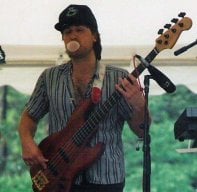
Here's Paul McCartney using a Gizmotron in 1979.
7149e7f38b779d89dd1532e32c5390ef.jpg
18879499_1910225849192297_9145934309083840512_n.jpg