• TalkBass has been independent since 1998. Add your voice.
    Create a free account to reply to discussions, view embedded media, and browse with fewer display ads.
    Join freeLog in
    Want zero display ads or expanded classifieds tools? Compare plans.

Unusual Rock Trivia?

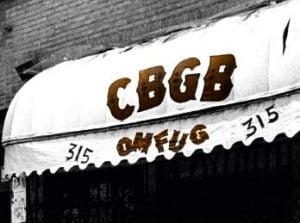
The letters for the New York City club CBGB stood for (Country, Bluegrass, and Blues) OMFUG stood for (Other Music For Uplifting Gourmandizers)

97-300x223.jpg
 
He also instigated the Concert For George, which was held at the Hall on 29 November 2002 to pay tribute to Clapton's lifelong friend, George Harrison.
I purchased the house in which I currently live in November 2002. The owner at the time was out of the country when we put in our offer, but he came back after a week or so and the deal was done. At the time, he apologized for not being available: "I was in London for a memorial concert for a friend of mine, George Harrison." It was The Concert for George.

This guy later went on to claim that he paid for Bruce Springsteen's first beer in Philadelphia, and that he designed the album cover for Procul Harem's "Grand Hotel." I believe this last claim is true, as he was a graphic designer. I can't speak to his other two claims. He was very full of himself and enjoyed reminding us of just how special he was.

We got a great house, though.
 
After Nick Gilder left the band Sweeney Todd to pursue a solo career, Clark Perry was brought in to replace Gilder on vocals. Perry did not work out, however, and was replaced within a few months by Bryan Adams; who was 16 at that time. Bryan recorded Sweeney Todd's second album, If Wishes Were Horses. That album was unsuccessful and Adams left the band after less than a year.

Sweeney Todd had a #1 Canadian hit with the song "Roxy Roller" in 1976 with Nick Gilder on lead vocals. Clark Perry recorded a second version of "Roxy Roller" but left before doing an album of songs. Bryan Adams appeared on the single "If Wishes Were Horses".
 
Back in September of 2007, Steven Tyler (Steven Victor Talarico), launched a custom motorcycle company along with his cousin, Stephen Talarico, and cycle designer Mark Dirico. The trio called the company Red Wing Motorcycles. That high-flying moniker may have seemed like a good idea at the time, but it turns out that the name was already taken. In fact, it's been taken a few times. This being the case, the company was renamed Dirico Custom Motorcycles.

Each bike comes autographed by Steven Tyler.

162967_Front_3-4_Web.jpg

0909_hbkp_02_z%2Bquick_ride_dirico_motorcycles%2Bflyer.jpg


bsteven-tyler-dirico-speedster-bfront-view-619790505.jpg
 
P.P. Arnold, the great soul and RnB singer. She was with Ike and Tina Turner up until the conclusion of the Stones tour in 1966. They opened for them. She quit them to stay in Britain to go solo. Among the musicians who were in her subsequent back up bands:
Steve Howe
The Nice: (Keith Emerson)
Most of the members of Spooky Tooth
On her recordings:
Albert Lee
Carl Palmer
Steve Marriott
Ronnie Lane
Ron Wood
Nicky Hopkins
Keith Richards
 
George Harrison's "What Is Life" song was released as the second single from his All Things Must Pass album and was a Top 10 hit in the U.S., Canada, Australia, Germany, Sweden, Switzerland, and other countries. However, it was only released as the B-side to "My Sweet Lord" in the U.K. and did not chart there.

Oddly, the Olivia Newton-John cover of the song did chart in the U.K. in 1972.

Harrison's backing musicians on the song included Eric Clapton, members of Delaney & Bonnie's backing band, and all four members Badfinger. Harrison co-produced the recording with Phil Spector.

 
George Harrison's "What Is Life" song was released as the second single from his All Things Must Pass album and was a Top 10 hit in the U.S., Canada, Australia, Germany, Sweden, Switzerland, and other countries. However, it was only released as the B-side to "My Sweet Lord" in the U.K. and did not chart there.

Oddly, the Olivia Newton-John cover of the song did chart in the U.K. in 1972.

Harrison's backing musicians on the song included Eric Clapton, members of Delaney & Bonnie's backing band, and all four members Badfinger. Harrison co-produced the recording with Phil Spector.


This is a good example of when a cover version of a song does not stand up to the original, especially when one version has Eric Clapton on it... :)

 
George Harrison's "What Is Life" song was released as the second single from his All Things Must Pass album and was a Top 10 hit in the U.S., Canada, Australia, Germany, Sweden, Switzerland, and other countries. However, it was only released as the B-side to "My Sweet Lord" in the U.K. and did not chart there.

Oddly, the Olivia Newton-John cover of the song did chart in the U.K. in 1972.

Harrison's backing musicians on the song included Eric Clapton, members of Delaney & Bonnie's backing band, and all four members Badfinger. Harrison co-produced the recording with Phil Spector.


Now you made me listen to some Badfinger...cool
 
I learn something new every day. Didn’t know there such a thing as “bass harmonica” until I was looking just now!

On the the theme song for Sanford and Son, I always knew there was a harmonica in it, learned that it was a bass harmonica. It was played by Tommy Morgan for the Quincy Jones recording (and therefore, the original theme song). The real name for the song is “The Streetbeater”.

I believe these are the players:
Quincy Jones, composer. Phil Woods & Ernie Watts (saxophones), Tommy Morgan (harmonica), David Walker (guitar), George Duke & Dave Grusin (keyboards & organ), Chuck Rainey (bass), James Gadson (drums), Bobbye Porter (percussion)
Morgan is also featured on this Pet Sounds track, “I Know There’s An Answer”(AKA “Hang On To Your Ego”)...
 
  • Like
Reactions: Novarocker
Bob Ezrin produced the Alice Cooper album "School's Out" and the song of the same name. He used a children's choir to sing on the song. Ezrin used the same idea on Pink Floyd's "Another Brick In The Wall Part 2", which he co-produced, and used students from the Islington Green School in London to sing on the song. He figured it made sense since both songs referenced school children.


He also produced Lou Reed’s bum trip masterpiece, Berlin; on the gut wrenching track, “The Kids”, where the children of the wastrel female protagonist of the story line are taken away from her due to her neglect, Ezrin used his kids, two sons, to provide the hysterical screaming at the end of the song...

When I worked at a certain record store, if we had lingering customers at closing time we’d put that on and clear the place like a charm:DThe two tykes made another appearance on a later production of dad’s, Kiss’ “God of Thunder”.
 
At the age of 23, after having some hit songs and songwriting and studio credits for other acts, Tony Orlando (born Michael Anthony "Tony" Orlando Cassavitis) became a producer as well as a successful music executive. He was hired by Clive Davis as the general manager of Columbia Records' publishing imprint, April-Blackwood Music in 1967, and by the late 1960s had been promoted to vice-president of Columbia/CBS Music.

In 1969, Orlando signed Barry Manilow to his first recording contract with Bell Records, co-writing with him and producing Manilow's earliest tracks. He also worked with many other notable acts of the day.

Orlando recorded the song "Candida", with backup singers including Toni White and Linda November; both of whom went to successful music careers. Concerned about a possible conflict of interest with his April-Blackwood duties, Orlando sang under the condition that his name not be associated with the project, so it was released under the simple name of "Dawn", the middle name of the daughter of Bell records executive Steve Wax.

"Candida" became a worldwide hit in 1970, reaching number one in five countries, and the top ten in many others, including number 3 in the USA. Dawn, with Wine and November again singing backup, recorded another song, "Knock Three Times", which became a #1 hit. Orlando then wanted to go on tour, and asked two other session singers, Telma Hopkins (who became a well known actress) and Joyce Vincent Wilson to join for the tour. Orlando then discovered that there were six touring groups using that name, so Dawn became "Dawn featuring Tony Orlando", which changed to Tony Orlando and Dawn in 1973 and had a string of hit songs and a TV show called The Tony Orlando and Dawn Show which ran for four seasons from 1974 to 1976.