• TalkBass has been independent since 1998. Add your voice.
    Create a free account to reply to discussions, view embedded media, and browse with fewer display ads.
    Join freeLog in
    Want zero display ads or expanded classifieds tools? Compare plans.

Unusual Rock Trivia?

How A Tom Petty & The Heartbreakers Song Came To Define The Horror Of ‘The Silence Of The Lambs’


One of the most distinguished character introductions in movie history is that of Catherine Martin, the senator’s daughter who is abducted by the perverse serial killer Buffalo Bill in 1991′s “The Silence of the Lambs.”

Cruising down a Memphis highway late at night, Catherine sings along with Tom Petty and the Heartbreakers’ “American Girl,” the lyrics foreshadowing the doom that awaits her. Here’s a young woman, her whole life ahead of her, content and unknowing, before she is lured into a deviant’s underground lair.

After all it was a great big world / With lots of places to run to / Yeah, and if she had to die tryin’ / She had one little promise she was gonna keep / Oh yeah, all right / Take it easy, baby / Make it last all night / She was an American girl.

When Smith got the role, director Jonathan Demme was still determining which music to use for the scene. Ted Tally’s script didn’t indicate a specific song; it merely said Catherine was jamming along to the radio. Had Smith’s own suggestions for the scene come to fruition, she would never have become associated with “American Girl,” the infectious Petty-penned classic that didn't even chart upon its initial release in the United States in 1977.

Smith was part of the “whole New York punk hard-core movement” of the 1980s, so she wanted her karaoke moment to feature one of her favorite bands, namely Bad Brains. (Smith said she was also friends with members of Agnostic Front and Cro-Mags.) Demme, who’d directed 10 movies by that point, including “Something Wild” and “Married to the Mob,” had an alternate vision in mind.

Demme secured the rights to two very different tracks. The first was “American Girl,” an ambiguous rock anthem about an ambling everywoman; the second was Rufus and Chaka Khan’s “Tell Me Something Good,” a funky seduction that lacks Petty’s gripping hook.

“I think he always had it in his mind because the only songs that I remember him talking about were those two,” Smith said. “And ‘American Girl’ was the one he really wanted. I just didn’t feel like the quintessential American girl. I guess I still don’t. I felt too much like an outsider.”

What Catherine needed was a carol that would put audiences in her corner the moment she appears. She would belt “American Girl” for all of 30 seconds before parking outside her apartment building, saying hello to the cat meowing at her in a window and then assisting Buffalo Bill in loading a couch into his van. We needed to love Catherine without knowing a single thing about her, and what’s more lovable than someone rocking out with abandon, in extreme close-up, thumping the steering wheel as she goes? The security of Catherine’s vehicle ― the sheer aloneness of her shameless crooning ― fosters a comfort that’s contradicted the second she steps out, grocery bags in hand. Her life is shattered as quickly as she glances at Bill’s feigned struggle. Soon enough, she ― “it” ― would be rubbing the lotion on her skin, or else she’d “get the hose again.”

“Jonathan Demme, in his infinite wisdom, was the one who made the choice,” Smith said. “[...] It was almost too perfect. It just set it up absolutely 100 percent perfectly, that song.”

For such a famous movie moment, the “American Girl” routine was simple in execution. Smith, who hadn’t rehearsed her singalong, remembers Demme deciding to shoot the scene suddenly, at the end of a long day. She didn’t literally drive the car. Instead, she sat on a soundstage, where the movie’s prop master, Ann Miller, shifted around a two-by-four positioned under the wheels to simulate movement. The rest came naturally, as Smith already knew the lyrics.

“And Jonathan just said, ‘Just sing like you’re driving along in a car,’” Smith said. “I was very familiar with that, so that’s what I did. I remember he kept saying, ‘Keep your eyes on the road,’ because maybe I don’t keep my eyes on the road enough, or I didn’t back then.”

Since the song hadn’t blossomed into a veritable hit back in the ’70s, “The Silence of the Lambs” aided in the “American Girl” resurgence. It had already been featured in the movies “FM” and “Fast Times at Ridgemont High,” but “Lambs” gave Petty’s ditty a singular identity. It was about hope ― in this case, the rollicking calm before a horrifying storm.

“American Girl” went on to score more big- and small-screen invocations, including “Sugar & Spice,” “The Sopranos,” “Ugly Betty,” “Parks and Recreation,” “That’s My Boy” and “Hot Pursuit.” In 2015, Demme incorporated it into another of his films, “Ricki and the Flash,” which opens with Meryl Streep covering the song alongside her rock-star-wannabe character’s cover band. The song has, in Petty’s own words, lasted all night.

“I’m really sad because I always wanted to meet him, you know?” Smith said of Petty. “I never got to meet him, and I always felt a special bond with him because of that.”

 
Don't know if this tidbit has been posted yet, but:
Brian May (Guitarist for Queen) is an astrophysicist, who is actually actively working with the team that sent the probe to photograph Pluto and beyond.

When he defended his dissertation, it was originally not accepted because the panel said his theory was wrong...I can’t remember what his theory was, but it was proven correct later. He was then awarded his PhD.
 
When he defended his dissertation, it was originally not accepted because the panel said his theory was wrong...I can’t remember what his theory was, but it was proven correct later. He was then awarded his PhD.
From brianmay.com:
"Brian has always retained his keen passion for Astronomy and in 2006, after a 30-year break, he returned to Astrophysics and his doctoral thesis. Already the recipient of honorary degrees from the Universities of Hertfordshire, Exeter and Liverpool John Moores, upon submission of his updated thesis on the Motions of Interplanetary Dust, Brian achieved his full PhD degree from Imperial College, London, in 2007. He subsequently accepted a post of Visiting Researcher to continue his work in Astronomy and following a 5 year post as Chancellor of Liverpool John Moores, Brian now holds the honorary position of Chancellor Emeritus. 2006 saw Brian co-author his first book, Bang! The Complete History of the Universe, with Sir Patrick Moore and Dr Chris Lintott. This illustrated astrophysics book, now been published in 20 languages, was followed in 2012 with the release of a greatly anticipated sequel, The Cosmic Tourist.

Another long-term interest in 3D Photography led to the publication of Brian’s second book. Co-authored with Elena Vidal, A Village Lost and Found is an authoritative study of the work of master 1850s stereo photographer, T R Williams, complete with an OWL stereoscopic viewer designed by Brian himself. He is currently co-authoring a book on French Diableries, due for publication for Halloween 2013. More information on this and all matters stereoscopic are available at Brian’s dedicated website, www.londonstereo.com."
 
La Grange by ZZ Top has a groove that is based on a traditional boogie blues rhythm used by John Lee Hooker in "Boogie Chillen'" and by Slim Harpo in "Shake Your Hips". A failed lawsuit by the copyright holder of "Boogie Chillen'" resulted in the court ruling in ZZ Top's favor that the rhythm was in the public domain. The line "a-how-how-how-how" is quoted from John Lee Hooker's song "Boom Boom".




La Grange by ZZ Top has a groove that is based on a traditional boogie blues rhythm used by John Lee Hooker in "Boogie Chillen'" and by Slim Harpo in "Shake Your Hips". A failed lawsuit by the copyright holder of "Boogie Chillen'" resulted in the court ruling in ZZ Top's favor that the rhythm was in the public domain. The line "a-how-how-how-how" is quoted from John Lee Hooker's song "Boom Boom".


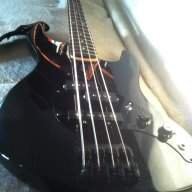
Dusty Hill, Bass guitar player for Z Z TOP, is the often irresponsible and trouble-making cousin of Hank Hill, Propane and Propane accessory magnate from Arlen, TX. and all-around great guy, I'll tell you what!
 
Bob Ezrin produced the Alice Cooper album "School's Out" and the song of the same name. He used a children's choir to sing on the song. Ezrin used the same idea on Pink Floyd's "Another Brick In The Wall Part 2", which he co-produced, and used students from the Islington Green School in London to sing on the song. He figured it made sense since both songs referenced school children.


"Could It Be Magic" is a song with lyrics by Adrienne Anderson and music by Barry Manilow, based on Frédéric Chopin's Prelude in C minor, Opus 28, Number 20. Initially released in 1971 by Featherbed (a group of session musicians featuring Barry Manilow), produced and co-written by Tony Orlando, it was later re-recorded as a Barry Manilow solo track, given a first album and single release in 1973 on Bell Records and - after being remixed - an album and single re-release in 1975 on Arista Records. The 1975 re-release became one of Manilow's first hits. The song has been recorded by a number of other artists over the years, most successfully by Donna Summer in 1976 and by Take That in 1992.