• TalkBass has been independent since 1998. Add your voice.
    Create a free account to reply to discussions, view embedded media, and browse with fewer display ads.
    Join freeLog in
    Want zero display ads or expanded classifieds tools? Compare plans.

Vintage G&L L-1000: Thoughts?

Looked to be in good condition. A few marks throughout, but not bad considering it’s age. Plugged in to the seller’s amp and it was glorious. Neck looked good after a once over. Doesn’t feel too heavy. Original case. Serial number: B004007.

It is now in the back seat as I drive home. No turning back now…

I’ll get some pics later.
If you ever pull the neck it would be interesting to see the dates. My September ‘80 is in the B001300’s. …curious how fast they were making them in ‘81?
 
  • Like
Reactions: JoshuaD
Here's mine.
IMG-7871 2.jpg

Left neck alone with "Derek & the Dominoes Strat" wear spots and original well worn frets. Plays like a dream.
 
Last edited:
The neck straightness, fret life, originality, and presence of original case are very important.

The final price should not exceed about $1,000 cash locally, if it is all original and in player condition with a straight neck and OHSC. You might go up from there a few hundred bucks for ones that are in exceptional condition, and even more for ones that are rare colors (e.g. Candy Apple Red, or gold), and/or extremely early serial numbers. The most I have ever paid for an L-1000 of that era is $1,500 cash for a rare Candy Apple Red one that was a very low serial number, and in almost unplayed condition – i.e. almost as collectible as they get.

IMO, you are better off starting with a "non-vintage" bass. You are likely to make mistakes when you are learning. Make those mistakes on an instrument that is not collectible, and that won't suffer the poor decisions a beginner is bound to make when it comes to care and treatment, repairs, mods, etc. Once you're a great bass player, and know how to treat a vintage instrument, then get one.
 
Last edited:
yes get it if it’s in good playing shape (neck not ski ramped). Honestly I bought an old school Series E L2K with neck issues and had it replanned and refretted. I’ll never part w it. Leo and George F were creating machines of destruction. Nothing sounds like an old school G&L.
 
Last edited:
  • Like
Reactions: CaribooBass
My 1980 candy apple red/maple neck is B00175x. FWIW....the FB has some purdy Birdseye. Did I largely buy it cuz it's Leo's first year of production in his last gig? Yep! Did I spend $xx,xxx? I did not. Barely spent $x,xxx. I bought it as a keeper, something historically cool to me!
 
  • Like
Reactions: kmd88 and JoshuaD
If you ever pull the neck it would be interesting to see the dates. My September ‘80 is in the B001300’s. …curious how fast they were making them in ‘81?

Our 1980 1Ks are similarly stamped. Mine is 1100-something. It is a November bass (though parts of it were made earlier).

I have a Feb., 1981 as well, serial number 3000 or so. They had already gone to slotted pole pieces by then.

And I have two late 1981s, with mixed hardware. Their serial numbers are around 7000.

They shipped not many more than about 1,500 basses in 1980, starting in June. Serial numbers for basses did not start at 0. They started at around 500. The rule of thumb is that if you have a serial number below 2000, you probably have a 1980 (though that is certainly not absolute, and there are perhaps a few hundred 1980s that have a serial number over 2000).

However, 1981 saw much higher production, with about 6,000 basses made. So not only was 1980 a half year for production, but they were also making them at twice the pace in 1981. As such, 1980s are significantly more rare than 1981s.

Bass production was lower in 1982, with perhaps 3,000 made: back to the pace of 1980, but with a full year's production time. That seems to have been a more standard pace for them from that point. They must have received major retailer orders of 1981s, causing them to really crank them out that year. Perhaps a result of their mid-year introduction taking some time to hype up retailer demand.

You still see these early production numbers having an effect on supply, if you closely watch the used market for the early big headstock G&Ls. By far the most commonly found examples are 1981s, with the slotted pole pieces. And 1980s are quite rare. You also frequently see seller's try to hype up the slotted pole pieces, by claiming that they "sound better," and/or are "rare." But in reality, the slotted pole pieces mean that you have by far THE most common variant in terms of pickup poles, by a factor of at least 2 – and having played all the variants, they all sound just like 1Ks to me.

The OP's bass was likely completed in the spring of 1981, and it is one of the first 3,500 or so G&L basses ever made.
 
Last edited:
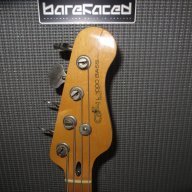
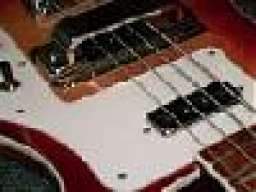
Here are two pics I have of the bass. Looks pretty clean, but it’s not the best photo so I’ll have to wait to see it in person. You can see it has the correct pickup/poles for an ‘81. Can see, but not make out the serial number on the bridge. Original case, based on what I’ve seen others with.

The gentleman selling seems to be a straight shooter. He is not the original owner and has only owned it a short period of time. He is selling due to medical issues that will not allow him to play anymore. I’m fairly certain he’s been a bass player longer than I’ve been alive. He is asking $900.

View attachment 4767074 View attachment 4767075
I owned a bass just like that (this is the early headstock design) in natural. I could never bond with it, really. I always thought it was a great bass , but I never got it to do “all that” that everyone else was doing with them.

however , the bass you are being offered is RED, so that changes everything.
 

Latest posts