
Enjoy the benefits of a premium membership!
Upgrade Account
-
TalkBass has been independent since 1998. Add your voice.
Create a free account to reply to discussions, view embedded media, and browse with fewer display ads.
Join free Log in
Want zero display ads or expanded classifieds tools? Compare plans.
You are using an out of date browser. It may not display this or other websites correctly.
You should upgrade or use an alternative browser.
You should upgrade or use an alternative browser.
Vintage Old Fender - I don't get it.
- Thread starter darwin-bass
- Start date
More options
Who Replied?
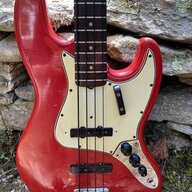
Most of us who own vintage pre-CBS Fenders did not pay crazy money for them.
I bought my '64 Jazz used in '73 from the bass player to The Marine Band down in D.C.
He was hell bent on getting a Les Paul Studio Bass
I ended up with the far better bass.
The vintage AlNiCo pickups are much milder than even the most accurate vintage style pickups.
The tone is more woody, less electronic.
If you don't get it, ask the studio engineers who record those vintage guitars.
The bass you might choose for live work, may not be ideal for recording.
Added midrange boost and active electronics that might sound good to your ear live, generally does not translate well
in recording.
I bought my '64 Jazz used in '73 from the bass player to The Marine Band down in D.C.
He was hell bent on getting a Les Paul Studio Bass
I ended up with the far better bass.
The vintage AlNiCo pickups are much milder than even the most accurate vintage style pickups.
The tone is more woody, less electronic.
If you don't get it, ask the studio engineers who record those vintage guitars.
The bass you might choose for live work, may not be ideal for recording.
Added midrange boost and active electronics that might sound good to your ear live, generally does not translate well
in recording.

I confess, I just don't get it...
Why would someone pay big money for an inferior instrument with damaged finished and half warn-out frets?
You are right. Most people wouldn't pay big money for an inferior instrument, so the answer might be that your assessment of vintage instruments is incorrect.

To be honest, I think some people feel a need to put down what they can't afford, when it's really founded in envy.
It doesn't matter what my bass is worth because it will never be sold in my lifetime.
My grandson will inherit it with certain age/maturity restrictions.
It doesn't matter what my bass is worth because it will never be sold in my lifetime.
My grandson will inherit it with certain age/maturity restrictions.
I used to have an old wooden sailboat a couple of years ago, and in terms of sailing performance, convenience, robustness, maintenance it was inferior to newer boats. But that's missing the point, it had a different feel, looked nicer, smelled nicer (wood, varnish and mold ), moved differently in the water and just had a "mojo" that new plastic boats don't have. I think a lot of such characteristics translate to other vintage stuff too, it just feels, looks and sounds differently to new gear. Sometimes this is a good thing, sometimes a bad thing. For me, old boats and old cars are cool, old music gear not so much.
Music instruments as investments is not for me, I like to use any tool or toy I buy, but I can understand that anything that is rare and has buyers will be expensive.
If someone doesn't get it or like it then move on and buy something else. There's not just one correct choice.
), moved differently in the water and just had a "mojo" that new plastic boats don't have. I think a lot of such characteristics translate to other vintage stuff too, it just feels, looks and sounds differently to new gear. Sometimes this is a good thing, sometimes a bad thing. For me, old boats and old cars are cool, old music gear not so much.Music instruments as investments is not for me, I like to use any tool or toy I buy, but I can understand that anything that is rare and has buyers will be expensive.
If someone doesn't get it or like it then move on and buy something else. There's not just one correct choice.


"Don't cha' love kids?" ...... Not all basses are the same and that goes for old Fenders. When it all comes together it's a beautiful thing but, when it doesn't, it's just wood and strings. If you're lucky, in time, you'll learn the difference.

I confess, I just don't get it...
Why are the old Fenders worth so much? Their necks are not as well built as many of today's basses (single action truss rod, no other reinforcement), they exhibited neck dive (heavy tuners), cheap bridges, non-angled headstock required a string hold-down button, 3-bolt necks.
Why would someone pay big money for an inferior instrument with damaged finished and half warn-out frets?
Is there really nothing else that sounds as good? Nothing else have that old-school mojo?
Yea, I just don't get it. Please enlighten me.
Not trying to start "something", just trying to get some answers to Q's that have been nagging me.
- Keith -
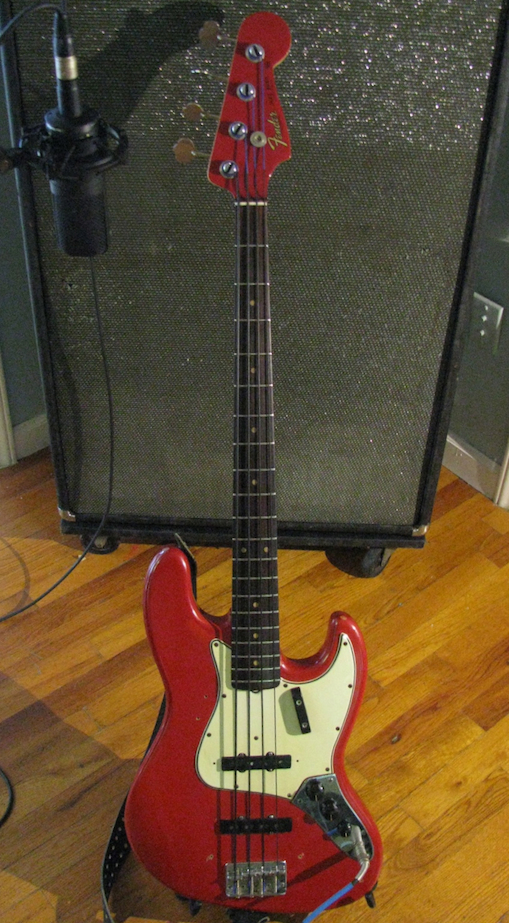
And yet here she is 58 years on, still with her inferior neck and original frets- arrow straight and playing like a dream.
Basic single coil pickup that sounds like the blues.
Not sure where the neck dive comes in- this bass is perfectly balanced and weighs around 8 lbs with covers fitted.
In answer to the original question- because of supply and demand. There is a limited number of these in existence and people still want them.

50 years old May 7th 2014
Nice, how did you get such a specific date for the construction of the bass?

BassHappy
Supporting Member
It's always gonna be one person's jewel is another person's yawn. It's what makes us diverse and interesting. It's what makes the world go round.
It is certainly not just vintage Fenders. What I might point out is that great wood is great wood, whether now or back then. If it ages well - like fine wine - it becomes even better with age. I have a bass made with 100+ year old mahogany and it is sweet and warm. My PRS #11 is now over 35 years old the mahogany sounds better each and every year to me. PRS made an early guitar for my guitar player from a 125 year old piece of mahogany out of an old house they were tearing down - it was part of a coal bin. He laminated it to a 100+ year old antique maple dresser drawer he reshaped into a carved top. The guitar was remarkable the day it was built, but you should hear it now, 35 years later. Good wood in many cases becomes great wood as it ages over many years - and might be the primary reason the vintage Fenders are in demand. Guys like Pat Wilkins and of course, many others - know this and go to great lengths to score really old antique wood for their builds.
The new technology, fit and finish by all accounts is as good or better than ever, so the difference must be in the wood. I know this drives the "the wood makes no difference" folks crazy but how else do you account for the extraordinary sound and prices on many of these vintage instruments?
BassHappy
It is certainly not just vintage Fenders. What I might point out is that great wood is great wood, whether now or back then. If it ages well - like fine wine - it becomes even better with age. I have a bass made with 100+ year old mahogany and it is sweet and warm. My PRS #11 is now over 35 years old the mahogany sounds better each and every year to me. PRS made an early guitar for my guitar player from a 125 year old piece of mahogany out of an old house they were tearing down - it was part of a coal bin. He laminated it to a 100+ year old antique maple dresser drawer he reshaped into a carved top. The guitar was remarkable the day it was built, but you should hear it now, 35 years later. Good wood in many cases becomes great wood as it ages over many years - and might be the primary reason the vintage Fenders are in demand. Guys like Pat Wilkins and of course, many others - know this and go to great lengths to score really old antique wood for their builds.
The new technology, fit and finish by all accounts is as good or better than ever, so the difference must be in the wood. I know this drives the "the wood makes no difference" folks crazy but how else do you account for the extraordinary sound and prices on many of these vintage instruments?
BassHappy
Last edited:

Play this 52 year old jazz (refin) and there's no yawn. Guaranteed. Oddly enough, build quality is just so so: obvious production line hallmarks, treble side pocket "nub", painting nail hole patches, but the neck and pickups are astounding.

Last edited:
I think it is just a "collectors way of thinking," and what I mean by that is sure certain basses sound better and are made better then others but it's a cool factor to be able to say it's a 40+ year old bass that looks awesome with cool mojo and is still rockin. I agree though, I do not need to spend $4000 on a old bass when basses coming out these days are updated most times for the better then the old.
Nice, how did you get such a specific date for the construction of the bass?
Thorough detailed documentation of the bass by a Fender Gold Level, Custom Shop Luthier.
Neck stamp.
Pots were '63 code, but that was normal because they bought them by the thousands.

I was just thinking how cheap the old Fenders are.
No I mean it. To me they seem very reasonably priced.
Regards
Davo
No I mean it. To me they seem very reasonably priced.
Regards
Davo
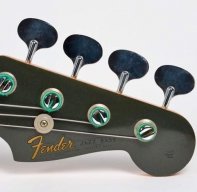
Thorough detailed documentation of the bass by a Fender Gold Level, Custom Shop Luthier.
Neck stamp.
Pots were '63 code, but that was normal because they bought them by the thousands.
A lot of people mistake the first digit of the neck stamp for the day of manufacture. You're neck stamp is no doubt "7 May 64 A". But the "7" doesn't mean the 7th of May, 7 is just the code for a Jazz Bass neck. There is no way to know the exact day ANY vintage Fender left the factory. You can usually narrow it down to a year by taking the sum of all the original parts together.

I confess, I just don't get it...
Why are the old Fenders worth so much? Their necks are not as well built as many of today's basses (single action truss rod, no other reinforcement), they exhibited neck dive (heavy tuners), cheap bridges, non-angled headstock required a string hold-down button, 3-bolt necks.
Why would someone pay big money for an inferior instrument with damaged finished and half warn-out frets?
Is there really nothing else that sounds as good? Nothing else have that old-school mojo?
Yea, I just don't get it. Please enlighten me.
Not trying to start "something", just trying to get some answers to Q's that have been nagging me.
- Keith -
It's always been an interesting argument, both in the classical and popular worlds for string instruments.
One of my double basses is an old 1800's German instrument. It's got cracks fixed all over the place, but it just sounds deep and rich. Yes, I prefer my Ron Prentice bass, made in 1974 for its tonal shove, it's brightness and sheer volume, but a lot of MD's ask me for the old German brute. Similarly with my cellos - My main cello is a large bodied modern instrument made in 1979, but some want a more vintage mellow tone.
In some of the more hideously overpriced vintage Fenders (have a listen to some of the sound files at Andy Baxter Bass), there's definitely a lot of seasoning in the woods due to age, but it's never been enough for me to warrant buying a vintage instrument for professional jobs. Some producers/MD's want to see/hear a vintage Fender, wanting that particular sound, but I can get a very rich Precision sound with my MusicMan Classic Sabre or a Enfield Lionheart - The Enfield can even do single coil Jazz sounds very happily. That's the main reason I bought it, for the tonal flexibility it offers.
But at the end of the day, if you hand pick a really good Jazz, Precision or other new version of a timeless classic, you're going to be so close to the sound of a vintage model that no one will ever notice. I was looking at a '64 Jazz the other day and it sounded no better or worse than a new American Special I played at a dealer a few weeks ago at about an eighth of the price!
We all need to play instruments that fit us, feel good and sound great to our ears. That & opinions are like ******** - Everyone's got one!
Last edited:

Saying that something is a matter of opinion creates false equivalency. We don't live in a world where every bass is equally good or bad.
Saying that something is a matter of opinion creates false equivalency. We don't live in a world where every bass is equally good or bad.
I never set out to create false equivalency. Yes, if a bass player finds a vintage Jazz they love the sound and feel of and have the several thousands of dollars to buy it, then why not?
But equally, they may find a brand new one that plays and sounds equally good or better to them.For me, I'd like a vintage Jazz, but I've never found one I liked enough to spend some serious money on. Yet.
For the record I was summing the impression I got from a quick read of the thread. I wasn't directing my comments at anyone in particular.I never set out to create false equivalency. Yes, if a bass player finds a vintage Jazz they love the sound and feel of and have the several thousands of dollars to buy it, then why not?
For me, I'd like a vintage Jazz, but I've never found one I liked enough to spend some serious money on. Yet.
While I'm no one to say what's good or bad, I think we agree that there are good things with broad appeal and good things with niche appeal, and then there are basses that only a mother could love.


