• TalkBass has been independent since 1998. Add your voice.
    Create a free account to reply to discussions, view embedded media, and browse with fewer display ads.
    Join freeLog in
    Want zero display ads or expanded classifieds tools? Compare plans.

Volcano Pic

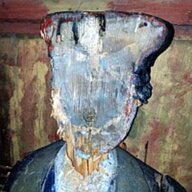
It looks like it was painted by that dude with the fro. I'm too lazy to look up his name.

fixed.

bobvol.gif
 
This is really nasty, and could last months. Great for the economy. :atoz:

http://www.reuters.com/article/idUSSGE63F02E20100416

Volcanic ash grounds flights across much of Europe
Fri Apr 16, 2010 1:10pm EDT
Related News

* Around 17,000 flights cancelled

* Disruptions worst since 9/11; cost $200 mln per day

* Problems could continue for up to six months


By Michael Holden

LONDON, April 16 (Reuters) - A huge ash cloud from an
Icelandic volcano spread out across Europe on Friday causing air
travel chaos on a scale not seen since the Sept. 11 attacks and
costing airlines hundreds of millions of dollars.

Significant disruption of European air traffic was expected
on Saturday because of the dangers posed by volcanic ash
drifting from Iceland, aviation officials said. Airports in much
of Britain, France and Germany remained closed and flights were
set to be grounded in Hungary and parts of Romania.

"I would think Europe was probably experiencing its greatest
disruption to air travel since 9/11," a spokesman for the Civil
Aviation Authority, Britain's aviation regulator, said.

"In terms of closure of airspace, this is worse than after
9/11. The disruption is probably larger than anything we've
probably seen."

Following the Sept. 11, 2001 attacks on Washington and New
York, U.S. airspace was closed for three days and European
airlines were forced to halt all transatlantic services.

Disruption from the volcanic ash eruption in Iceland is
costing airlines more than $200 million a day, the air industry
body IATA said.

"At current levels of disruption, IATA's initial and
conservative estimate of the financial impact on airlines is in
excess of $200 million per day in lost revenues," the
International Air Transport Association said in a statement.

Vulcanologists say the ash could cause problems to air
traffic for up to six months if the eruption continues, but even
if it short-lived the financial impact on airlines could be
significant.

The fallout hit airline shares on Friday with Lufthansa
(LHAG.DE), British Airways (BAY.L), Air Berlin (AB1.DE), Air
France-KLM (AIRF.PA), Iberia (IBLA.MC) and Ryanair (RYA.I) down
between 1.4 and 3.0 percent. [ID:nLDE63F07I]

David Castelveter, a spokesman with the Air Transport
Association of America trade group, said U.S. airlines had
cancelled at least 170 flights to and from Europe.


MOUNTING COSTS

The flight cancellations would cost carriers such as British
Airways and Lufthansa about 10 million pounds ($16 million) a
day, transport analyst Douglas McNeill said.

"To lose that sum of money isn't a very pleasant experience
but it's of limited commercial significance as well," he told
BBC TV.

"A couple of days like this won't matter too much. If it
goes on for weeks, that's a different story."

In France, state-controlled airports operator Aeroports de
Paris (ADP.PA) faced losses of 5 million euros a day or more,
analysts said.

Joe Sultana, head of network operations at European air
control agency Eurocontrol, said the situation was
unprecedented.

"We understand the economic impact, both to the airlines and
the general European economy, but safety comes first," he said.

The volcano began erupting on Wednesday for the second time
in a month from below the Eyjafjallajokull glacier, hurling a
plume of ash 6 to 11 km (4 to 7 miles) into the atmosphere.

Officials said it was still spewing magma and although the
eruption could abate in the coming days, ash would continue
drifting into the skies of Europe. [ID:nLDE63F0LB]

Volcanic ash contains tiny particles of glass and pulverised
rock that can damage engines and airframes.

In addition to travel problems, health officials warned that
the volcanic ash could also prove harmful to those with
breathing difficulties.

In 1982, a British Airways jumbo jet lost power in all its
engines when it flew into an ash cloud over Indonesia, gliding
towards the ground before it was able to restart its engines.

The incident prompted the aviation industry to rethink the
way it prepared for ash clouds.


PLUME DRIFTING

In Brussels, European aviation control officials told a news
conference that some 12,000 to 13,000 flights were likely to
operate in European airspace on Friday, compared with about
29,500 normally. The ash was expected to spread further south
and east.

An official at the World Meteorological Organisation said it
was impossible to say when flights would resume.

"We can only predict the time that flights will resume after
the eruption has stopped, but for as long as the eruption is
still going on and still leading to a significant eruption, we
cannot say," said Scylla Sillayo, a senior official in the WMO's
aeronautical meteorology unit.

Polish officials said Sunday's funeral for President Lech
Kaczynski and his wife who were killed in a plane crash last
Saturday looked set to go ahead as planned. [ID:nLDE63F110]

German Chancellor Angela Merkel, returning from a trip to
the United States, was diverted to Portugal and was expected to
spend the night in Lisbon.
The air problems have proved a boon for other transport
firms. All 58 Eurostar trains between Britain and Europe were
operating full, carrying some 46,500 passengers, and a
spokeswoman said they would consider adding more services.

London taxi firm Addison Lee said it had taken requests for
journeys to Paris, Milan, Zurich and Salzburg in Austria.
 
This is really nasty, and could last months. Great for the economy. :atoz:

http://www.reuters.com/article/idUSSGE63F02E20100416
Volcanic ash grounds flights across much of Europe
Fri Apr 16, 2010 1:10pm EDT
Related News

* Around 17,000 flights cancelled

* Disruptions worst since 9/11; cost $200 mln per day

* Problems could continue for up to six months


By Michael Holden

LONDON, April 16 (Reuters) - A huge ash cloud from an
Icelandic volcano spread out across Europe on Friday causing air
travel chaos on a scale not seen since the Sept. 11 attacks and
costing airlines hundreds of millions of dollars.

Significant disruption of European air traffic was expected
on Saturday because of the dangers posed by volcanic ash
drifting from Iceland, aviation officials said. Airports in much
of Britain, France and Germany remained closed and flights were
set to be grounded in Hungary and parts of Romania.

"I would think Europe was probably experiencing its greatest
disruption to air travel since 9/11," a spokesman for the Civil
Aviation Authority, Britain's aviation regulator, said.

"In terms of closure of airspace, this is worse than after
9/11. The disruption is probably larger than anything we've
probably seen."

Following the Sept. 11, 2001 attacks on Washington and New
York, U.S. airspace was closed for three days and European
airlines were forced to halt all transatlantic services.

Disruption from the volcanic ash eruption in Iceland is
costing airlines more than $200 million a day, the air industry
body IATA said.

"At current levels of disruption, IATA's initial and
conservative estimate of the financial impact on airlines is in
excess of $200 million per day in lost revenues," the
International Air Transport Association said in a statement.

Vulcanologists say the ash could cause problems to air
traffic for up to six months if the eruption continues, but even
if it short-lived the financial impact on airlines could be
significant.

The fallout hit airline shares on Friday with Lufthansa
(LHAG.DE), British Airways (BAY.L), Air Berlin (AB1.DE), Air
France-KLM (AIRF.PA), Iberia (IBLA.MC) and Ryanair (RYA.I) down
between 1.4 and 3.0 percent. [ID:nLDE63F07I]

David Castelveter, a spokesman with the Air Transport
Association of America trade group, said U.S. airlines had
cancelled at least 170 flights to and from Europe.


MOUNTING COSTS

The flight cancellations would cost carriers such as British
Airways and Lufthansa about 10 million pounds ($16 million) a
day, transport analyst Douglas McNeill said.

"To lose that sum of money isn't a very pleasant experience
but it's of limited commercial significance as well," he told
BBC TV.

"A couple of days like this won't matter too much. If it
goes on for weeks, that's a different story."

In France, state-controlled airports operator Aeroports de
Paris (ADP.PA) faced losses of 5 million euros a day or more,
analysts said.

Joe Sultana, head of network operations at European air
control agency Eurocontrol, said the situation was
unprecedented.

"We understand the economic impact, both to the airlines and
the general European economy, but safety comes first," he said.

The volcano began erupting on Wednesday for the second time
in a month from below the Eyjafjallajokull glacier, hurling a
plume of ash 6 to 11 km (4 to 7 miles) into the atmosphere.

Officials said it was still spewing magma and although the
eruption could abate in the coming days, ash would continue
drifting into the skies of Europe. [ID:nLDE63F0LB]

Volcanic ash contains tiny particles of glass and pulverised
rock that can damage engines and airframes.

In addition to travel problems, health officials warned that
the volcanic ash could also prove harmful to those with
breathing difficulties.

In 1982, a British Airways jumbo jet lost power in all its
engines when it flew into an ash cloud over Indonesia, gliding
towards the ground before it was able to restart its engines.

The incident prompted the aviation industry to rethink the
way it prepared for ash clouds.


PLUME DRIFTING

In Brussels, European aviation control officials told a news
conference that some 12,000 to 13,000 flights were likely to
operate in European airspace on Friday, compared with about
29,500 normally. The ash was expected to spread further south
and east.

An official at the World Meteorological Organisation said it
was impossible to say when flights would resume.

"We can only predict the time that flights will resume after
the eruption has stopped, but for as long as the eruption is
still going on and still leading to a significant eruption, we
cannot say," said Scylla Sillayo, a senior official in the WMO's
aeronautical meteorology unit.

Polish officials said Sunday's funeral for President Lech
Kaczynski and his wife who were killed in a plane crash last
Saturday looked set to go ahead as planned. [ID:nLDE63F110]

German Chancellor Angela Merkel, returning from a trip to
the United States, was diverted to Portugal and was expected to
spend the night in Lisbon.
The air problems have proved a boon for other transport
firms. All 58 Eurostar trains between Britain and Europe were
operating full, carrying some 46,500 passengers, and a
spokeswoman said they would consider adding more services.

London taxi firm Addison Lee said it had taken requests for
journeys to Paris, Milan, Zurich and Salzburg in Austria.
Problem Solved.
volcano.jpg
 
Crazy stuff this, watching the news now and flights are still down. Good job my brother drove back from France and wasn't going to fly. Ferry companies must be having a ball.

That afro painter dude is awesome though. I once saw his program at like 3am or something and thought it was the best stoner TV I've ever seen. I just wish I'd been stoned.
 
Got friends here visiting in Moscow, their visas expire today. Cannot fly back until Tuesday morning, supposedly. Nothing confirmed, no one knows how long the ash clouds are going to mess things up.

Beautiful pics though. Too bad the guys from National Geographic cannot fly there.
 
http://in.news.yahoo.com/137/20100418/371/tbs-economy-impact-to-rise-sharply-if-as.html

The economic impact of the volcanic cloud halting flights across Europe will increase sharply the longer disruption continues, forcing holiday cancellations, delaying deliveries and reducing jet fuel demand.

African exporters of flowers and vegetables by air to European supermarkets, technology companies relying on "just-in-time" deliveries of components, event organisers and others could all feel the pinch.

Economists say so far they have not changed their models or predictions for European growth, hoping normal service could resume this week. But in a worst-case scenario in which the ash cloud closes European airspace for months, one economist estimates lost travel and tourism revenue alone could knock 1-2 percentage points off regional growth as long as it lasts. European growth had been predicted at 1-1.5 percent for 2010.

"That would mean a lot of European countries wouldn't get any growth this year," said Vanessa Rossi, senior economic fellow at Chatham House. "It would literally stifle the recovery. But the problem is it is incredibly hard to predict what will happen. Even the geologists can't tell us."

The event is a classic example of a "Black Swan", a totally unexpected event with widespread impact, impossible to predict and hard to model.

The key questions now are whether the volcano keeps erupting and spewing ash into the atmosphere, where the wind takes the ash and how long the ash already in the sky remains over Europe.

For map of ash cloud movement and airline routes, click:

http://graphics.thomsonreuters.com/RNGS/2010/APR/ASH4.jpg

Vulcanologists and meteorologists say they cannot immediately answer those questions as volcanoes are particularly unpredictable. They warn the last time the volcano under the Eyjafjallajokull glacier erupted, it lasted more than a year. But it may not continue to spew ash for the entire eruption.

Most had originally expected the cloud and disruption would linger over Europe for several days.

Travel and tourism accounts for around five percent of global gross domestic product -- some $3 trillion -- with Europe accounting for a third of that, much of it accruing over the summer months. Not all of this will be lost, but Rossi estimated a prolonged shutdown could cost up to $5-10 billion dollars a week in the industry.

But the impact will likely be wider. Most of the world's goods by volume may move by sea and land, but transport analysts estimate 40 percent by value moves by air.

NO "JUST-IN-TIME"

The world's biggest air freight operators say they are moving what they can by road and looking at contingency plans of using southern European airports that are outside the cloud. But they say deliveries will be sharply affected.

"If your just-in-time operation is depending on parts that come from Asia or the U.S. or Africa or the Mideast... , you just can't get it," said United Parcel Service Inc spokesman Norman Black.

"DHL and UPS use airhubs in Germany, Fedex Corp relies on an airhub in France and all that airspace is closed. There's just not an option right at the moment while we all wait and see how long this is going to take."

Pharmaceutical firms are heavy users of air freight, but most said on Friday they had enough stocks to avoid a short-term crunch. Last-minute high-tech imports between Asia and the United States are flown over the Pacific and will be unaffected, but European firms may feel the pinch.

Most food and beverage deliveries move by sea, but some premium products such as the finest Scotch whiskeys -- retailing at hundreds of dollars a bottle in China or Japan -- can no longer be moved.

That could mean the most vulnerable national economies to the shutdown could prove to be African producers of fruit and flowers that will swiftly perish if not shipped to market.

"Kenya, as the largest supplier of cut flowers to Europe, where tourism is also an important sector, is likely to be the most vulnerable; followed by the East African soft commodity producers more generally," said Standard Chartered chief Africa economist Razia Khan, herself stranded in Botswana by a cancelled flight.

The International Air Transport Association (IATA) estimates airlines are losing $200 million a day from the shutdown, which has caused chaos well beyond the immediate European airspace closed. Most airlines will be uninsured for this loss, although insurer Munich Re said on Friday it would consider offering cancellation insurance in future should the crisis produce demand.

NO MONEY FOR GOVERNMENT SUPPORT

European airline shares dipped on Friday and will likely fall sharply if it appears disruption will be prolonged. Even if the wind shifts, ash clouds over the Atlantic and Arctic would continue to disrupt flights to North America and Asia.

Analysts estimate the shutdown is reducing demand for jet fuel by some 2 million barrels a day, last week undermining jet fuel prices. This could filter into the wider oil price if the shutdown continues.

The wider travel and tourism industry so far has suffered less. The problem will be if the shutdown lasts long enough to deter future travel.

"Right now the hotels have people who are stranded. If after a while, no new people arrive, that hurts the hospitality industry, " said Rajeev Dhawan, director, Economic Forecasting Center at the Robinson College of Business, Georgia State University.

Even if the initial cloud clears, vulcanologists warn the same thing could happen again for as long as the eruption under the glacier lasts, further threatening struggling firms.

"If this had happened a couple of years ago, governments would have had the money to step in and provide support," she said. "But right now, after the crisis, that money isn't there. This could be enough to push some weaker airlines and travel companies to the wall. It couldn't have happened at a worse time. On the other hand, it could all clear overnight and we could be back to normal by next week."

It could be worse. Scientists say this eruption looks unlikely to impact agriculture outside Iceland itself, in contrast to the much larger 1783 Laki eruption, also on Iceland.

"They were famines in France due to crop failure and this might well have been a factor in the French Revolution," said Prof Steve Sparks, director of the Bristol Environmental Risk Research Centre at Bristol University.