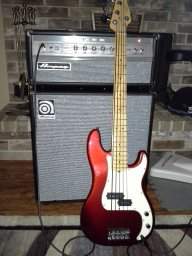
look closely at the above photos of the carvin power amp
Stealth. I love it!

TalkBass has been independent since 1998. Add your voice.
Create a free account to reply to discussions, view embedded media, and browse with fewer display ads.
Join free Log in
Want zero display ads or expanded classifieds tools? Compare plans.
look closely at the above photos of the carvin power amp
might be a n00b question, but how to go about filtering/removing those crazy low frequencies that sound like mud, suck power, and can encourage over-excursion? That would be my primary concern with any pre/power amp setup.

what pookie said. the vt has the standard ampeg low end rolloff, which greatly helps get rid of a lot of mud freqs.might be a n00b question, but how to go about filtering/removing those crazy low frequencies that sound like mud, suck power, and can encourage over-excursion? That would be my primary concern with any pre/power amp setup.

I'm not saying it can't work, just that it will work better doing it the "correct" way.
sometimes you have to go by the book, sometimes you have to tear pages out of the book and wipe your butt with them. this is one of those instances where the latter response is probably most appropriate

I'm speaking from manufacturer's recommendations, personal experience AND personal experience with other preamps to use as a basis for comparison. Where are you speaking from?
Since you asked, I'm speaking from a degree in audio engineering and 20 or so years in music. I was unaware that the VT was intended to be used this way by the manufacturer. Most pedals don't have the output to do this.
Since you asked, I'm speaking from a degree in audio engineering and 20 or so years in music. I was unaware that the VT was intended to be used this way by the manufacturer. Most pedals don't have the output to do this.

well the good thing about the vt is that if you clip the output of one slightly, it sounds like an svt with a slightly clipped output, which as we all know is 100% a-1 badass!
isn't that how math rock got started?Let me get my slide rule out and see if that makes sense...
I don't disagree with this at all. That said, the bass I was using as a testing platform was my Warmoth/Status G4 with dual Darkstar pickups. Darkstars are fairly hot, but no abnormally so. The pickups in G&L instruments are WAY hotter, and my bass is certainly lower volume than most active circuits when using any kind of boost in the low-end. That said, it easily drove a QSC and a Crown power amp to clipping when going through my VT at fairly "middle-of-the-road" settings. I didn't bring my Jazz bass which has considerably lower output, but my suspicion is that it would have worked as well.Smoove - Depends on your overall gain structure. I don't know the particulars of your rig, but say you're playing an active bass with a hot output, gain 75% up, master 75% up, and some boost on the eq, you're increasing the overall level to the point that you could be clipping the output stage of the VT without knowing it.
I've been in two studios recently. One took a signal from the VT into a Radial J48 and it worked great. I didn't get into any particulars about gain with the engineer on that one. The other studio setting took a signal from the VT right into a Mackie board. The engineers commented that the signal from the VT was very hot, and this was with the same settings I had used with the power amps I was testing the day before:A good test to do would be to plug the VT into the line level input of a console with the gain (or trim) set to unity. Then you can check on the console's meters how much gain you're actually sending to the power amp. But as long as you're not maxing out the output of the pedal it's probably fine.