Cue host of Photoshopped memes of Jaco playing Warwicks, Alembics, Dingwalls etc...


TalkBass has been independent since 1998. Add your voice.
Create a free account to reply to discussions, view embedded media, and browse with fewer display ads.
Join free Log in
Want zero display ads or expanded classifieds tools? Compare plans.
Cue host of Photoshopped memes of Jaco playing Warwicks, Alembics, Dingwalls etc...

LOL! “God hates your bass”

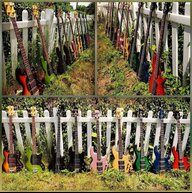
The schedua one was the heaviest and made in 1996. It weighed almost 13 pounds and after three nights of gigging in a row, I felt as though my clavicle were ready to break. The ash is a solid body and the lightest 6 String Wal I have played. It was the first Wal 6er made, the prototype. The Wenge is a build I had commissioned From 2017. The Mk3 is the most ergonomically perfect and advanced bass I have ever played. If I had to choose one bass for eternity...it’d be a Mk3.View attachment 4145922View attachment 4145923
Cue host of Photoshopped memes of Jaco playing Warwicks, Alembics, Dingwalls etc...


Being a 1989 you'll want to send the circut boards in for servicing if they havent been done already.
Why is that? Is it specific for those years? Or Just because it is 32 years old?

Left handed Pro neck fitted is a tad quirky!Here is a recent listing that I am considering. Any red flags for you experienced Wal nuts?
Wal Mark 1 Bass 1989 Shedua Facings two necks. Freteless / Freted + case | Jimvoyager | Reverb
Why is that? Is it specific for those years? Or Just because it is 32 years old?
The chosen electrolytic capacitors contain acid, and they have a useful service life; 25yr is about all you're going to get from them, and when they start leaking the acid will eat away thin aluminum tracers on the circut board that pass right under them. Anytime I buy an old Wal that's near 20yrs old I just replace them. Best to not wait until it becomes a problem.
Also there are some carbon resistors that can get brittle (like 5 or 7 of them) they used in the 80s. Sometime in the early/mid 90's Wal changed to a ceramic resistor that's much tougher. So those get updated as well when the boards are in for servicing.
I can see the Reverb bass has the old resistors still in place, but the caps aren't visible in the pic, and much harder to tell if they've been replaced or not.
I'm pretty sure you have had your basses for a good 10+ years now? So pretty safe to say they've never been done.
What I go by is the voltage rating I see on the two caps. You can see it in my pic above.
In the 80's Wal was using a 25v cap, and then in the 90's and 00's jumped around and used a 40v and 50v. The voltage rating doesn't matter...its the microfarad rating...so it will need to be a 4.7uF rated capacitor (4.7μF).
You can see the replacements I installed on the black bass above are 35v, and I believe my new Wals also have 35v caps if I remember right.