None whatsoever.Is there a relationship between weight and punch?

TalkBass has been independent since 1998. Add your voice.
Create a free account to reply to discussions, view embedded media, and browse with fewer display ads.
Join free Log in
Want zero display ads or expanded classifieds tools? Compare plans.
None whatsoever.Is there a relationship between weight and punch?

Could a modern and lightweight bass sound like a vintage Bass with the right electronics? In terms of low end punch, sustain and growl
Is there a relationship between weight and punch?
Weight is related to the low end. A very light instrument, imagine a sheet of paper with strings, would just be fluttering back an forth, absorbing energy from the strings. The higher the frequencies, the less they would be absorbed so the overall sound would be tinny, the low end being sucked into feeding the fluttering. Make the sheet of paper thicker, turn it to cardboard or to solid wood and more of that low end would remain in the strings. The heavier the body, the less it would vibrate and the sound would remain fuller. At some point, the difference would no longer be noticeable and more weight would no longer matter. Most basses are built beyond that point.
The same principle applies to amplifiers. I suppose this is why bass amplifiers are built heavier than those for guitar.
Speaker cabinets need to be stiff, not heavy. Unfortunately to make the panels stiff it usually means adding weight in the form of bracing . One of the most amazing speaker cabinets made was a horn 16 feet long with a mouth opening 11 feet by 11 feet. It was made of concrete. Perfect for a bar gig!
It does to me."Better" doesn't mean anything.

I get your theory, but I don’t think the body weight makes a significant difference to the low end.Weight is related to the low end. A very light instrument, imagine a sheet of paper with strings, would just be fluttering back an forth, absorbing energy from the strings. The higher the frequencies, the less they would be absorbed so the overall sound would be tinny, the low end being sucked into feeding the fluttering. Make the sheet of paper thicker, turn it to cardboard or to solid wood and more of that low end would remain in the strings. The heavier the body, the less it would vibrate and the sound would remain fuller. At some point, the difference would no longer be noticeable and more weight would no longer matter. Most basses are built beyond that point.
The same principle applies to amplifiers. I suppose this is why bass amplifiers are built heavier than those for guitar.

Heavy basses tend to sound more compressed to my ears. It’s actually kind of funny because I tend to not use a compressor with basses that are over 10 pounds but normally do for all basses under 10 pounds. 8-9 lbs seems to be the sweet spot imo for your typical ash or alder body with maple neck basses.Is there a relationship between weight and punch?
Could a modern and lightweight bass sound like a vintage Bass with the right electronics? In terms of low end punch, sustain and growl
Thank you!
PD. Don't know where to post right.
This is not directed specifically at MVE. His quote just seemed appropriate for this! The one thing they don't tell you on the Gittler webpage is how much they weigh. They're made out of titanium, so they may be heavier than they look. Personally, I'm with the mass equals sustain crowd and I like a good looking, well finished chunk of wood.

Usingg the same scientific proof that all major internet sites use, the sound of a bass (not factoring in amplifier) is made up of the following:
83.34% - Style of playing (where and how you play)
8.21% - Strings
7.98% - Pickups
0.23% - Body and neck woods
0.09% - Fingerboard wood
0.15% - Magic




0.23% wood?? Man you better delete that one! They will come out of the closet over that !!Usingg the same scientific proof that all major internet sites use, the sound of a bass (not factoring in amplifier) is made up of the following:
83.34% - Style of playing (where and how you play)
8.21% - Strings
7.98% - Pickups
0.23% - Body and neck woods
0.09% - Fingerboard wood
0.15% - Magic
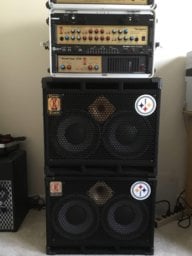
I think I hear a difference in the lower part of the spectrum as this guitar is being cut down. It is subtle and requires good headphones:
I played a Warwick Corvette 5 back in the day that was a tank. Made of Bubinga. Sounded great. But it wasn’t any punchier than my 8.5 lbs PBass.
You can change the tone by just playing it differently. Hand position, touch, attack. Unless the gear and/or instrument is vastly substandard, 85% (maybe more) of tone is the player. Sorry gear heads (and I’m one myself), stop buying new stuff and practice more.
Let me find my asbestos jump suit real quick.

Here is a demo of a lightweight bass:
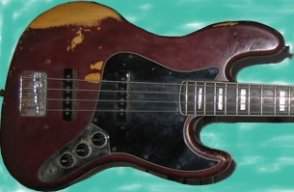
Stiffness, thank you. I think it is the same for the bass absorbing acoustic energy from vibrating strings: stiffness is the factor, not mass.Speaker cabinets need to be stiff, not heavy. Unfortunately to make the panels stiff it usually means adding weight in the form of bracing . One of the most amazing speaker cabinets made was a horn 16 feet long with a mouth opening 11 feet by 11 feet. It was made of concrete. Perfect for a bar gig!

Stiffness, thank you. I think it is the same for the bass absorbing acoustic energy from vibrating strings: stiffness is the factor, not mass.