• TalkBass has been independent since 1998. Add your voice.
    Create a free account to reply to discussions, view embedded media, and browse with fewer display ads.
    Join freeLog in
    Want zero display ads or expanded classifieds tools? Compare plans.

What Amplifier Specifications Do You Feel Is Beneficial?

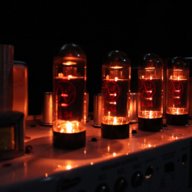
What if the 1000 watt amp reaches 1% THD by design at 50 watts? Or what if the super-coveted and highly regarded tube amp doesn't ever dip below 1%? I think we will find that designing to "marketing numbers" will result in some pretty uninspiring amps lacking in mojo, sterile, unforgiving of overdriven operation, etc.

Agree - some things are better kept behind the company firewall and forcing the user's ears, not their eyes, to decide... Ultimately, until all amp builders publish to established standards the spec sheets and performance claims remain apples and pears. And in many ways that's fine. I bought my Genz because it sounds great, not because of the spec sheet.
 
I like:
Wattage whichever way you measure it

impedance range that the amp operates at comfortably. I've seen ratings of two ohms...but not at full power... which basically sounds like 4 ohm for actual general gigging.

Dimensions and weight

Centers for EQ/tone controls.

List any controls that may not be obvious, like an unlabelled push/pull pad or combo speakon/14".

Warranty clearly spelled out

In short, nothing special. Just the basics.
 
What if the 1000 watt amp reaches 1% THD by design at 50 watts? Or what if the super-coveted and highly regarded tube amp doesn't ever dip below 1%? I think we will find that designing to "marketing numbers" will result in some pretty uninspiring amps lacking in mojo, sterile, unforgiving of overdriven operation, etc.

Agreed. There are people who will rule out gear based on specs. It's a tightrope.
 
A 1 dB compression measurement made after the dynamic behavior has settled out is no more or less an accurate description than a steady-state power spec', because that is really what it is. It would indicate (for the steady-state case), where the amplifier is starting to run out of gas. IMO it would be a useful supplement to the usual "some power @ some THD". OTOH, the steady-state power output at 10% THD gives somewhat similar information.

Measuring dynamic behavior - that's something for the amp reviewers in their labs to do. There are ways it could be specified I suppose, but I see no way that would make sense in a consumer-level product data sheet.

None needed. (I couldn't tell what you inferred :laugh:.) I was using "clueful" in the sense of the consumer being technically aware of what such a specification means. It could be a stretch on my part.
That's how I read it and hopefully my response reflected that.

Something useful for a non-technical consumer?
Kind of like horsepower or gas milage for automobiles. The consumers like those numbers even though they don't know what they mean, how they are derived, or that as a standalone number they don't mean much, or even if they are accurate or not.
Seems like that's pretty much what we already have in the amp business.

One auto manufacturer just jumped to the #1 spot (in some category) even after recently being cited for fake gas mileage numbers.
We say we want a lot of specs, but even if we know what they mean, how often are they the determining factor in our purchases?

While only movie fiction, I always liked the line from the movie Dave, where they are trying to find money for homeless children.
At one point Dave asked. "Why are we spending millions of dollars to convince consumers to like the automobiles they've already purchased?"
In the truth is often stranger than fiction, it kind of makes you wonder if that really is happening in D.C.

Maybe instead of a list of specs all we need is for someone to tell us why we should like the amplifiers we already own?
Oh, we already have that here. They are the "clubs" we have that are associated with certain brands or models of gear.
 
I see here you are headed with this, but there are all kinds of amps, not just tube amps, that employ harmonics addition in a variety of ways to generate a pleasing (to many players) more interesting, less sterile tone. This is going to be an even bigger thing I predict in the future, and already is in a big was with DSP processing like Axe-FX, Two Notes, etc. where harmonics are generated based on calculations made from not just the instantaneous signal but maybe looking ahead (via a slight delay) a few cycles and accumulating some of the past cycles to get a better perspective on what the signal is about to do next. This is all happening on a very small time slice but is way more comprehensive than an instantaneous "data" sample.

Also, when voicing a speaker that you wish to be overdrive friendly, a designer may choose to modify or take advantage of the non-linearity of the magnetic field at the edges of the gap where they are not straight but are slightly curved. On a speaker like this, the distortions will rise at a lower rate but somewhat earlier in the power curve. The (usual) goal in these instances is for the transition to real non-linearity to be smoother, less abrupt, and thus more useful as a tone sculpting tool. These effects will also vary greatly with frequency!

This is a tough task to describe in a way that gives a single (even marginally useful) useful number IMO.


Good points. Users will always have to "try before buy" to make sure they like the sound of the unit. Reading specs will never be able to replace that.

So for specs, the usual.
- weight (kg, lbs)
- size (cm, inches)
- inputs, (impedance of inputs. important for users of piezo pickups as well as magnetic pickups)
- How much gain can the input knob control (like in a mixer)
- outputs (is the XLR (or 1/4") out pre or post EQ or is it assignable. )
- wiring diagram (for those who want to read it. ;-) )
- EQ set points. (not just low, mid high, but i.e.. 30Hz, 500Hz, 2000Hz) And how wide is the Q approximately.

None of the above say how it will sound, but specs can't really tell that.
 
  • Like
Reactions: Al Kraft
I think we will find that designing to "marketing numbers" will result in some pretty uninspiring amps lacking in mojo, sterile,... etc.

Similar to a big difference in guitar and bass cab design. A guitar cab that is super-precise and doesn't flavor the sound at all will come off as "blah". On the flip side, lots of bass players want exactly that... A cab that puts out exactly what they put in.

I agree that an amp needs to at least have some basic seasoning, even if it is just a pinch of salt. Some players find a lot of the more HIFI modern amps "too sterile", and in real testing they actually have measured THD above 1%.
 
I'm an electrical / electronic idiot, so I would not even attempt to make suggestions in this crowd.

But, I would only have two 'wishes', if you will:

1) A common set of standard tests / published outputs that EVERY manufacturer would have to adhere to. This might involve changing consumer law, so who knows how that would go . . . .

2) Some sort of similar common standard for cabinets along the lines of the 1 watt at 1 meter sort of efficiency standard, again where any builder would have to use the same tests.
 
Good points. Users will always have to "try before buy" to make sure they like the sound of the unit. Reading specs will never be able to replace that...None of the above say how it will sound, but specs can't really tell that.

Unfortunately, with everybody purchasing from the internet these days, it's about the only thing you have to thin the heard before considering a purchase.
 
I like:

impedance range that the amp operates at comfortably. I've seen ratings of two ohms...but not at full power... which basically sounds like 4 ohm for actual general gigging

Maybe I am missing something here. We provide a 2 ohm rating at the same duty cycle as our 4 and 8 ohm ratings. They happen to be the same as the 4 ohm rating, much the same as a tube amp with impedance taps.

Or do you mean the ability to drive 2 ohms without shutting down easily?
 
Bass Gear mag specs amps with RMS output at 40 Hz.

That strikes me as both an empirically measurable and practically applicable number to indicate real-world capability for bass amplification.
IME that's not a practically applicable number by no means. Those numbers had never been practically applicable and never will be!
If an amplifier restricts average RMS down to (let's say) numbers like around 50% then there is a very good chance to amplify signals of 6dB crest "savely" over time.
The manufacurer should clearly state this feature.

Testfield laboratories should state that in almost allways of all applications it makes less to no sense to amplify with 3dB crest numbers, respectively RMS watts.

If an amplifier resists to amplify signals with less crest than 6dB crest does NOT and NEVER automatically mean reduction in loudness (either way clean sound or overload range) and also does not mean any reduction of Harmonics at typical overload range (working mode).

Sometimes the "common" RMS power number can be very foolish

There was way more information given by ratings like
300 watt Pink Noise 6dB crest

If an amplifier was rated with additional number like this I would know, compared with my svt tube head 300 watt RMS

This amplifler was louder than my 300 Watt SVT even with lower dirt in the sound at same output power 300 Watt.
The amplifier could be pushed very hard (lots of dirt) to get 300 Watt over time without overheating the device over time

I think most of all players of the svt don't want to push this amplifier (the most popular amplifier all around the world) harder than to 9dB crest. Rock and Crunch players may push the amplifier very hard to around 6dB crest.
Only some hardcore players may push the amp as hard to get smallish 3dB crest which then (actually) equals the "common" RMS power rating.
 
Last edited:
  • Like
Reactions: agedhorse
If the housing is an essental part of cooling for the power amp stage the manual should note to provide sufficiant air flowing around the housing if the amplifier is pusehd hard.
I'm pretty sure most of all manuals do note this point if neccessary.

Sometimes there are complaints at TB forum about issues with shutdown of an amplifer. May be some user did not read the manual carefully?

Ampeg did not note that with the svp pro there is a good chance to "destroy" the transformer if the housing and it's environment runs to hot over time. If thermal cutoff breaker inside the transformer cuts off and "shut down" the preamp the line tranformer is wrecked.
 
Last edited:
  • Like
Reactions: agedhorse
What if the 1000 watt amp reaches 1% THD by design at 50 watts? Or what if the super-coveted and highly regarded tube amp doesn't ever dip below 1%? I think we will find that designing to "marketing numbers" will result in some pretty uninspiring amps lacking in mojo, sterile, unforgiving of overdriven operation, etc.
What I want is an objective set of specs that will give me some idea of what I'm buying. When buying a power amp like (QSC) it is fairly cut and dry but, with a bass amp head it is a total crapshoot and the only way to find out if it will do the job is to take it on the gig.
 
  • Like
Reactions: bdplaid
I see here you are headed with this, but there are all kinds of amps, not just tube amps, that employ harmonics addition in a variety of ways to generate a pleasing (to many players) more interesting, less sterile tone. This is going to be an even bigger thing I predict in the future, and already is in a big was with DSP processing like Axe-FX, Two Notes, etc. where harmonics are generated based on calculations made from not just the instantaneous signal but maybe looking ahead (via a slight delay) a few cycles and accumulating some of the past cycles to get a better perspective on what the signal is about to do next. This is all happening on a very small time slice but is way more comprehensive than an instantaneous "data" sample.

In division of System and Informations Theory a slight delay offers the possibility to implement time variant properties of an "emulated" system which are very natural with any amplifier, especially with tube amplifiers. It offers the possibility to emulate tube head characteristics way more "realistic" and "organic" than with instantaneous DSP processing
 
Last edited:
  • Like
Reactions: agedhorse
More specs would just give Marketing even more numbers to fudge. Lol. We can't even get consistent power ratings.
I think this is exactly what some players think about the OP's question asked.
At the other hand side I think totally different. The common standards fudge us players way too much cause the standards (even AES standards) predict way more power than useable in real practice with any instrument.
 
Last edited:
I think this is exactly what some players think about the OP's question asked.
At the other hand side I think totally different. The common standards fudge us players way too much cause the standards (even AES standards) predict way more power than useable in real practice with instruments.
If any (common) standard predicts 300 Watt 1%THD continous, and may be an amplifier xy could amplify for 1 hour without running into heat issues.
What does this number mean to me as bass player cause I'm (for sure) down at around 30 Watt (probably even less) if my bass guitar signal shall never exceed at no time more than 1%THD.

That's why (common) standards can be so foolish
 
Last edited:
  • Like
Reactions: agedhorse