
Enjoy the benefits of a premium membership!
Upgrade Account
-
TalkBass has been independent since 1998. Add your voice.
Create a free account to reply to discussions, view embedded media, and browse with fewer display ads.
Join free Log in
Want zero display ads or expanded classifieds tools? Compare plans.
You are using an out of date browser. It may not display this or other websites correctly.
You should upgrade or use an alternative browser.
You should upgrade or use an alternative browser.
What Constitutes a Professional Musician?
- Thread starter CoffeeLove
- Start date
More options
Who Replied?

I couldn’t make ends meet without my performance gigs, including an MD position at a church. My day job makes up most of my income.
But, my day job is also a music-related field; I run the sound preservation studio for a large university music library. My musical skills (ability to read scores, extensive knowledge of music history) come into play for sure, but it’s primarily a sound engineering gig (which I am not professionally trained in, unlike music).
So I dunno, am I professional musician?
But, my day job is also a music-related field; I run the sound preservation studio for a large university music library. My musical skills (ability to read scores, extensive knowledge of music history) come into play for sure, but it’s primarily a sound engineering gig (which I am not professionally trained in, unlike music).
So I dunno, am I professional musician?
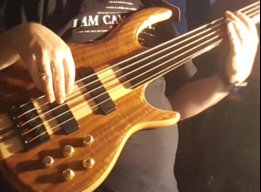
I play in a working bar band that typically plays three to five nights a week, and from what I can tell we are probably the most active in our area these days. I retired from my engineering career in April of 2019 and have been totally music since. Am I a professional? Hard to say. I show up on time, help set up, induce no friction, play and sing my parts with intent to serve each song, strive to continuously build my expertise, work on my physical image and stage presence, tear down, get paid. In between gigs I study and practice and occasionally fill in with other bands.
Professional? Well, to me that’s just another label. I identify as a functional variety-band bass player. One of many. And I love it.
That’s me in the white shirt and red bandana breaking a setup sweat, followed by an albeit blurry shot during the gig:
So it sounds like your primary source of income became being a musician. From the criteria I've always been told and gone by, you're a professional musician.
Doesn't matter WHY it happened. At times I've lost my job. When I did, I starting playing pro again, weddings, gigs, whatever. I was a professional musician for those months, once again, although at the end of the year, tallying my income, the music part would have been so inconsequential compared to the income from my 1 or 2 day jobs through the year even with the break between jobs, that I'd only classify it as semi-pro by then. If it hadn't switched back to a new day job at some point though, it would have been classified as being a professional musician, once again, like my old days.
That's awesome that your day job involves music! Cool! Not that you specifically asked me LoL, but my 2 cents worth is that you're a professional music librarian and semi-professional musician.I couldn’t make ends meet without my performance gigs, including an MD position at a church. My day job makes up most of my income.
But, my day job is also a music-related field; I run the sound preservation studio for a large university music library. My musical skills (ability to read scores, extensive knowledge of music history) come into play for sure, but it’s primarily a sound engineering gig (which I am not professionally trained in, unlike music).
So I dunno, am I professional musician?
This is a pretty blurry line. If you can pay your way, whatever that is, you are a professional.
But here is where you JUST explained why it's not blurry, at all.
It's not IF you CAN pay your way, which would be blurry. That would be the equivalent of stating that you COULD be a professional musician - the opportunity for you is there.
The black and white part is based on if you DO pay your way. If your PRIMARY income is as a musician (which, according to my training and experience means you play music as your job, whether live, in studio, at home, on a street), and a primary income is one that is 50% or higher of your income from my own experience, then you ARE a professional musician.
If you do not make at least 50% of your income from music, but do make some money from it, then you are semi-pro.
If you do not make money from it, then you are an amateur musician.
The titles are only defined by income versus other income in your life. They don't define your opportunity to make money at it.
I have opportunities to work in IT support all the time. I have helped people for money and plenty of times for free on the side. However it's not my profession, I don't make notable money from it. I don't even consider myself semi-pro at it, because I already work in computers as my day job (software engineer), so it is just part of the skillset that bleeds over a bit.
That's awesome that your day job involves music! Cool! Not that you specifically asked me LoL, but my 2 cents worth is that you're a professional music librarian and semi-professional musician.
Ah, but I technically can’t call myself a librarian because I don’t have an MLS!

But here is where you JUST explained why it's not blurry, at all.
It's not IF you CAN pay your way, which would be blurry. That would be the equivalent of stating that you COULD be a professional musician - the opportunity for you is there.
The black and white part is based on if you DO pay your way. If your PRIMARY income is as a musician (which, according to my training and experience means you play music as your job, whether live, in studio, at home, on a street), and a primary income is one that is 50% or higher of your income from my own experience, then you ARE a professional musician.
If you do not make at least 50% of your income from music, but do make some money from it, then you are semi-pro.
If you do not make money from it, then you are an amateur musician.
The titles are only defined by income versus other income in your life. They don't define your opportunity to make money at it.
I have opportunities to work in IT support all the time. I have helped people for money and plenty of times for free on the side. However it's not my profession, I don't make notable money from it. I don't even consider myself semi-pro at it, because I already work in computers as my day job (software engineer), so it is just part of the skillset that bleeds over a bit.
But if 51% of your income comes from music and 49% comes from waiting tables, can you really say that music CAN pay your way? Wouldn't that also be a semi-pro?
PossiblyBut if 51% of your income comes from music and 49% comes from waiting tables, can you really say that music CAN pay your way? Wouldn't that also be a semi-pro?

That's how how I was told - you can have 2 equal professions... it's like saying you're a semi pro musician and semi pro waiter. What I was told, by people who taught me how to do my taxes as a musician here, that my primary profession is the one that is my main source of income. If it's exactly 50/50 (which it has never been for me), then you would have two primary sources of income.
If you make 1% more as a musician, then that's your primary profession.
I'm just saying what I was taught and how I always did it LoL. As I understand. those are the accepted ... well, not sure they are rules, but standards?

Professional: “engaged in a specified activity as one's main paid occupation rather than as a pastime”
Oh there's a special Librarian degree? I wouldn't know - cool.Ah, but I technically can’t call myself a librarian because I don’t have an MLS!
However, I actually have worked with a TON of software engineers who have zero schooling and aren't engineers, but it's their profession.
I don't think the accreditation is required for it to be your profession, Mr. Music Librarian. I'm jealous of your day job, actually!

I would postulate that very few professional musicians had time to hang out in an internet forum discussing what constitutes a professional musician until the Covid lockdown happened. 
Now that I think of it, it seems like these discussions tend to default to the semantics of the word “professional” but what about the word “musician”?
Is “musician” being conflated with “performer” in some of these arguments?
Is “musician” being conflated with “performer” in some of these arguments?

Based on My tax returns in the 1980’s I was a pro musician. Now I am a pro lawyer But— I am a better musician today than I was in the 1980s.
I've had threads on here about this and here is what I learned.
My own personal take is that you can't call yourself a professional anything unless it's something you make your living at. It's the tax return test. If it isn't what's on your tax return under "occupation" it is not your profession.
That being said, there are many here who mix it up with behavior. And that's quite a reasonable thing to do. You can behave in a professional manner, i.e. take it seriously and do all the things that show you take it very seriously as a craft, and play at a level that would get you paying gigs if that's what you wanted to chase after as a living.
Many people here will argue that this makes you a professional. I would quibble just a bit and say that it makes you pro-level in your attitude and abilities, but the word "profession" has a specific meaning. So when I say I used to play professionally that means something to you... it means I made my living in music. Otherwise the term "play professionally" has no meaning at all. It could mean almost anything.
You can be a teacher without gigs and be a professional musician if you are a music teacher. But if you are otherwise not putting "musician" on your tax return, you are not a professional musician.
My definition only (well, that and the dictionary
I guess that "pro" needs context similar to "mint" in a listing. There is the technical definition and the commonly used definition.

A spouse with a good job or a willingness to live in a van down by the river.


....... and all nutritional sustenances supplied by Ramen noodle soup. I can remember having to choose between flushing the toilet or saving that last bit of water (water shut off for nonpayment) to soften the noodles... no power either.A spouse with a good job or a willingness to live in a van down by the river.
Gotta mix it upDid we change from carrots to cheesecake? Why didn't someone tell me? Does that mean I'm not a professional anymore?

making the majority of your income from playing ... and filing that income on your taxes ...
seen a lot of 'pros' that really suck ,... so being 'good' or actually 'having talent' is moot ...
i'm just semi-retired at everything .. !!
seen a lot of 'pros' that really suck ,... so being 'good' or actually 'having talent' is moot ...
i'm just semi-retired at everything .. !!

You're a professional when you get paid. Get paid to paint a house, you're a professional house painter. Get paid to play music, you're a professional musician.


