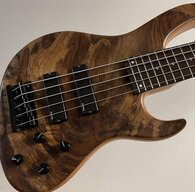
I spoke with my luthier, Keith Roscoe. I have 6 of his basses and they are magnificent. Keith inserts graphite rods on each side of the truss rod to help add sustain. My Mahogany body bass with Hard Rock Maple neck will sustain for days, and the neck is a bolt-on. Keith said that the graphite rods can help offset dead spots as well.
Dead spots can be caused by hardware issues but dead spots can also be the result of the combination of woods used to make the body and the neck. The more dense woods will tend to have more sustain, especially with a Hard Rock Maple neck, and even more so with the graphite rods on each side of the truss rod.
Keith says that a slight rotation of the truss rod, tighten or loosen, might help with a dead spot, but it will most likely not completely remedy the problem. The issue of dead spots is usually related to wood choices.
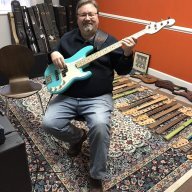
I wanted my Roscoe Classic 4-string P-bass style bass to be as light weight as reasonably possible. I chose a Swamp Ash body that had very little grain in it. The chunk of wood was so light it almost reminded me of Balsa wood. The neck is Maple and there are two graphite rods. That particular bass, because of the light piece of Swamp Ash that I chose, has two slight dead spots, at frets 15 and 16 of the G string. The graphite rods are a must with a bass this light. I really shouldn’t call these dead spots. The notes at these frets can still last long enough to be a whole note for the music I play. It’s just that the notes at other points on the neck can sustain somewhat longer. I have never played a song and said to myself, I sure wish my high Bb had more sustain. If I’m playing with a pick, mimicking a Carol Kaye style, I like less sustain. I have a piece of foam that I place under the strings, next to the bridge.
Keith Roscoe says that the wood I chose probably reacts with a sympathetic resonance at the frequencies of the high Bb and B notes I play on the G string of my bass. But the sympathetic resonance can be out of phase enough to cause a slight bit of cancellation, resulting in diminished sustain. This is similar something known as comb filtering, which can happen with a live sound reinforcement system. Phase cancellation results from the sound arriving at your ear sooner from one speaker and milliseconds later from another speaker.
Keith Roscoe uses a Plek machine to ensure that the necks on his basses are as perfect as can be. He pleks the basses twice. The first Plek is to ensure that the fingerboard is perfectly planed. This can be especially important for a fretless neck. The second Plek is for the frets. Note that Keith will Plek any brand of bass if you send it to him. The price is slightly higher for a non-Roscoe bass.
Keep on keeping it low,
BassicallyDoug