• TalkBass has been independent since 1998. Add your voice.
    Create a free account to reply to discussions, view embedded media, and browse with fewer display ads.
    Join freeLog in
    Want zero display ads or expanded classifieds tools? Compare plans.

What makes an expensive bass expensive?

I would encourage OP to visit a high end bass shop whenever he gets the chance. Just two weeks ago my wife and I traveled to Orlando, Florida, and I insisted on stopping by Bass Central. The physical location is unassuming, but inside- wow, what a selection of top-notch instruments and amplifiers. Plus the guys running the shop are 2nd to none- really excellent folks, and happy to let me play away for 3 hours.

The high point was getting to QC the new Fodera Standards delivered that day, a Matthew Garrison and a Victor Wooten Ying-Yang. These instruments were dream-like! The Ying-Yang had some setup issues and needed to be tweaked, but the Garrison was dreamy. These are just objects that feel great in the hand, and feel great being played. There are no short-cuts to getting that feeling. That's what you're paying for.

Not that I own any basses that nice (the Garrison Standard lists for $8750 IIRC), but I can see why, if I had the money, I might go for it. The Garrison bass was extremely sweet, a very interestingly thought-out instrument. A 5-string, low E to high C, with a 33" scale length. The sound of the strings was very even and unified across the whole neck, and the electronics package was not only extremely well thought out, it was beautifully integrated into the whole of the instrument. It did everything I wanted it to do, and it was pretty intuitive and simple to get what I wanted. The only thing limiting the music I made with that bass was me- my ability and my conception.
 
This is a terrible false dilemma. I know plenty of folks with nice gear who are better musicians than me by a long shot. I also know some folks with expensive instruments who are still, well, working on it. You don't have to forgo nice gear to become a better musician. Often, the tone, taste, feel, technique, and dedication can be enhanced by the acquisition of a fine instrument - when a player gets the tone, playability, and specifications they have longed for. This, believe it or not, can actually make someone practice more!
I'm planning out a custom build right now that will hopefully combine all of the elements and specifications I want in an instrument - from the look and the tone, to the string spacing and the fretboard radius. After playing for years, and having had dozens upon dozens of instruments in my hands, I'm fairly certain I know almost exactly what I want in a bass. In order to realize this dream bass, I will be going to a custom builder (not sure exactly who yet) because I know that I can get a level of quality and fit & finish that would be hard to come by on a production line bass, and because they just don't make the bass I want on a production line. This is an instrument that will totally work for me, although clearly doesn't work for everybody given the lack of a model with my specifications from any of the bigger brands.

i don't follow this philosophy:)
i appreciate super bass-lines more than super basses :)
 
There are many posts that I have made on TB outlining in detail our cost structure. In no way does Fodera charge for its name. Quite the opposite -- if we could not charge what we charge we would either need to reduce the quality of our products and/or service or close our doors...

Regards,

J

There's craftsmanship & then there's charging for your name. Labor is still the correct word. Craftsmanship just means that it's artist labor that's used.
 
There are many posts that I have made on TB outlining in detail our cost structure. In no way does Fodera charge for its name. Quite the opposite -- if we could not charge what we charge we would either need to reduce the quality of our products and/or service or close our doors...

Regards,

J

Maybe the production costs are too high, then? Also, I wasn't referring directly to Fodera...just to the boutique bass industry as a whole.
 
I know that most people defend them on the grounds of quality and the parts they use...I'll be giving some $0.02 from the perspective of a guy who likes to do his own setups/mods.

With a boutique product like a Fodera, Wal, or (insert other brand here), you are paying for the peace of mind knowing that you won't get a lemon and even if you somehow did, they would flip inside-out and back again to make sure they make it right for you and get you taken care of. I'd say this stems from them taking actual pride in what they create and the reputation they want to maintain. If I were a professional musician and wanted something reliable that I don't have to guess on whether or not it will hold up, I would go with a boutique bass. Now that doesn't mean I wouldn't have my customs and modded basses that I would bring and play, but I'd have the boutique to take care of business if things went south with my modded basses.
 
i don't follow this philosophy:)
i appreciate super bass-lines more than super basses :)

Believe me, I play & practice a lot more songs that were recorded with a Fender or a Stingray than with a custom boutique. That doesn't mean that I won't personally go for an instrument that fits me better than a stock P or J bass. I can track & gig all day long with a fender, but it will be far more personally enjoyable with the custom. That's really what it's all about to me.
 
Maybe the production costs are too high, then? Also, I wasn't referring directly to Fodera...just to the boutique bass industry as a whole.

If you search you'll find a break down of what the actual hourly wages (insurance, health insurance, machines, tools, spray booth, r&d, materials, solutions, rags, finishes, wood, electronics, hardware, and the real treasure, time)are for a luthier. If you think his costs are too high then do you get paid too much for your job, just enough or not enough?
 
If you search you'll find a break down of what the actual hourly wages (insurance, health insurance, machines, tools, spray booth, r&d, materials, solutions, rags, finishes, wood, electronics, hardware, and the real treasure, time)are for a luthier. If you think his costs are too high then do you get paid too much for your job, just enough or not enough?

Have you called a plumber recently?:)
 
Of course it's the player. Those basses make very little sound if you don't touch them. :)

Yet, if you don't have to wrestle with an instrument isn't that a good thing?

I do think some wrestle is a part of paying dues as you acquire more and more skill.

This topic can be apples and orange juice. Are we discussing vintage, reissues, Custom Shop or expensive refined versions of the trusted Fender? Sort of a different category than say a Smith designed to be what it is.

Yep! put an expensive bass on a stand next to a cheap bass on another stand and they sound exactly the same!! hahaha
 
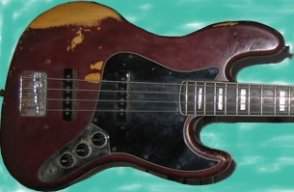
How does your 74 jazz get any mojo if you don't use it at gigs?

Great question!!! :) :) It was used on numerous gigs from 1990 up until 2002(when I landed a Lakland artist deal)

Before then,it was used by its previous owner on countless shows from 74-78(when he sold it to my mom)

From 2002 til the day I stop getting calls to record,it will continue its home studio mojo! hahaha

Oh...and it's been signed by dozens of my bass role models(from gigs I shared the stage with to me taking it to clinics) by Marcus Miller to Chuck Rainey,to Alphonso Johnson,to Jimmy Earl,to Jimmy Haslip,to Berry Oakley Jr(woulda been nice to get Sr..RIP),to Victor Wooten.I'm leaving off about 30 other names! :)

It has plenty of it my brother! :) :)

Peace!
 

Attachments

  • Fender Jazz.jpg
    Fender Jazz.jpg
    48.6 KB · Views: 43
I know that most people defend them on the grounds of quality and the parts they use...I'll be giving some $0.02 from the perspective of a guy who likes to do his own setups/mods.

With a boutique product like a Fodera, Wal, or (insert other brand here), you are paying for the peace of mind knowing that you won't get a lemon and even if you somehow did, they would flip inside-out and back again to make sure they make it right for you and get you taken care of. I'd say this stems from them taking actual pride in what they create and the reputation they want to maintain. If I were a professional musician and wanted something reliable that I don't have to guess on whether or not it will hold up, I would go with a boutique bass. Now that doesn't mean I wouldn't have my customs and modded basses that I would bring and play, but I'd have the boutique to take care of business if things went south with my modded basses.

Oh how I wish that were true! I've had several friends to experience the horror of waiting 12 to 18 months for their dream bass only to find it wasn't a dream at all! There's no guarantee that a boutique instrument solves all problems.

I've had a custom bass made that was great starting out...only to find the truss rod wasn't properly installed and couldn't adjust properly over time.

ANY bass is a crap shoot because we're dealing with woods and the human element....just might not happen as much with the boutiques.Still way too much money to be thrown to chance in my honest opinion.

But on the flip side,if you have the money to spend and don't mind the risks,more power to you because if you find one that happens to be made right,you'll have a friend for life!
 
There is hardly a such thing as a "hand made bass"

I was hiking the other day and out there I was thinking "what a hoot it'd be to start banging out guitars and basses without any of my power tools in a shed in the woods totally cut off from electricity! Of course, I'd also have to make better saws, chisels and a big ol sand casting rig for the tuners and bridges... how the h--- am I going to make the pickups? These instruments will not be 'fully handmade by some weird old dude in the hills' if I source my wire and magnets already made... then what's the point?"

As soon as I figure out how to make quality alloys on the small scale with just a wood fire, this hermit luthier plan is happening. Wait, will tree sap work for insulating the wires and potting the coils?
 
If you search you'll find a break down of what the actual hourly wages (insurance, health insurance, machines, tools, spray booth, r&d, materials, solutions, rags, finishes, wood, electronics, hardware, and the real treasure, time)are for a luthier. If you think his costs are too high then do you get paid too much for your job, just enough or not enough?

And it's not just that - a company like Fender or Ibanez that sells tens of thousands of instruments a year can afford to place large orders at a factory and it may very well cost them half if not less than what a smaller company would pay. Why? Because the factories can purchase more raw materials (wood, fretwire) and components (tuners, pickups, bridges, knobs, strings) and they in turn get a discount for placing large orders from their suppliers.

Keep a factory busy for a good part of the year and you will see huge discounts. I work for a footwear company in manufacturing and when we give factories orders during their normally slow periods, we can get a 15 - 20% off season discount. Placing larger orders allows us to get better pricing - it keeps the factory's cash flow going and they can afford to keep their employees, update their equipment, expand, etc.

But yes, some seem to think you pay x dollars for an instrument and it's all profit - you made a good point with health insurance. Again, I would imagine a smaller company would have to shell out more per employee than a larger company in medical insurance, of course that's out of my expertise so just a guess.

Smaller/boutique builders charge more because of the hours and skill involved, the attention to detail. the higher quality materials, and because they sell far less instruments than the mass producers and still have to pay employees, bills, set aside money for future development and naturally, make a profit.

Now, that's not to say I don't look at certain instrument prices and shake my head and think, "wth?", I do. But again, if there is someone willing to pay then it's worth it to THEM. And I do think some instruments are overpriced for what they are in comparison to other similar instruments but everyone likes a different flavor.

I for one don't get why Fender US Jazzes cost so much since they're such basic, no-frills instruments, they sell tons of them, and they've been making them forever and I think Ibanez' Premium and higher end SRs are much better deals (nicer woods, more ergonomic design, relatively lightweight, active electronics) and cost hundreds less.

But then again, I also play a U.S. Tele geetar :D And I think the Tele is the coolest guitar ever designed and that too is a no-frills instrument. So go figure!

 
Is it me or does Fodera always pop up in these expensive or overpriced threads? I think it's been stated 1000,s of times.. They are what they are relatively speaking. If you can afford there extreme pricing you think they are amazing. If you can't. You think they are crazy...that's me

To the Op.. I don't think it's any more than marketing and supply and demand... Vinny was brilliant to hook up with Wooten...now he has a nice endorsement base and followers who think owning them will give them the same skill set..it's brilliant