• TalkBass has been independent since 1998. Add your voice.
    Create a free account to reply to discussions, view embedded media, and browse with fewer display ads.
    Join freeLog in
    Want zero display ads or expanded classifieds tools? Compare plans.

What's On Your Workbench?

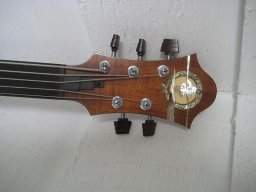
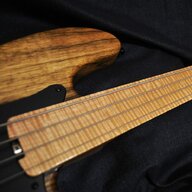
Nice build! Love the all maple neck & body colour contrast :)

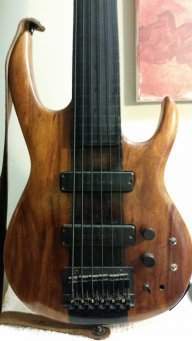
I (jokingly) resent the statement of no one builds grabber style basses xD i've built 3 (Grabber, Ripper, & G3). The Grabber & Ripper were full builds, the G3 was more recycle parts from around home (many mods will leave you with lots of parts/pickups). I am based in canada so that may also be a thing.

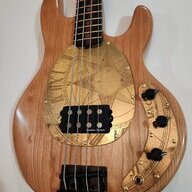
Oh no way! Very cool! After a few more "Snatcher" builds, I'll likely try a triple-pickup version like the G3. Huge fan of all of them, and I've always wanted one of each.
 
  • Like
Reactions: ThaCoast
Oh no way! Very cool! After a few more "Snatcher" builds, I'll likely try a triple-pickup version like the G3. Huge fan of all of them, and I've always wanted one of each.

The G3 wiring was pretty simple, even with three, 2 wire jazz pickups (two bridges, & one neck). Though i did prefer its tone compared to s standard g3 (based on videos ive watched), & it got pretty close in tone just fatter. I prefer my ripper & grabber builds.

1&ccb=1-5&_nc_sid=730e14&_nc_ohc=ZdTMioCR4wcAX8q-fZL&tn=Wjdjvmi4pX4jYeeF&_nc_ht=scontent.fymy1-2.jpg


I am tweaking the ripper's wiring & replacing the pots in the grabber for some smoother ones. Just a quicj update on both.

Rippers controls are same as original, 4 position rotary is: both full humbucker in series, both full in parallel, both split (neck north, bridge south) in series, both split (neck south, bridge north) in parallel.
 
View attachment 5227900

For too long, I've put up with inadequate lighting above the workbench. Now I'm finally doing something about it.

Okay, that's a good thing.....But you really should invest in some stacks of wood cutoff scraps and piles of sawdust. :D
 
Question for those that use a corded handheld router: you need to keep the cord from getting in the way, and I suppose most of us would attach it to the ceiling or some other overhead thing. (I used a clothes line at one point.) So here's my question: do you attach it flexibly, so that as you move the router around the cord stays more or less taut? If so, how?
 
  • Like
Reactions: StereoPlayer
Question for those that use a corded handheld router: you need to keep the cord from getting in the way, and I suppose most of us would attach it to the ceiling or some other overhead thing. (I used a clothes line at one point.) So here's my question: do you attach it flexibly, so that as you move the router around the cord stays more or less taut? If so, how?
I never thought about. I just make sure it’s out of my way.
 
Question for those that use a corded handheld router: you need to keep the cord from getting in the way, and I suppose most of us would attach it to the ceiling or some other overhead thing. (I used a clothes line at one point.) So here's my question: do you attach it flexibly, so that as you move the router around the cord stays more or less taut? If so, how?

I usually drape the cord over one of my hands/arms so I move the cord as I move, or over the edge of the bench. Sometimes, around a clamp holding the work piece.

I would be concerned that hanging the cord would pull on the top of the router and cause it to tip or jerk.

Have you used a router with the cord hanging? I'd be interested to know how that worked.
 
Question for those that use a corded handheld router: you need to keep the cord from getting in the way, and I suppose most of us would attach it to the ceiling or some other overhead thing. (I used a clothes line at one point.) So here's my question: do you attach it flexibly, so that as you move the router around the cord stays more or less taut? If so, how?
I don’t suspend it in any way. I just make sure it can travel freely across and off the edge of the work surface without hanging up on anything.
 
Question for those that use a corded handheld router: you need to keep the cord from getting in the way, and I suppose most of us would attach it to the ceiling or some other overhead thing. (I used a clothes line at one point.) So here's my question: do you attach it flexibly, so that as you move the router around the cord stays more or less taut? If so, how?

I used velcro wraps to attach the electrical cord to the dust extraction hose:
flattening_done.jpg


Seems to work well enough (the velcro straps that is -- the dust extraction doesn't work well at all on the router planing setup!)
 
Last edited:
Question for those that use a corded handheld router: you need to keep the cord from getting in the way, and I suppose most of us would attach it to the ceiling or some other overhead thing. (I used a clothes line at one point.) So here's my question: do you attach it flexibly, so that as you move the router around the cord stays more or less taut? If so, how?

I have a good quality 12/3 extension cord mounted to my routing bench, so it hangs down in the middle. The cord end is normally about a foot off the bench top.

IMG_5445B.jpg


It's the blue cord with the yellow end. The cord is just draped over a wooden arm up high, so I can adjust the height of the end by lightly pulling on it.

IMG_5585B.jpg


Most of my routers have short cords, and are plugged right into the extension cord. I adjust the height so it doesn't get tangled in the fixture. But, if I do pull on it, it just slides over the wooden arm. It won't pull on the router.

IMG_7643B.jpg


IMG_8177B.jpg


I also have a quad outlet box over on the left side of the bench, on the outer wall of the shell. When I'm using a router with a longer cord, or a second power tool, I drape the cord over the top off the wall and plug it into that box. Again, I allow the friction of the cord draping over the wall to hold the cord up off the bench top.

The basic idea is to run the cord up and over something (that's not sharp-edged!), and use that to keep the cord out of your way.

Safety note: The blue hanging cord is also plugged into that quad outlet box. And so are the lights over the routing bench. And there's a switch under the quad box that turns it on and off. When I'm done working at the bench, I flip that switch off, which shuts off all the power to the cords and any power tools, and the lights.

My biggest rule for fire safety in a woodworking shop: All electrical power to all outlets and machines and lights gets shut off when I'm not there.
 
Last edited:

Latest posts