
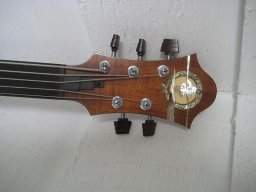
I estimated that there was really only one part of that piece of wood that might yield a usable fingerboard blank. I mounted it to a sled and ran it through the bandsaw:
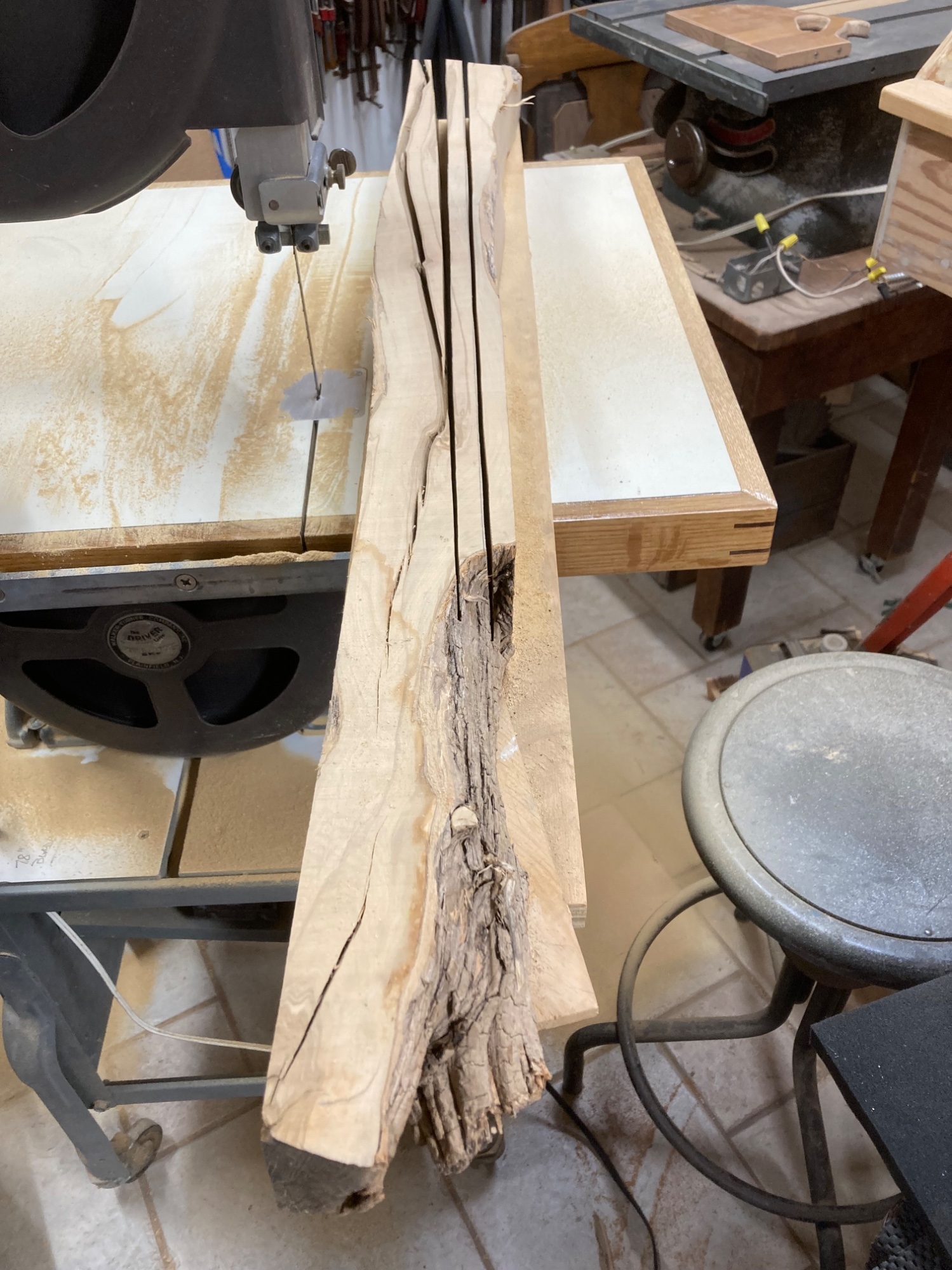
That poor saw…. I switched to a 3/8” x 4tpi blade, 3/8” being the biggest blade that saw can mount, but it’s still a fairly small, not very powerful saw and that’s a thick piece of very hard, very dense wood. The saw wasn’t happy about it but it made the cuts. I fed very gently.
The grain inside is really cool!
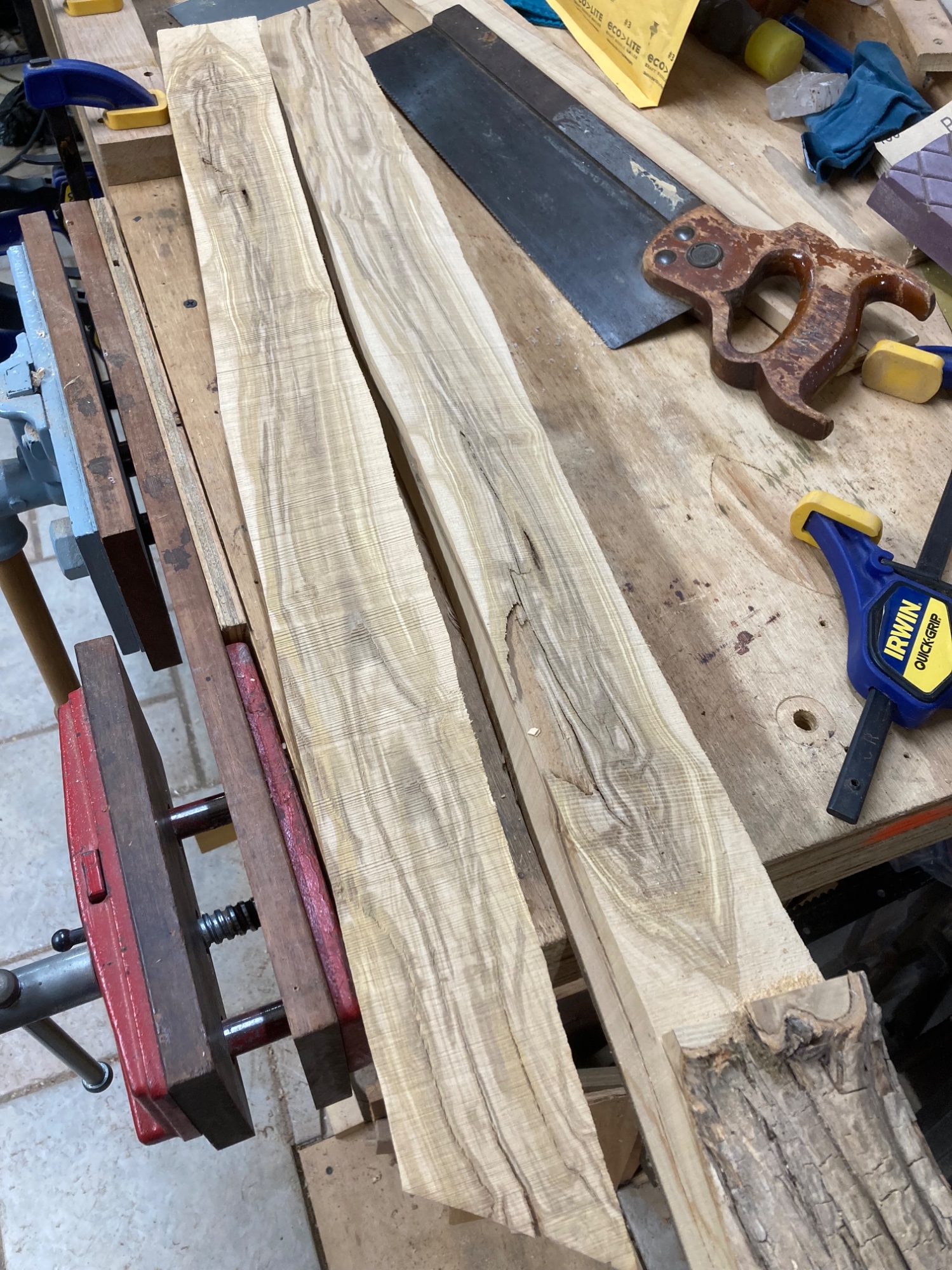
Unfortunately, even that one clear path I found had some internal cracking so I’m a little dubious it’ll work out.
I got a single 1/2” slab out of it which I’ll set aside for a few months and see what it does. If it doesn’t twist like a corkscrew or continue to split I should be able to router-plane it to size and stabilize the small cracks with epoxy.
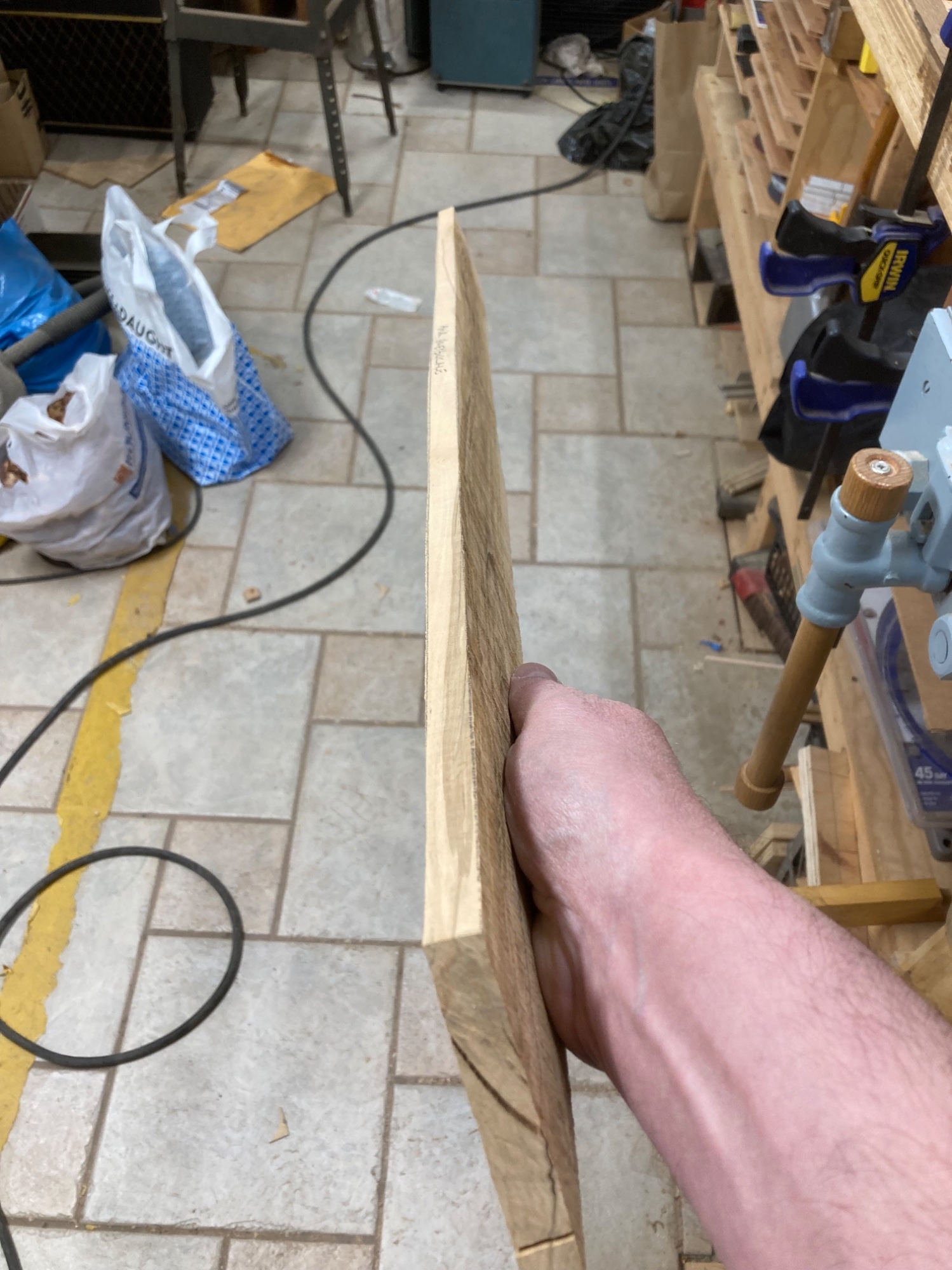
I can easily understand why honeysuckle is not commonly used (even with all the twisting and cracking, most pieces are too small to be useful) but if this works out it’ll make for a pretty unique fingerboard.
That poor saw…. I switched to a 3/8” x 4tpi blade, 3/8” being the biggest blade that saw can mount, but it’s still a fairly small, not very powerful saw and that’s a thick piece of very hard, very dense wood. The saw wasn’t happy about it but it made the cuts. I fed very gently.
The grain inside is really cool!
Unfortunately, even that one clear path I found had some internal cracking so I’m a little dubious it’ll work out.
I got a single 1/2” slab out of it which I’ll set aside for a few months and see what it does. If it doesn’t twist like a corkscrew or continue to split I should be able to router-plane it to size and stabilize the small cracks with epoxy.
I can easily understand why honeysuckle is not commonly used (even with all the twisting and cracking, most pieces are too small to be useful) but if this works out it’ll make for a pretty unique fingerboard.








 .
.

 ...
...


