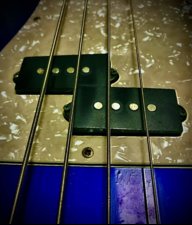
With P Basses, it’s all about the neck. It seems like every P Bass I’ve ever picked up has had a wildly different neck. Personally I never found one I liked until the Player Series. Gigged with mine tonight!

TalkBass has been independent since 1998. Add your voice.
Create a free account to reply to discussions, view embedded media, and browse with fewer display ads.
Join free Log in
Want zero display ads or expanded classifieds tools? Compare plans.


I love the qualities of all things on the US models
My Blue American Performer is dreamy to play and made me spend double on my first P bass
I might have next bought an incredible American Elite Precision...but do not dig the body shape...But it was the nicest Precision I played out of all models Fender makes
Could not connect with American Professional P as neck is a little more chunky.
60s originals...i do not like the 1 3/4 nut width
Mexican Players were ok...Nate Mandel was nice, but heavy
G&L LB-100. Fender dna. You can pick your color, neck size, fretboard and finish. Quartersawn neck if you want and you’re still under 2000.

My Lakland has a 1 5/8” nut and it’s AWESOME.i don’t really need a J pickup, and I’m not a huge fan of the baseball bat neck. Something between a jazz and super thick neck would be ideal for me!


They ‘re all different, some are nicer and more expensively made, without necessarily being a «better» bass as such.Despite mypossiblydefinitely overdramatic post about maybe selling off all my gear in a previous thread here: Tribulations finding others to play with
I'm thinking of when i do find those magic other musicians to play with rewarding myself with a NEW (not used) Precision Bass. I've never had a new instrument before, I've managed to make mostly mediocre/inexpensive Ibanez, Yamaha and epiphone sound pretty darn good.
So my question is: there are a lot of different models of P-basses out there, ranging from $1,199AUD for the 'Player' series to $3,399AUD for the 'American Original', with the Vintera 50's, Japan Hybrid, and American Profession all in between.
Is there really $2,200 difference between them? WHat exactly is better in terms of playability and sound? I don't mind paying more if i'm actually getting more.
Anyone have any input? Thanks!
Anyone have any input? Thanks!
This has been amazingly helpful! Thank YouTo me, I comes down to a combination of budget, the kind of instrument you want (specs), looks, how it feels in your hands (neck) and on the strap (weight & balance) and how it sounds.
Neck
If you don’t want the super beefy old school necks, the standard P bass neck has a 1.625" nut width, so look for your preference there. On the other hand, if you are wedded to a Jazz width neck, look for one with a 1.5" nut width. If you don’t know what nut width you prefer and want a standard P bass experience such as most P players have had for decades now (and you aren’t totally committed to old school beef), I’d get the 1.625" nut width.
Next comes neck profile - if you don’t know what profile (the carve of the back of the neck, the shape that fits in your hand) you want, "modern C" works well.
Graphite rods - cost more, add stability to the neck. I dunno, once you hear about them, you naturally want them. That said, my basses and guitars without graphite rods in their necks stay stable enough
Fretboard radius - 9.5" is the standard for Fender instruments since some point in the 70s, though Fender has come out with a number of models with the old school, rounder fretboard radius of 7.25". If you don’t know which you prefer, get the 9.5" radius.
Fretboard material - you pay more for rosewood these days due to restriction in trade of the species. If you like the look and/or sound of maple (somewhat brighter than rosewood, though some here will argue that), there ya go. If you prefer the look and/or sound of rosewood, you pay more. If you want the look of rosewood but don’t want to pay for it and can handle a sound somewhere in between maple and rosewood, you can get pao ferro. There are other options, either cheaper or more expensive, I believe, but those are the main ones.
Frets - you can either get regular (medium jumbo) frets or thin ‘vintage style" frets. Either are fine to me, but if you don’t know, medium jumbo is good.
Body
Ash and Alder are the traditional P bass woods, usually ash with a maple neck/fretboard and alder with a rosewood fretboard. IMO, Ash is a little more 50s, alder is a little warmer and more 60s (many people have differing opinions on this, including that it makes no difference). If wood isn’t important to you, other body woods are generally cheaper. One factor can be that particularly soft woods dent easier and can have problems with screw stripping - iirc, basswood is one such wood.
Color - for me, this is a biggie and will have a lot to do with which models I choose from. YMMV. Pickguard can be changed out, but the body paint is not simple to change.
Finish - if you know you’re into an old school, nitrocellulose lacquer finish, then Fender offers those but you have to pay more. Otherwise, most Fenders have come with a polyurethane or urethane finish for decades now. Fender prices polyurethane finishes higher than urethane iirc, but to be honest I don’t know the difference - they’re all "plastic" finishes (as opposed to nitro lacquer) to me. If you don’t know what you want, polyurethane finish is fine.
Weight - you can get lightweight parts, but you said you’re not into swapping stuff out, so go for one that is comfortable right out of the box, weight-wise. If you don’t know about weight, for me, the 8 to 9 lbs. range is good, with any little bit over 9 lbs. getting old fast. Other people can tolerate more, and I even know one guy what actually craves a "beefier" bass. If you have back problems, get something light.
Pickup(s) - the standard P bass experience is one split coil pickup. Alnico pickups generally have more detail than ceramic pickups, though ceramic pickups can be punchier. If you don’t know your preference, get alnico. And then it comes down to the sound you like - more expensive isn’t always better (though it often is). Try sound samples online if you can’t listen for yourself. You can always change the pickup later...
Electronics - the standard P bass experience is passive electronics, one volume, one tone. If you have other needs, pursue accordingly
Hardware: bridge, tuners — generally, anything on a Fender is going to be fine for me here, YMMV.
Basically, I typically look at price range and color to see something I might possibly be interested in, then I get into the specs and see if they suit me. Then I get the instrument in my hands and see if the neck and weight suit me and if I like the sound, and finally if there’s some special something that makes me want to pull the trigger on that particular bass, I may actually buy it! If ordering online, I just go by looks, price and specs and take my chances.
I probably wouldn’t go all out on a first P bass - you might get a more moderately priced one first, find out what you like and don’t like, and then pursue your "Dream Precision" later if needed. The more expensive ones do have a subtly but undeniable nicer look and feel to them, but it doesn’t mean that the particular specs involved will actually suit you
Good luck!

Ooh that finish looks niiiiiiiiceLooking at this one makes me feel gooey....
View attachment 3550370

i don’t really need a J pickup, and I’m not a huge fan of the baseball bat neck. Something between a jazz and super thick neck would be ideal for me!

I keep hearing good things about Peavey basses, but I don't think I've ever seen one in a shop here in Australia. Bass amps, yes, guitar amps and PAs, yes, but not Peavey basses and only occasionally Peavey guitars.Also don’t neglect non-Fenders! Peavey Fury, G&L SB or LB, Yamaha BB, Ibanez TMB would all make great P bass sounds, if they are available in your area.


To me, I comes down to a combination of budget, the kind of instrument you want (specs), looks, how it feels in your hands (neck) and on the strap (weight & balance) and how it sounds.
Neck
If you don’t want the super beefy old school necks, the standard P bass neck has a 1.625" nut width, so look for your preference there. On the other hand, if you are wedded to a Jazz width neck, look for one with a 1.5" nut width. If you don’t know what nut width you prefer and want a standard P bass experience such as most P players have had for decades now (and you aren’t totally committed to old school beef), I’d get the 1.625" nut width.
Next comes neck profile - if you don’t know what profile (the carve of the back of the neck, the shape that fits in your hand) you want, "modern C" works well.
Graphite rods - cost more, add stability to the neck. I dunno, once you hear about them, you naturally want them. That said, my basses and guitars without graphite rods in their necks stay stable enough
Fretboard radius - 9.5" is the standard for Fender instruments since some point in the 70s, though Fender has come out with a number of models with the old school, rounder fretboard radius of 7.25". If you don’t know which you prefer, get the 9.5" radius.
Fretboard material - you pay more for rosewood these days due to restriction in trade of the species. If you like the look and/or sound of maple (somewhat brighter than rosewood, though some here will argue that), there ya go. If you prefer the look and/or sound of rosewood, you pay more. If you want the look of rosewood but don’t want to pay for it and can handle a sound somewhere in between maple and rosewood, you can get pao ferro. There are other options, either cheaper or more expensive, I believe, but those are the main ones.
Frets - you can either get regular (medium jumbo) frets or thin ‘vintage style" frets. Either are fine to me, but if you don’t know, medium jumbo is good.
Body
Ash and Alder are the traditional P bass woods, usually ash with a maple neck/fretboard and alder with a rosewood fretboard. IMO, Ash is a little more 50s, alder is a little warmer and more 60s (many people have differing opinions on this, including that it makes no difference). If wood isn’t important to you, other body woods are generally cheaper. One factor can be that particularly soft woods dent easier and can have problems with screw stripping - iirc, basswood is one such wood.
Color - for me, this is a biggie and will have a lot to do with which models I choose from. YMMV. Pickguard can be changed out, but the body paint is not simple to change.
Finish - if you know you’re into an old school, nitrocellulose lacquer finish, then Fender offers those but you have to pay more. Otherwise, most Fenders have come with a polyurethane or urethane finish for decades now. Fender prices polyurethane finishes higher than urethane iirc, but to be honest I don’t know the difference - they’re all "plastic" finishes (as opposed to nitro lacquer) to me. If you don’t know what you want, polyurethane finish is fine.
Weight - you can get lightweight parts, but you said you’re not into swapping stuff out, so go for one that is comfortable right out of the box, weight-wise. If you don’t know about weight, for me, the 8 to 9 lbs. range is good, with any little bit over 9 lbs. getting old fast. Other people can tolerate more, and I even know one guy what actually craves a "beefier" bass. If you have back problems, get something light.
Pickup(s) - the standard P bass experience is one split coil pickup. Alnico pickups generally have more detail than ceramic pickups, though ceramic pickups can be punchier. If you don’t know your preference, get alnico. And then it comes down to the sound you like - more expensive isn’t always better (though it often is). Try sound samples online if you can’t listen for yourself. You can always change the pickup later...
Electronics - the standard P bass experience is passive electronics, one volume, one tone. If you have other needs, pursue accordingly
Hardware: bridge, tuners — generally, anything on a Fender is going to be fine for me here, YMMV.
Basically, I typically look at price range and color to see something I might possibly be interested in, then I get into the specs and see if they suit me. Then I get the instrument in my hands and see if the neck and weight suit me and if I like the sound, and finally if there’s some special something that makes me want to pull the trigger on that particular bass, I may actually buy it! If ordering online, I just go by looks, price and specs and take my chances.
I probably wouldn’t go all out on a first P bass - you might get a more moderately priced one first, find out what you like and don’t like, and then pursue your "Dream Precision" later if needed. The more expensive ones do have a subtly but undeniable nicer look and feel to them, but it doesn’t mean that the particular specs involved will actually suit you
Good luck!
There even getting harder to find here in the states. Oh well, plenty of other great P basses to choose from!I keep hearing good things about Peavey basses, but I don't think I've ever seen one in a shop here in Australia. Bass amps, yes, guitar amps and PAs, yes, but not Peavey basses and only occasionally Peavey guitars.