

Enjoy the benefits of a premium membership!
Upgrade Account
-
TalkBass has been independent since 1998. Add your voice.
Create a free account to reply to discussions, view embedded media, and browse with fewer display ads.
Join free Log in
Want zero display ads or expanded classifieds tools? Compare plans.
You are using an out of date browser. It may not display this or other websites correctly.
You should upgrade or use an alternative browser.
You should upgrade or use an alternative browser.
What's so special about John Entwistle?
- Thread starter FunkyYeti
- Start date
More options
Who Replied?
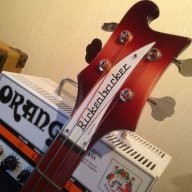
Borris the spider is a good Entwistle bass-centric song too
Also worked with John Howe of RotoSound to turn RotoSound 66 Swing Bass strings into THE choice for grindy rock bass lines.
I'm not the biggest rock fan out there, but I can see why people like John Paul Jones, John Deacon, Geezer Butler and the likes.
I can even see why people like Cliff Burton, although I think he's seriously overrated.
But I don't understand why John Entwistle is so highly regarded here on TalkBass and in the media. I listened to The Who's top songs on Spotify and watched a few videos on YouTube. Sure, he has that sort of tapping technique and a few fills on "My Generation," but is that it? I guess he did come before Jones et al., making him a pioneer?
I'm being serious here. I'm not trolling. What am I missing?
He played with Keith Moon- a lead drummer and yet he found room. the other bassists you list had it easy next to Entwistle.
- Feb 8, 2005
- 3,636
- 1,053
- Disclosures
- Endorsing Artist: Bag End - Dean Markley - Thunderfunk
Talking about John’s technique is the easy (and completely justifiable) answer people will go to, in addition to him being a pioneer in the world of rock bass in terms of making the bass an instrument to be taken seriously, which is absolutely true.
This track reminds me though how creative his lines often were. It’s difficult to do, but try to imagine Pete coming to you with these chords and a melody he’s playing, and it’s now your task to come up with a bass line. It’s absurdly easy to listen to what John played (especially after you’ve heard it 1,000 times) for a lot/most of us to think “Yeah, I’d come up with something that melodic/interesting.” Uh huh....a lot/most of us think we are above average drivers too.
But would you really? I would wager probably not. Without him, we arguably would not have Chris Squire who (IMO) took what J.E. did and took it even further, but again just IMO.
THAT is what impresses me about players of his ilk. Anyone willing to put in the time can develop chops. It’s what impresses people the most but easiest to attain. That level of creativity is something much more rare.
JE pioneered that bright, Rotosound tone, hounding James Howe's company so he could get a tone on bass that resembled an electric guitar, but lower. Previously in the early 60's, a lot of bass sounded like thumpy organ pedals.
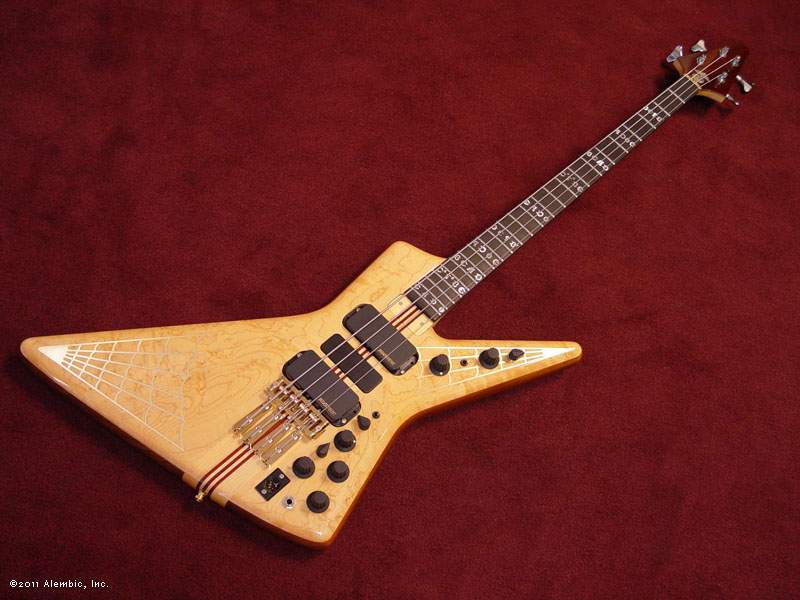
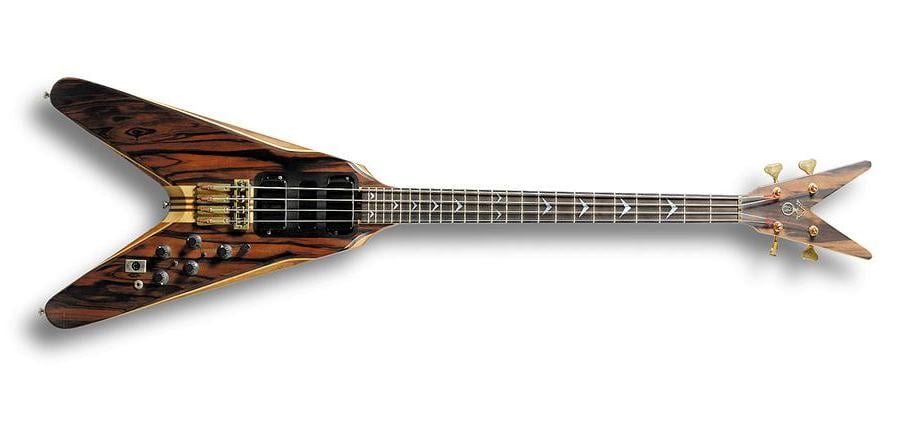
My friends at Alembic ( see that video at the start of this thread, that Explorer-shaped Alembic Exploiter became one of his trademarks) explained for his basses, they'd get the neck dead straight, and lower the action to where you'd be hard-pressed to get a piece of cigarette paper between the strings and the frets. Unplayable for anyone there, yet John could pick it up and fly on them. He once requested a 34" scale Flying V-shaped bass. Of course it wound up being almost five feet long, but it worked for him.
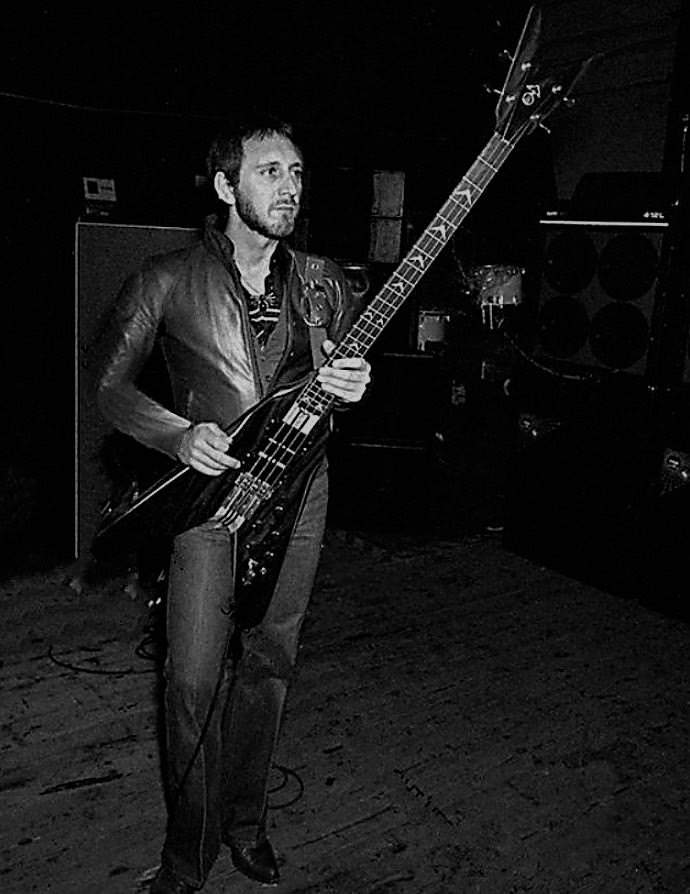
And he had to ply his trade between Keith Moon, Townshend, and Roger Daltrey. Playing with Moon alone would have been a monumental task for anyone.
And this may provide a little insight:
My friends at Alembic ( see that video at the start of this thread, that Explorer-shaped Alembic Exploiter became one of his trademarks) explained for his basses, they'd get the neck dead straight, and lower the action to where you'd be hard-pressed to get a piece of cigarette paper between the strings and the frets. Unplayable for anyone there, yet John could pick it up and fly on them. He once requested a 34" scale Flying V-shaped bass. Of course it wound up being almost five feet long, but it worked for him.
And he had to ply his trade between Keith Moon, Townshend, and Roger Daltrey. Playing with Moon alone would have been a monumental task for anyone.
And this may provide a little insight:
I'm not the biggest rock fan out there, but I can see why people like John Paul Jones, John Deacon, Geezer Butler and the likes.
I can even see why people like Cliff Burton, although I think he's seriously overrated.
But I don't understand why John Entwistle is so highly regarded here on TalkBass and in the media. I listened to The Who's top songs on Spotify and watched a few videos on YouTube. Sure, he has that sort of tapping technique and a few fills on "My Generation," but is that it? I guess he did come before Jones et al., making him a pioneer?
I'm being serious here. I'm not trolling. What am I missing?
If it has to be explained to you, you are never going to get it.
Last edited:

John and Pete are pretty much the reason for the 100 watt Marshall head.
The Who's musical equipment - Wikipedia
The Who's musical equipment - Wikipedia
If it hasn't been mentioned yet, Entwistle popularized the "Piano Sound" bass tone, where the bass guitar had a clear ringing tone with sustain and defined treble, like the lowest strings on piano. This was the opposite of the thumpier tones without a lot of top end that made up most bass sounds of the era.
Using this tone, he pioneered the technology to get it heard in the world, and effectively opened the door for other players who didn't want to stand in the dark onstage and not be noticed. In terms of the material he played, much of it was lead bass, sometimes departing the normal bass guitar role, which was very uncommon at the time. The status quo of gear and standard playing techniques didn't allow everybody and anybody to do it. Much of the gear related stuff he introduced is so commonplace and accepted now that we just think of it as how things are supposed to be done normally.
The list of famous players that can track their approach straight back to John Entwistle - whether they know it or not - is exhaustively long. It's not just Rock and Roll players either - the raw, roundwound string sounds that Doug Wimbish, Mark King, and Marcus Miller use are influenced by Entwistle, and they'll tell you so. He's not an icon and a legend by accident.
Using this tone, he pioneered the technology to get it heard in the world, and effectively opened the door for other players who didn't want to stand in the dark onstage and not be noticed. In terms of the material he played, much of it was lead bass, sometimes departing the normal bass guitar role, which was very uncommon at the time. The status quo of gear and standard playing techniques didn't allow everybody and anybody to do it. Much of the gear related stuff he introduced is so commonplace and accepted now that we just think of it as how things are supposed to be done normally.
The list of famous players that can track their approach straight back to John Entwistle - whether they know it or not - is exhaustively long. It's not just Rock and Roll players either - the raw, roundwound string sounds that Doug Wimbish, Mark King, and Marcus Miller use are influenced by Entwistle, and they'll tell you so. He's not an icon and a legend by accident.
Oh as mentioned before Rotosound swing 66 bass strings.
RotoSound - Wikipedia
RotoSound - Wikipedia
It's really not that complicated. Taste is subjective.
Talent is not.
Further, people will compare a guy like Entwistle to a bunch of more contemporary players who are “just as good” - without realizing all those players grew up listening to Entwistle and copying his dig.That's something people always seem to forget. He didn't have the role models we have now. Much like Larry Graham did for slap, Entwistle created a new style of bass playing.
Last edited:
Ask GEDDY what he thinks of John Entwistle 
JE pioneered that bright, Rotosound tone, hounding James Howe's company so he could get a tone on bass that resembled an electric guitar, but lower. Previously in the early 60's, a lot of bass sounded like thumpy organ pedals.
View attachment 3768046
My friends at Alembic ( see that video at the start of this thread, that Explorer-shaped Alembic Exploiter became one of his trademarks) explained for his basses, they'd get the neck dead straight, and lower the action to where you'd be hard-pressed to get a piece of cigarette paper between the strings and the frets. Unplayable for anyone there, yet John could pick it up and fly on them. He once requested a 34" scale Flying V-shaped bass. Of course it wound up being almost five feet long, but it worked for him.
View attachment 3768041
View attachment 3768043
And he had to ply his trade between Keith Moon, Townshend, and Roger Daltrey. Playing with Moon alone would have been a monumental task for anyone.
And this may provide a little insight:
I would almost kill for his Spyder Bass.
And, if I had it, I would play the snot out of it, not hang it on the wall.

Context is important. He was the perfect bassist for the people he was playing with: Brash, bright, in your face, very busy, and creative. And the Who were a trio, so each of them had a lot of space to fill.
In the context of a different group - let's say a large band with horns - would he have been so musically successful? I don't know.
In the context of a different group - let's say a large band with horns - would he have been so musically successful? I don't know.
He took bass playing where it had never been before.
Today's players cannot remember the days before Billy Sheehan, Jaco, Chris Squire, Anthony Jackson and all the Metallica bassists. Remember even JPJ despite his enormous talent as an arranger, composer, multi intrumentalist and overall nice guy compared to his bandmates was still primarily a bass player in the traditional sense of holding it down for everybody else to show off. In the Who on the other hand, as has been previously mentioned, it was vastly different.
Today's players cannot remember the days before Billy Sheehan, Jaco, Chris Squire, Anthony Jackson and all the Metallica bassists. Remember even JPJ despite his enormous talent as an arranger, composer, multi intrumentalist and overall nice guy compared to his bandmates was still primarily a bass player in the traditional sense of holding it down for everybody else to show off. In the Who on the other hand, as has been previously mentioned, it was vastly different.

I'm being serious here. I'm not trolling. What am I missing?
A lot apparently. And yes, he was a pioneer of the round wound sound and not just sitting in the pocket all the time or settling into a groove. His first instrument was french horn. And that instrument had a huge influence on how he approached bass guitar and wrote his basslines. He was quite unique in that respect for a number of years before others started adopting a lot of what he was doing.
What bothers you about the consensus? What don’t you like about his particular style so we have some idea of where your blind spot is?
Last edited:

I have not been super impressed with his soloing (which to me sounded sloppy) but his work with The Who was astounding.
Entwistle was the perfect bassist for The Who and crazy Keith Moon and really set the stage for rock bassists like John Deacon.
I have no dog in the fight, but the Ox has definitely earned his place in the pantheon. I’ve never been a huge Entwistle fan, but his work with The Who is solid and his influence on rock bassists is equaled by very few.
Entwistle was the perfect bassist for The Who and crazy Keith Moon and really set the stage for rock bassists like John Deacon.
I have no dog in the fight, but the Ox has definitely earned his place in the pantheon. I’ve never been a huge Entwistle fan, but his work with The Who is solid and his influence on rock bassists is equaled by very few.
.......plus, he had to play with Keith Moon. Yikes!!
The Who were a weird band- in that Pete's guitar frequently filled the drum role because Moon was all over the place- that gave John the opportunity to approach the bass' traditional role in a very nontraditional manner.* And that's a huge reason he matters. He approached the bass in a way that others didn't and/or hadn't thought of. Then he challenged himself to do it better. A cursory listening of a few common radio songs doesn't do anymore for understanding his place in the world than hearing Ray Brown on a couple of TV show appearances tells you why HE matters. So, I suggest "Live At Leeds" and the entirety of "Who's Next" as a place to start.
*Way back in the mid '70s in a Guitar Player Magazine interview (as there weren't any bass mags) Jack Bruce said something that made the most tremendous impact on me- "Just because the bass has a traditional role to fulfill, doesn't mean one has to fulfill it in the traditional manner"
*Way back in the mid '70s in a Guitar Player Magazine interview (as there weren't any bass mags) Jack Bruce said something that made the most tremendous impact on me- "Just because the bass has a traditional role to fulfill, doesn't mean one has to fulfill it in the traditional manner"


