Thanks to all for a very interesting thread. I've tried going ampless in a few quiet gigs, with poor results. My problem is that I can't hear myself -- even if I'm just playing with a pianist, and even if I'm hitting the strings hard. If I can't hear myself, my intonation really suffers. So the amp is as much for me as it is for listeners or other musicians.

Enjoy the benefits of a premium membership!
Upgrade Account
-
TalkBass has been independent since 1998. Add your voice.
Create a free account to reply to discussions, view embedded media, and browse with fewer display ads.
Join free Log in
Want zero display ads or expanded classifieds tools? Compare plans.
You are using an out of date browser. It may not display this or other websites correctly.
You should upgrade or use an alternative browser.
You should upgrade or use an alternative browser.
Double Bass when NOT to use an amp
- Thread starter Marc Piane
- Start date
More options
Who Replied?Oh two years ago Nathan, there's so much I want to warn you about...
But seriously, what's an amp? Still not using one. I like to think I've gotten louder.
But seriously, what's an amp? Still not using one. I like to think I've gotten louder.
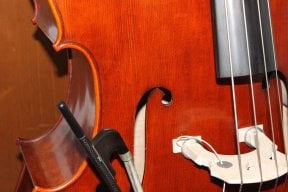
Thanks to all for a very interesting thread. I've tried going ampless in a few quiet gigs, with poor results. My problem is that I can't hear myself -- even if I'm just playing with a pianist, and even if I'm hitting the strings hard. If I can't hear myself, my intonation really suffers. So the amp is as much for me as it is for listeners or other musicians.
A soundport on the bass side shoulder would help a lot. It really helps for classical guitars. IMO, more players should ask for these in new basses, and more DB luthiers should build them.
A soundport is an interesting idea. Wonder if any bass makers would try it.
Anyway, tonight I've got a duo gig with a pianist. It's only for an hour. I'll try unamped again and see how it goes. Doesn't seem worth lugging all my electronics in there just for an hour.
Anyway, tonight I've got a duo gig with a pianist. It's only for an hour. I'll try unamped again and see how it goes. Doesn't seem worth lugging all my electronics in there just for an hour.

- Dec 13, 1999
- 11,736
- 8,941
- 70
- Disclosures
- Chuck Sher publishes my book, WALKING BASSICS:The Fundamentals of Jazz Bass Playing.
A soundport is an interesting idea. Wonder if any bass makers would try it.
James Condino and Arnold Schnitzer that I know of...
- Dec 13, 1999
- 11,736
- 8,941
- 70
- Disclosures
- Chuck Sher publishes my book, WALKING BASSICS:The Fundamentals of Jazz Bass Playing.
I appreciate the info, Ed. Have you ever played one of them? If so, does it improve one's ability to hear oneself?
- Dec 13, 1999
- 11,736
- 8,941
- 70
- Disclosures
- Chuck Sher publishes my book, WALKING BASSICS:The Fundamentals of Jazz Bass Playing.
Nope, and just cause I'm bored.
http://condino.com/double-bass/
I saw this one in the white, but it was still being worked on and I didn't get to play it.
http://www.aesbass.com/handmadebasses.htm
Scroll down to the ERGO basses...
http://condino.com/double-bass/
I saw this one in the white, but it was still being worked on and I didn't get to play it.
http://www.aesbass.com/handmadebasses.htm
Scroll down to the ERGO basses...
thanks Ed, very impressive looking (both of them). I'd love to get a chance to try one sometime.

I played DB for about twenty years before I really started to learn to pull a sound without an amp. I had decent gigs, great teachers, good instruments . . . I had no conception about that next level of volume, clarity and sound production on my instrument because I had never let myself confront it. Hanging around here helped clue me in that there was something more and that it was worth pursuing.I've tried going ampless in a few quiet gigs, with poor results. My problem is that I can't hear myself -- even if I'm just playing with a pianist, and even if I'm hitting the strings hard. If I can't hear myself, my intonation really suffers. So the amp is as much for me as it is for listeners or other musicians.
Having a bass which was decent loud helped. But it wasn't about having a remarkable instrument or a special setup. (My bass is fine but yours is at least as fine. I play Spiro Mittels, medium height.)
Once I figured out that there was a door I walked through it (see that pun?). Now that noise is available on essentially any bass.
I'm not saying, "Woah, I am special." I'm saying, "Woah, I was a dope and still am."
You aren't, though. Pull the sound! Our instrument is capable of a ton of music if we let it!
Thanks for the encouraging words, Sam. I've been playing DB for eleven years now, and while I can pull a stronger sound than I used to, I still have trouble unamped.
But I will try it again this evening and will keep your encouragement in mind.
I've got Obligatos on now -- a pretty soft string, but I'm sure you are right, it's more about technique than equipment. Thanks for your thoughts on this.
But I will try it again this evening and will keep your encouragement in mind.
I've got Obligatos on now -- a pretty soft string, but I'm sure you are right, it's more about technique than equipment. Thanks for your thoughts on this.

- May 30, 2000
- 4,707
- 256
- Disclosures
- Creator of: iGigBook Sheet Music Manager
Thanks for the encouraging words, Sam. I've been playing DB for eleven years now, and while I can pull a stronger sound than I used to, I still have trouble unamped.
But I will try it again this evening and will keep your encouragement in mind.
I've got Obligatos on now -- a pretty soft string, but I'm sure you are right, it's more about technique than equipment. Thanks for your thoughts on this.
I played a restaurant gig last Saturday, bass, drums, trombone, sax with no amp. I have no problem hearing myself, my bass projects well and I'm using obligatos. I believe that the bass you use does matter.
Another important point: the sound expectations your fellow musicians might have. I have played with musicians who were not too loud, but still were complaining that they couldn't hear me, despite the fact that I played amplified and was convinced that I was the one that was too loud (which was later corroborated by friends sitting in the audience). The fact is that I play with as natural a sound as possible (I use an Ehrlund or a mic), wereas some musicians expect the bass to cut through just like a bass guitar, even when the repertoire is acoustic jazz. The "my bass only louder" does not cut it for them (pun intended), as it isn't the timbre they expect from a bass. And that is a tough situation to find yourself in: when two sonic philosophies collide...
Cheers,
Vincent
Cheers,
Vincent
Another important point: the sound expectations your fellow musicians might have. I have played with musicians who were not too loud, but still were complaining that they couldn't hear me, despite the fact that I played amplified and was convinced that I was the one that was too loud (which was later corroborated by friends sitting in the audience). The fact is that I play with as natural a sound as possible (I use an Ehrlund or a mic), wereas some musicians expect the bass to cut through just like a bass guitar, even when the repertoire is acoustic jazz. The "my bass only louder" does not cut it for them (pun intended), as it isn't the timbre they expect from a bass. And that is a tough situation to find yourself in: when two sonic philosophies collide...
Cheers,
Vincent
Absolutely! Also, quite a few of the musicians I play with are in their late fifties (like me) and early/mid sixties with unacknowledged hearing loss. It's a big problem.
John Clayton likes to tell a story about the first time Ray Brown went to Japan. Bass players over there tried to emulate his sound on records by jacking up the string height on their basses and pulling the snot out of the strings. They were amazed to find that this was not the way Ray did it. According to John, and I find it to be true, having a big, focused unamplified tone has more to do with the left hand than the right. To get the greatest possible resonance from the string you have to make sure it is completely anchored to the fingerboard.
I do this by playing on my finger tips, not the pads, and pulling back with my arm, not squeezing with the thumb (one more reason I sit when I play). I know you get more overtones playing on the pads of your fingers but the sound does not travel as well. I was never able to play gigs without an amp before this masterclass, even with sensitive musicians. Those gigs still happen rarely and I always have an amp in the car but this was a major turning point for me.
Usual disclaimers: YMMV, IME, IMHO, etc.
I do this by playing on my finger tips, not the pads, and pulling back with my arm, not squeezing with the thumb (one more reason I sit when I play). I know you get more overtones playing on the pads of your fingers but the sound does not travel as well. I was never able to play gigs without an amp before this masterclass, even with sensitive musicians. Those gigs still happen rarely and I always have an amp in the car but this was a major turning point for me.
Usual disclaimers: YMMV, IME, IMHO, etc.
<<I do this by playing on my finger tips, not the pads, and pulling back with my arm, not squeezing with the thumb (one more reason I sit when I play). I know you get more overtones playing on the pads of your fingers but the sound does not travel as well. >>
Don, thanks for this info. So the technique you are describing is for the left hand? I can see where finger tips, and not squeezing with the thumb, would apply to the left hand, but I'm not sure about "pulling back with my arm". Is that also referring to the left hand or the right hand?
Don, thanks for this info. So the technique you are describing is for the left hand? I can see where finger tips, and not squeezing with the thumb, would apply to the left hand, but I'm not sure about "pulling back with my arm". Is that also referring to the left hand or the right hand?
I'm not sure about "pulling back with my arm". Is that also referring to the left hand or the right hand?
Yes, pulling back with the left arm instead of squeezing with the thumb. In other words, using the weight of the left arm to depress the string. The bass needs to be in a firm position against your hip or in my case against the leg while sitting. I'm pretty sure John Clayton stands when he plays so I know there is a way to do it standing.
Got it, thanks Don. I will give this a try. In my efforts to be louder and stronger unamped, I've been focusing solely on the right hand, so this is great information for me. I generally sit when I play, also.
Thanks again for passing this along.
Thanks again for passing this along.
- Dec 13, 1999
- 11,736
- 8,941
- 70
- Disclosures
- Chuck Sher publishes my book, WALKING BASSICS:The Fundamentals of Jazz Bass Playing.
Did anybody quote Dennis yet? "Playing in tune is the best amplifier." Yes, physics helps both pizz hand and fingerboard hand, but also having that expectation of pitch, good positional understanding of the fingerboard, as well as a clearly "heard" internal line all translate into a confident stop and a confident attack.
"Playing in tune is the best amplifier."
Never heard that before but I like it!


