• TalkBass has been independent since 1998. Add your voice.
    Create a free account to reply to discussions, view embedded media, and browse with fewer display ads.
    Join freeLog in
    Want zero display ads or expanded classifieds tools? Compare plans.

where are jazz basses in the mix?

while the video above is great in how different basses can sound with drums (not an entire mix), this whole topic is just ludicrous:

The player plays a VERY important part, the player's note delivery consistency plays an important part, the newness of strings plays an important part, the genre of music plays an important part (especially keyboard-driven as opposed to guitar-driven), the competency of the other players in getting satisfactory tone colors on their instruments plays an important part, the competency of the mixer/mix/engineer will all play an important part,etc etc etc

If a competent bass player plays a Jazz bass in a group of other competent players that all listen to each other, he is going to sit in a mix better than a not-as-competent player, with inconsistent delivery, playing a P-bass with a bunch of guys who all think they should be the hottest signal in a mix.
In the bass world we tend to think that a lot of things about the instrument matters more than it should...what really defines your tone is you as a player and the other people you play with, and how everything fits together. There's no magic bullet or do-all. You want to sound GOOD, but there are a lot of ways to accomplish that and 80% of them aren't the bass itself.
This.

i’ve heard a p bass in the mix hundreds and hundreds of times, and i could always identify where it was; nestled right in-between the bass drum and the snare drum. a nice cozy little spot. but when jazz basses come foward, you know the bass is there... but where is it? if the bass wasn’t there you would immediately know, but still i don’t know where it is.
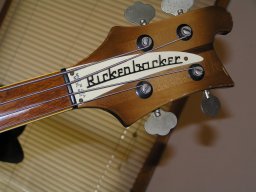
Others have said it better, but the way I think of it, a P-Bass sits in the mix, a J-Bass (both coils) wraps around a mix, a Stingray sits under a mix, and a Rickenbacker lies on top of a mix.
Not trying to be rude, but IMO this entire premise is crap. I'm going to explain why I think it's crap, and when I'm finished telling this story, you'll at least understand why I think it's crap.

About 7 years ago, I went to a TB GTG in Seattle. Anyone who's never been to one, you owe it to yourselves to go the next time there is one in your area. It's show & tell for bass players. Imagine the fun of seeing other players' special basses & amps & cabs & other unique toys, and imagine the joyous cacophony of 3-10 bass players playing at the same time (not together) -- and not just playing, but testing their chops, checking out other people's basses and amps.

I brought the bass in my avatar, a Warmoth 3-pickup Jazz. I also brought my rig, then a TC Electronics amp into a Phil Jones B6 cabinet. I also brought my guitar player friend. We had beers and socialized, but while I was geeking out on all the gear, he sat down and observed. What he observed is relevant here.

As you can imagine, multiple bass players playing simultaneously in an uncoordinated fashion is going to result in a lot of sonic mud. But as my friend watched, he thought he could distinguish the sound of my bass and amp being played from out of that mud. And as he watched the fingers of the guy playing my bass, sure enough, that's what he was hearing. Fairly clearly, in fact. At the time, my friend thought that it might be the guy's technique, but as he watched, the guy put my bass down, and then picked up someone else's bass, and then everything the guy was playing got lost in the mud. Then someone else picked up my bass, and then my friend could hear it again, verified by watching that guy's fingers as he played. And as he observed, he also watched other people play other basses through other amps, and try to listen for distinct lines being played, and most of the time he was unable to hear any.

At the time, I didn't know any of this was happening. He told me about it later, on the way home.

So why would a guitar player be able to hear my bass among all the other basses? In my opinion, the difference was the Phil Jones cab. The amp wasn't that special. The bass played a part, as it has a broader tonal palette than most basses, but the real difference between my rig and anyone else's there was the 5" drivers in the PJ cab. If you've never heard a Phil Jones cab, you'll be stunned by the amount of bass those 5" drivers can produce. Phil Jones cabinets articulate better than pretty much anything else IME & IMO, and the key is those 5" drivers. Six of them in my cab represent the same surface area as one and a half 10" speakers, but with more and tighter control than a 10" driver would have.

So if my bass can be heard and not be buried by other basses being played at the same time, it's sure as hell not going to be buried by a kick drum & snare drum. (IMO, a P bass runs the most risk of being buried in a mix because there is just less you can do with it, adjustments-wise.) It's also why I don't worry about boosting mids to be heard in the mix. I believe my sound can be flat or scooped and be heard well enough, if the sound is being faithfully reproduced with enough articulation. I know that puts me in a very small minority here on TalkBass, but I feel like I have good reasons for thinking the way I do.
 
This.


Not trying to be rude, but IMO this entire premise is crap. I'm going to explain why I think it's crap, and when I'm finished telling this story, you'll at least understand why I think it's crap.

About 7 years ago, I went to a TB GTG in Seattle. Anyone who's never been to one, you owe it to yourselves to go the next time there is one in your area. It's show & tell for bass players. Imagine the fun of seeing other players' special basses & amps & cabs & other unique toys, and imagine the joyous cacophony of 3-10 bass players playing at the same time (not together) -- and not just playing, but testing their chops, checking out other people's basses and amps.

I brought the bass in my avatar, a Warmoth 3-pickup Jazz. I also brought my rig, then a TC Electronics amp into a Phil Jones B6 cabinet. I also brought my guitar player friend. We had beers and socialized, but while I was geeking out on all the gear, he sat down and observed. What he observed is relevant here.

As you can imagine, multiple bass players playing simultaneously in an uncoordinated fashion is going to result in a lot of sonic mud. But as my friend watched, he thought he could distinguish the sound of my bass and amp being played from out of that mud. And as he watched the fingers of the guy playing my bass, sure enough, that's what he was hearing. Fairly clearly, in fact. At the time, my friend thought that it might be the guy's technique, but as he watched, the guy put my bass down, and then picked up someone else's bass, and then everything the guy was playing got lost in the mud. Then someone else picked up my bass, and then my friend could hear it again, verified by watching that guy's fingers as he played. And as he observed, he also watched other people play other basses through other amps, and try to listen for distinct lines being played, and most of the time he was unable to hear any.

At the time, I didn't know any of this was happening. He told me about it later, on the way home.

So why would a guitar player be able to hear my bass among all the other basses? In my opinion, the difference was the Phil Jones cab. The amp wasn't that special. The bass played a part, as it has a broader tonal palette than most basses, but the real difference between my rig and anyone else's there was the 5" drivers in the PJ cab. If you've never heard a Phil Jones cab, you'll be stunned by the amount of bass those 5" drivers can produce. Phil Jones cabinets articulate better than pretty much anything else IME & IMO, and the key is those 5" drivers. Six of them in my cab represent the same surface area as one and a half 10" speakers, but with more and tighter control than a 10" driver would have.

So if my bass can be heard and not be buried by other basses being played at the same time, it's sure as hell not going to be buried by a kick drum & snare drum. (IMO, a P bass runs the most risk of being buried in a mix because there is just less you can do with it, adjustments-wise.) It's also why I don't worry about boosting mids to be heard in the mix. I believe my sound can be flat or scooped and be heard well enough, if the sound is being faithfully reproduced with enough articulation. I know that puts me in a very small minority here on TalkBass, but I feel like I have good reasons for thinking the way I do.
Interesting .There might be more than one way to skin a cat.
 
Where are Jazz basses in the mix?

Assuming you are playing with sensible musicians, wherever you want to put them.

They are flexible enough to fit in anywhere, but if the rock gods are against you and you are playing with an ego driven, cloth-eared, half stack harry, you'll have trouble fitting any bass into that mix. I prefer clean sounding amp and cabs, with definition and clarity. You can put almost any EQ on your bass and be heard with a rig like that.
 
This.


Not trying to be rude, but IMO this entire premise is crap. I'm going to explain why I think it's crap, and when I'm finished telling this story, you'll at least understand why I think it's crap.

About 7 years ago, I went to a TB GTG in Seattle. Anyone who's never been to one, you owe it to yourselves to go the next time there is one in your area. It's show & tell for bass players. Imagine the fun of seeing other players' special basses & amps & cabs & other unique toys, and imagine the joyous cacophony of 3-10 bass players playing at the same time (not together) -- and not just playing, but testing their chops, checking out other people's basses and amps.

I brought the bass in my avatar, a Warmoth 3-pickup Jazz. I also brought my rig, then a TC Electronics amp into a Phil Jones B6 cabinet. I also brought my guitar player friend. We had beers and socialized, but while I was geeking out on all the gear, he sat down and observed. What he observed is relevant here.

As you can imagine, multiple bass players playing simultaneously in an uncoordinated fashion is going to result in a lot of sonic mud. But as my friend watched, he thought he could distinguish the sound of my bass and amp being played from out of that mud. And as he watched the fingers of the guy playing my bass, sure enough, that's what he was hearing. Fairly clearly, in fact. At the time, my friend thought that it might be the guy's technique, but as he watched, the guy put my bass down, and then picked up someone else's bass, and then everything the guy was playing got lost in the mud. Then someone else picked up my bass, and then my friend could hear it again, verified by watching that guy's fingers as he played. And as he observed, he also watched other people play other basses through other amps, and try to listen for distinct lines being played, and most of the time he was unable to hear any.

At the time, I didn't know any of this was happening. He told me about it later, on the way home.

So why would a guitar player be able to hear my bass among all the other basses? In my opinion, the difference was the Phil Jones cab. The amp wasn't that special. The bass played a part, as it has a broader tonal palette than most basses, but the real difference between my rig and anyone else's there was the 5" drivers in the PJ cab. If you've never heard a Phil Jones cab, you'll be stunned by the amount of bass those 5" drivers can produce. Phil Jones cabinets articulate better than pretty much anything else IME & IMO, and the key is those 5" drivers. Six of them in my cab represent the same surface area as one and a half 10" speakers, but with more and tighter control than a 10" driver would have.

So if my bass can be heard and not be buried by other basses being played at the same time, it's sure as hell not going to be buried by a kick drum & snare drum. (IMO, a P bass runs the most risk of being buried in a mix because there is just less you can do with it, adjustments-wise.) It's also why I don't worry about boosting mids to be heard in the mix. I believe my sound can be flat or scooped and be heard well enough, if the sound is being faithfully reproduced with enough articulation. I know that puts me in a very small minority here on TalkBass, but I feel like I have good reasons for thinking the way I do.
I understand why you think it´s crap.
No need to single me out, though. And I stand by what I said. The Ric sound on Astronomy Domine (Pink Floyd) is totally different to the Stingray sound on The Barry Williams Show (Peter Gabriel). And I don´t think it´s entirely the player.

To your anecdote: your argument is that your unique bass and rig sounded distinctive. Well, yes. That wasn´t the question though. Where does a Jazz bass sit in a mix is not a question about whether 5" drivers give you more punch and clarity than 10" or 15". So sorry, but don´t agree with the point you made because it´s not answering the question.

Peace,
SoundSupport
 
  • Like
Reactions: amr1695
i’ve heard a p bass in the mix hundreds and hundreds of times, and i could always identify where it was; nestled right in-between the bass drum and the snare drum. a nice cozy little spot. but when jazz basses come foward, you know the bass is there... but where is it? if the bass wasn’t there you would immediately know, but still i don’t know where it is.
tenor.gif
 
I understand why you think it´s crap.
No need to single me out, though. And I stand by what I said. The Ric sound on Astronomy Domine (Pink Floyd) is totally different to the Stingray sound on The Barry Williams Show (Peter Gabriel). And I don´t think it´s entirely the player.

To your anecdote: your argument is that your unique bass and rig sounded distinctive. Well, yes. That wasn´t the question though. Where does a Jazz bass sit in a mix is not a question about whether 5" drivers give you more punch and clarity than 10" or 15". So sorry, but don´t agree with the point you made because it´s not answering the question.

Peace,
SoundSupport
I wasn't singling you out, I was addressing the entire concept with which I disagree.
 
hmm... judging by your posts and what i’m hearing as i’m listening to moving pictures (great album :thumbsup:), it seems jazz basses seem to be a more “feel rather than hear” type bass. you don’t ‘hear‘ them in the mix, you FEEL them. they usually stay hidden, but it’s only because they do their job. when they’re gone everything will feel all wrong.
What bass or basses do you play? Surely by playing your own bass(es) you have a sense of where the bass is in the mix by hearing and feeling what you play. Of course I’m going out on a limb here assuming you do play and own a bass. Do you play a Precision or a Jazz or something else?
 
I hate to sound monotonous by constantly repeating the fact that learning how to EQ your gear is paramount to achieving your sonic goal. With the technology that exists today it is possible to get a wide variety of tones through almost any rig. The trick is understanding how to coax those desired sounds out. Once you "get it" you have numerous options as to what gear to bring to a gig. This opens up the path to bringing the bass that inspires you to play your best, which in turn allows you to do so, thus insuring your part of the gig will as close to perfection as possible. This is equally true in the studio. That's where the satisfaction comes from IMHO. Hope this helps.
 
What bass or basses do you play? Surely by playing your own bass(es) you have a sense of where the bass is in the mix by hearing and feeling what you play. Of course I’m going out on a limb here assuming you do play and own a bass. Do you play a Precision or a Jazz or something else?
p bass! and sitting by my amp on the floor and playing along with songs it fits in the classic “between snare and bass drum” position. a little bassier than the records but that’s because i’m right in front of it.
 
  • Like
Reactions: B-Mac
Where the bass sits in the mix has less to do with what bass is being played and more about how the bass is being played and eq'd.
i’ve heard a p bass in the mix hundreds and hundreds of times, and i could always identify where it was; nestled right in-between the bass drum and the snare drum. a nice cozy little spot. but when jazz basses come foward, you know the bass is there... but where is it? if the bass wasn’t there you would immediately know, but still i don’t know where it is.
I will agree P basses sound great in a mix, so can jazz basses, stingrays, Rics, and hollow bodies.
Ive never had trouble hearing jazz bass in the mix.
I believe Flea used a jazz bass for most of Stadium arcadium. The album is full of melodic songs. Give the album a listen and tell me you can't hear every note he plays.
 
I wasn't singling you out, I was addressing the entire concept with which I disagree.

I think you make a really good point; the sound of our instrument is produced by the bass and the amplifter. Of course, we could also argue that the actual instrument that we play is the bass and amplifier. Jaco’s instrument = bass of doom + his Acoustic 360 (that he lugged everywhere, because it was ‘his sound’)
 
  • Like
Reactions: BlueTalon
I think you make a really good point; the sound of our instrument is produced by the bass and the amplifter. Of course, we could also argue that the actual instrument that we play is the bass and amplifier. Jaco’s instrument = bass of doom + his Acoustic 360 (that he lugged everywhere, because it was ‘his sound’)
Another point, which I didn't make but others have, is that there is a tremendous amount of overlap between basses (and amps, for that matter).

An individual P bass is limited... until you change the strings or the pickup. Then it's still limited, but it's limited with a different voice. People making the argument that a P bass sits in the mix right "here" (wherever "here is) either overlook the differences that different pickups/strings/preamps/etc. provide, or they might say something about the "classic P sound" as if other P sounds are not quite legitimate.

But as others have mentioned elsewhere, a J bass can do a pretty good P imitation. I myself have failed the blindfold test -- I think it was Scott at Scott's Bass Lessons (and others may have done this as well) who did a challenge for people to close their eyes and try to tell which was the P and which was the J. They didn't sound identical, but they were close enough that the difference wasn't significant.
 
This video really gives a good example of how certain basses sit in a mix.
I hear the Pbass between the kick and snare. The jazz and Ric seems to surround or wrap around the outside of the kick and snare. My ears hear the Stingray wrap around the snare drum . It doesn’t extend over to the kick drum side .:headphone:


Pretty good. The P is by far the most stand off-ish, but doesn't sound annoying in any way. The ric actually gets a very similar tone. Like the P with a little less mids, and the high end of the J. So I guess, the ric sounds just like a PJ.

The ray is by far the most articulate. But has no balls.
 
Last edited:
Anywhere you want.
I mean Jaco, Miller, Geddy Lee, Flea, Rage Against the Machine, hell the guy from Blink 182 uses a jazz.
My favorite rock jazz tone is a woman named MISA in a band called Band Maid. They are Japanese. She shreds on a Jazz. Pick, OD, occasional slapping.
Turn down the tone and a Jazz is just as thumpy as a P.
 
  • Like
Reactions: ruju
p bass! and sitting by my amp on the floor and playing along with songs it fits in the classic “between snare and bass drum” position. a little bassier than the records but that’s because i’m right in front of it.

There is a perennial problem with trying to assess or develop your 'tone' by playing along to records, which is this:- The mix you are playing to already has a bass in it, and the bass in that mix has already been EQ'd, compressed and filtered for 'best fit', which means there is no space for you. Sure you can play along to learn the lines or practice techniques, but it will never sound good. If you adjust your bass to match the record - good luck, since most of it will be buried - you will be too loud; if you look for sonic space you will upset something else in the mix. The only way to be sure is to get in an ensemble with other musicians, IME. But be prepared for a wake-up call. YMMV
 
There is a perennial problem with trying to assess or develop your 'tone' by playing along to records, which is this:- The mix you are playing to already has a bass in it, and the bass in that mix has already been EQ'd, compressed and filtered for 'best fit', which means there is no space for you. Sure you can play along to learn the lines or practice techniques, but it will never sound good. If you adjust your bass to match the record - good luck, since most of it will be buried - you will be too loud; if you look for sonic space you will upset something else in the mix. The only way to be sure is to get in an ensemble with other musicians, IME. But be prepared for a wake-up call. YMMV
you are likely very right. might have to look into finding some bass backing tracks or something...