• TalkBass has been independent since 1998. Add your voice.
    Create a free account to reply to discussions, view embedded media, and browse with fewer display ads.
    Join freeLog in
    Want zero display ads or expanded classifieds tools? Compare plans.

where are jazz basses in the mix?

I always banked them just to the right of the drums. When space was available on console I’d leave a blank in case we needed any last moment fix to the kit live mics. I’d run guitars and keys or horns right side. It really depends on the scope. I don’t think it matters. I think it’s what I learned in live sound, hooking drums first because that’s the most work on deck sometimes. Then bass because probably I’m always thinking about bass. Usually put the lead vocals dead right so if the singer was stupid I could say they’re most important and they’d believe it.
 
here’s a jazz bass guy who i don’t recall having too much trouble in the mix!!
 

Attachments

  • 3627E0D8-89CC-4A2B-9D3F-20A83F233437.jpeg
    3627E0D8-89CC-4A2B-9D3F-20A83F233437.jpeg
    68.2 KB · Views: 168
I would say Precision dominates in two freq places and compliments typical rock band, that is if go for classic 60' mix.
Jazz is everywhere, it's deeper and higher than P, but is flatter, doesn't jump out like P.
When playing live, I leave my Jazz flat and sound guy just adds lows so band can sound huge.
When recording, I have noticed that Jazz also benefits from LPF from around 1KH, it makes it dark and growly but present, leaving lots of space for guitars and vocals.
 
This video really gives a good example of how certain basses sit in a mix.
I hear the Pbass between the kick and snare. The jazz and Ric seems to surround or wrap around the outside of the kick and snare. My ears hear the Stingray wrap around the snare drum . It doesn’t extend over to the kick drum side .:headphone:


That's a great comparo video!
 
i’ve heard a p bass in the mix hundreds and hundreds of times, and i could always identify where it was; nestled right in-between the bass drum and the snare drum. a nice cozy little spot. but when jazz basses come foward, you know the bass is there... but where is it? if the bass wasn’t there you would immediately know, but still i don’t know where it is.
Under the kick drum, buried by the hihat
 
  • Like
Reactions: shojii
Honestly, I'm no tonal cork sniffer so to me P basses and Jazz basses sound really similar in a mix.
:laugh: funny! but you're right: when recording and mixing = almost any EB can be made to sound like (or suggest) almost any other. the exception, IME, is the P. it's palette choices may be pleasant or preferred, but those choices and variations are definitely limited...there's only so much you can do with one pickup --- before you have to change the pickup itself to get something different.

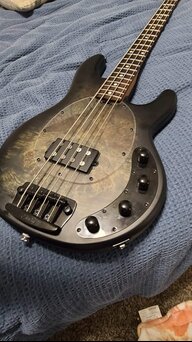
it seems jazz basses seem to be a more “feel rather than hear” type bass. you don’t ‘hear‘ them in the mix, you FEEL them.
0000.jpg

Given the versatility of the tone signature possessed by Jazz basses, it can sit anywhere you want in the mix. :thumbsup:

per the OP: i think you're drawing a harder line than is appropriate. in a blind test: i'm sure i could confuse you and your assumptions about the sound of a P vs. a J (vs. a PJ, vs. almost any other option). listening to previously recorded material doesn't really tell you much about the instrument used as much as it tells you about the recording and the mix! ;)
 
I've always though of a Jazz as being a guitar one octave down. No attack, and a rounder tone. A P somehow stands out in the mix, no matter what style or strings. I used to have skinny rounds on my 5000, when I did a lot of slap bass style and even with a lot of limiting it still was "separate" in the mix. The jazz I had would blend right in under the guitar and under the keys. I remember a session where They thought my bass track was the left half of the synth track. And it did sound like someone playing bass on a keyboard
 
Last edited:
while the video above is great in how different basses can sound with drums (not an entire mix), this whole topic is just ludicrous:

The player plays a VERY important part, the player's note delivery consistency plays an important part, the newness of strings plays an important part, the genre of music plays an important part (especially keyboard-driven as opposed to guitar-driven), the competency of the other players in getting satisfactory tone colors on their instruments plays an important part, the competency of the mixer/mix/engineer will all play an important part,etc etc etc

If a competent bass player plays a Jazz bass in a group of other competent players that all listen to each other, he is going to sit in a mix better than a not-as-competent player, with inconsistent delivery, playing a P-bass with a bunch of guys who all think they should be the hottest signal in a mix

A P-bass is just one of many different types of tools and colors for a pallette -- its not a magical unicorn airbrush
 
jazz basses are like big blankets around the mix, or maybe more so under. take any jimi live show or led zeppelin at the royal albert hall. that jazz sound is so LOW it’s dominating it’s sound space like a warm booming blanket.
 
Last edited:
  • Like
Reactions: funkinbottom
i’m currently listening to billy cox live with jimi in 1970, and i just went on another thread that confirms my theory: j basses are DEEPER than p basses. even though they’re the same notes, the fundamental is there and it’s right up in your face. or... technically not. what makes a jazz bass more hard to hear is the fact that since it doesn’t have as much fluff/‘fuzz’ as a p bass, it sounds more lonely in the low register. but because it’s so low and deep you end up really feeling it.

I'd say that jazz basses have a lot more deep end, but also they'll generally sound deeper when they're used in classic rock because the bass was usually given more priority over the kick drum in the EQ so those low frequencies are more present in the mix.

As far as I am concerned, both in recording and live situations, unless the whole purpose of the music is to manipulate the raw signal of course, that a good musician/sound engineer´, that know what they are doing, will aim to get the raw signal to the mixing console/recording as close to the intended final product as possible, hence not needing to change the tone of the different instruments drastically post production/before going through the PA.

Another perfectly valid approach though is to get a signal as naked and "raw" as possible, so to speak capturing the instruments as "al natural" as possible, so they can be manipulated at a later stage in almost whatever direction one would wish.

Which approach of those two above mentioned to chose would depend entirely of the nature of the music and what it is you are trying to achieve, sometimes in certain contexts one of them will give a better result than the other.

100% agree, with the caveat that engineers like to scoop out stuff that they find "ugly" a lot more so now especially than ever. Modern productions are about making things sound as clean as possible - which can be good or bad depending on the style of music.
 
  • Like
Reactions: bon viesta
I would say Precision dominates in two freq places and compliments typical rock band, that is if go for classic 60' mix.
Jazz is everywhere, it's deeper and higher than P, but is flatter, doesn't jump out like P.
When playing live, I leave my Jazz flat and sound guy just adds lows so band can sound huge.
When recording, I have noticed that Jazz also benefits from LPF from around 1KH, it makes it dark and growly but present, leaving lots of space for guitars and vocals.

And now I have some things to try out with my mixes:smug:
while the video above is great in how different basses can sound with drums (not an entire mix), this whole topic is just ludicrous:

The player plays a VERY important part, the player's note delivery consistency plays an important part, the newness of strings plays an important part, the genre of music plays an important part (especially keyboard-driven as opposed to guitar-driven), the competency of the other players in getting satisfactory tone colors on their instruments plays an important part, the competency of the mixer/mix/engineer will all play an important part,etc etc etc

If a competent bass player plays a Jazz bass in a group of other competent players that all listen to each other, he is going to sit in a mix better than a not-as-competent player, with inconsistent delivery, playing a P-bass with a bunch of guys who all think they should be the hottest signal in a mix

A P-bass is just one of many different types of tools and colors for a pallette -- its not a magical unicorn airbrush

I think this is the best comment in the whole thread. In the bass world we tend to think that a lot of things about the instrument matters more than it should...what really defines your tone is you as a player and the other people you play with, and how everything fits together. There's no magic bullet or do-all. You want to sound GOOD, but there are a lot of ways to accomplish that and 80% of them aren't the bass itself.
 
And now I have some things to try out with my mixes:smug:


I think this is the best comment in the whole thread. In the bass world we tend to think that a lot of things about the instrument matters more than it should...what really defines your tone is you as a player and the other people you play with, and how everything fits together. There's no magic bullet or do-all. You want to sound GOOD, but there are a lot of ways to accomplish that and 80% of them aren't the bass itself.
It would seem to me that the entire 'basses' section of the Talk Bass forum would at least contradict this by some degree..... Just sayin':whistle: