

Enjoy the benefits of a premium membership!
Upgrade Account
-
TalkBass has been independent since 1998. Add your voice.
Create a free account to reply to discussions, view embedded media, and browse with fewer display ads.
Join free Log in
Want zero display ads or expanded classifieds tools? Compare plans.
You are using an out of date browser. It may not display this or other websites correctly.
You should upgrade or use an alternative browser.
You should upgrade or use an alternative browser.
Where do you find the shorties?
- Thread starter Forty-Thirty
- Start date
More options
Who Replied?

Adjustment space on the saddles for starters.....easy to run out of room on the E and A string.
Also depending on which Mikro you end up with, the saddles may have the through-saddle screws or they may have the saddles where the screw only goes so far.
Found this can be problematic on string height.
I've not had any of those issues on several Mikros.

This is a fun, inexpensive and good sounding short scale.
Invalid Link Removed

That Mikey Way Squire is choice! Looks way cool and ill bet it sounds good as well.

Scale's not exactly short, either.
Hah, that was just for comedic effect. If an upright it suitable for all styles, how could you say some random slab wasn't suitable for metal?
Same guy appears to be cleaning out his stable. There's about 3 or 4 upright's on local CL asking about $15k combined.

I only caught a few fragmented episodes, always wanted to watch more, but it was on odd channels and times - I should just buy the whole series if it's that good. Only saw pieces and flashes of brilliance here and there, intriguing.Best science fiction TV series, ever.

I've not had any of those issues on several Mikros.
You didn't buy the ones I bought......


Best science fiction TV series, ever.
I'd give Firefly that honor, but B5 is up there.
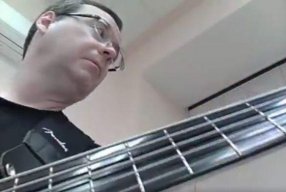
This is my main bass. I play it with a comp pedal and a Sansamp VT and play at the base of the neck and it is such a great tone. Get one of these. Try to find one locally to play and see how much fun they are to play.
I own two short scales, an MIG Hofner Club and an Epiphone Viola. Great necks on both and relatively lightweight; plenty of low end on the Epi and endless subsonic response from the Club. The Club especially is an underrated design, very comfortable to play for long periods.
You didn't buy the ones I bought......
All the Mikros I've seen have been the same. Maybe there are more than one version of the Mikro bridge.
I've done some searching and found there are two different saddle types. My Mikro bridges all have the saddle height adjustment screws that go completely through the saddles. The intonation adjustment screw stopping in the saddle syndrome can be caused by the unfortunate mislocation of the bridge too close to the neck or the intonation screws simply being too long. The bridge mislocation and can be remedied by relocating the bridge a bit further from the neck (but that would leave a couple of screw holes exposed). Too long intonation screws are easily replaced or shortened. None of my Mikros have suffered from this.
Last edited:
All the Mikros I've seen have been the same. Maybe there are more than one version of the Mikro bridge.
I've done some searching and found there are two different saddle types. My Mikro bridges all have the saddle height adjustment screws that go completely through the saddles. The intonation adjustment screw stopping in the saddle syndrome can be caused by the unfortunate mislocation of the bridge too close to the neck or the intonation screws simply being too long. The bridge mislocation and can be remedied by relocating the bridge a bit further from the neck (but that would leave a couple of screw holes exposed). Too long intonation screws are easily replaced or shortened. None of my Mikros have suffered from this.
You haven't seen all the Mikros.
Yes...there is more than one version of the same bridge. There are Chinese Mikros and Indonesian Mikros..and they can differ. I know because I owned both.
On some the screws do not go completely through the saddles. (saddle height adjustment screws)
I bought a bag of M3-05 screws to deal with the "too long" or "too short" intonation screws that go through the back of the bridge.
From factory they can be too long. You can cut them yourself if you like. But you need to get them as exact as you can when cutting for maximum strength and holding power.
Sometimes on the stock bridge you run out of room with certain strings because the spring they put in there can't be compressed any further.
You can take the spring out but then you just extracted a component of value.
I don't know how many string sets you've tried on your Mikro. I found that some require almost no saddle adjustment lengthways...and others required so much there was no room left.
Depends on the brand and type.
I haven't seen any where the stock bridge was installed factory too close to the neck, as you say.
And you only have so much wiggle room on moving the stock bridge back....too far back and you lose your room to G-string adjust although gaining lots of E.
- Jan 1, 2014
- 1,016
- 3,480
- Disclosures
- Decendant from the Clovis culture. "Emitting that wonderful bass effect since 1970".
You haven't seen all the Mikros.
Yes...there is more than one version of the same bridge. There are Chinese Mikros and Indonesian Mikros..and they can differ. I know because I owned both.
On some the screws do not go completely through the saddles. (saddle height adjustment screws)
I bought a bag of M3-05 screws to deal with the "too long" or "too short" intonation screws that go through the back of the bridge.
From factory they can be too long. You can cut them yourself if you like. But you need to get them as exact as you can when cutting for maximum strength and holding power.
Sometimes on the stock bridge you run out of room with certain strings because the spring they put in there can't be compressed any further.
You can take the spring out but then you just extracted a component of value.
I don't know how many string sets you've tried on your Mikro. I found that some require almost no saddle adjustment lengthways...and others required so much there was no room left.
Depends on the brand and type.
I haven't seen any where the stock bridge was installed factory too close to the neck, as you say.
And you only have so much wiggle room on moving the stock bridge back....too far back and you lose your room to G-string adjust although gaining lots of E.
I never said the bridges were mislocated, just that a mislocated bridge could cause the intonation screw stoppage issue you mention.
It's not rocket science to shorten a screw, and not all that critical, close enough is close enough. Springs can easily be shortened, besides the springs aren't absolutely necessary.
Thanks for reply ... sounds great. I want to like one of these ... I even travel to Oahu for business occasionally and have stopped by that Uke shop on the north shore ... just haven't been able to justify the expense or know where I would use it. That "thump" sounds awesome in what you're playing there. I would end up with more interest in the round wounds for what I play ... I'll be looking for them.
If you turn down some bass and turn up some mid this bass has a very cool snarl to it. That band in the video does primarily soul, r&b type stuff but also a small smattering of general party music like journey, bon jovi, New dance music, etc and it seems to work fine there too.
As a contrast, here's a video my original project released last month and it used the Rondo $150 uke bass (with the kala electronics I put in it) and got a sound that I think is very appropriate for this type of song (yes, the bowie influence is strong in the guy you see in the vid, but it's all good). So the Rounds will be cool but with the rubber strings you get a sound that nothing else can really get.
As for the original poster, obviously I highly recommend a uke bass...
Or, play what you have and save for a birdsong, it's a work of art that doesn't behave like a work of art, meant to be played. Sounds amazing. Mine was relatively affordable and I did everything I had bass wise to get it, so I define understand limited budget. Even though I have trouble playing it live because of my arthritis, I can't sell my birdsong (at least right now) because it's just too nice and I can still record with it, etc.
Or, play what you have and save for a birdsong, it's a work of art that doesn't behave like a work of art, meant to be played. Sounds amazing. Mine was relatively affordable and I did everything I had bass wise to get it, so I define understand limited budget. Even though I have trouble playing it live because of my arthritis, I can't sell my birdsong (at least right now) because it's just too nice and I can still record with it, etc.
I never said the bridges were mislocated, just that a mislocated bridge could cause the intonation screw stoppage issue you mention.
It's not rocket science to shorten a screw, and not all that critical, close enough is close enough. Springs can easily be shortened, besides the springs aren't absolutely necessary.
You'd be amazed how many people reading this could screw up shortening an intonation screw.
The more exact fit they are the less they wobble. The more screw you have inside the saddle the stronger they are.
I tried it without the springs.....just to see.
It's much better with the springs in there even though they don't appear to do too much.
What I did was find the exact intonation position of the saddle and then cut the screws so they are a precise fit to it with little slack.
Bought a whole bag of M3-05's off e-bay from China for peanuts....all long so they could be cut to whatever length I desired. I bought stainless.
You can also get 'em with different heads...depending on personal preference for slot-head. hex-head etc etc.
Bought a whole bag of M3-05's off e-bay from China for peanuts....all long so they could be cut to whatever length I desired. I bought stainless.
You can also get 'em with different heads...depending on personal preference for slot-head. hex-head etc etc.

Is that the thread used by the Fender high mass bridge? I have one with stripped intonation screws, trying to find new screws for...What I did was find the exact intonation position of the saddle and then cut the screws so they are a precise fit to it with little slack.
Bought a whole bag of M3-05's off e-bay from China for peanuts....all long so they could be cut to whatever length I desired. I bought stainless.
You can also get 'em with different heads...depending on personal preference for slot-head. hex-head etc etc.
I am actually in the process of doing that to my Bronco right now. With the pickup change I did I put a GFS Hot rails in it and it sounds really good now.
Did you have to trim/open/modify/gouge the pickup opening to get that GFS pickup in? That's kind of stopping me.
Oh, and what is "good" to you. Like a Precision? Like an EBO? Like a Rickenbacker?

No I didn't have to modify the pick guard. It went in fine some trouble at first but it fits. And moves freely using the screws to raise and lower the pickup.Did you have to trim/open/modify/gouge the pickup opening to get that GFS pickup in? That's kind of stopping me.
Oh, and what is "good" to you. Like a Precision? Like an EBO? Like a Rickenbacker?
Tone wise it has a lot of clairity I have it wired in parallel for now so it sounds more jazz pickup using only the neck pickup.


