
zap free poke around
Another band denied their rightful place on the Coachella stage this year.

TalkBass has been independent since 1998. Add your voice.
Create a free account to reply to discussions, view embedded media, and browse with fewer display ads.
Join free Log in
Want zero display ads or expanded classifieds tools? Compare plans.
zap free poke around

Caps absolutely positively retain juice. That's the whole point of a cap. As an example, I had an ACC amplifier from the 80s that had some really big capacity caps in it. It was unplugged for several months. When I plugged it into a cabinet, it made the kind of "whump" sound you get when there's juice in an amp. So, several months of just sitting there and it was still pretty well charged up. Think about that when you start putting your fingers into electronic equipment.Aight these answers are making me laugh now. I didn’t realize caps could retain electricity as well, so that’s good to know. I guess I’ll just test a couple leads and if none of the things I know I can touch (rubber coated wires) will fix it, I’ll probably just get rid of it.
Also, someone asked how I came to the conclusion that the head worked but wasn’t sending signal to the speaker. Basically, I listened for normal amp noises. When I turn the amp on, the head itself seems to make all the right noises. I flip the switch, there’s a click, and then a small amount of hum that doesn’t seem any more or less than my other amps. However, there is no pop from the speaker. I’ve switched out the speaker for another one and tried, but to no avail. When I plug in a cable and touch the end with my finger, no buzz or pop. So I could still be wrong, but this is what I came up with.


A capacitor's discharge can easily kill you ...Not sure if this is the answer you are looking for, nothing in the amp will shock you after it has been off for a few minutes. The capacitors discharge quickly.
A capacitor's discharge can easily kill you ...

This proves that ignorance can certainly be taught and passed on from teacher to student.This thread is why I am often somewhat concerned with the advice given. When you don't have a lot of experience or knowledge about a subject yet are willing to give advice as though you do to, people who have as little knowledge as you depending on this advice are at a much greater risk of getting injured (even if it's just by the false sense of security).
 Natural selection at work.

Curious conclusion. Driving a speaker is pretty much an amp's primary purpose. As long as the speaker jacks themselves are connected, no output pretty much suggests that the output section is toast.As far as I can tell the amp head works, but one or both of the leads to the speaker are dead.

After all the warnings OP is going to sweat like the passenger from Airplane! taking over the landing. I think he better not.Don’t work with wet hands.

Curious conclusion. Driving a speaker is pretty much an amp's primary purpose. As long as the speaker jacks themselves are connected, no output pretty much suggests that the output section is toast.
This appears to be a class D amp. If so, replacing the output module is the only realistic approach. If this were an older amp, I'd be inclined to look at the output transistors. But the likelihood of both going bad at the same is remote. Class D amps don't have output transistors.
The easiest way to troubleshoot would be to inject a signal at the input using a signal generator, then trace it through the signal path using an oscilloscope. But those are two very expensive pieces of gear that I'm guessing from your question you don't have.
Paying for an hour of bench time is your most cost effective option.
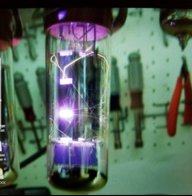

and.... they can hold it for years!Not all amps work that way, especially some of the older ones like SVTs and a lot of the big Fenders. They have to have bleeder resistors. And those old amps didn't. The caps can hold a charge for months strong enough to kill you (they discharge DC and not AC, so the amount needed to stop your heart is much less).
Learn your basics.
Correct, the giveaway that it's not class D is the presence of emitter resistors on these transistors. They are not required on class D topologies.Output transistors (well, the big ones... got part of that diode in my orange circle by accident). There are probably 2 more on the bottom of the heat sink. View attachment 3296589

Ok, this discharge will kill you!It certainly depends on the voltage.
Discharging capacitors are not avoided/protected by FI-switching!I always make sure the breaker is checked, the switch is off, then I check for current.