• TalkBass has been independent since 1998. Add your voice.
    Create a free account to reply to discussions, view embedded media, and browse with fewer display ads.
    Join freeLog in
    Want zero display ads or expanded classifieds tools? Compare plans.

Who decided this was a good idea? (w/ poll!)

What's your thought on this switch trend?

  • I love the switches, fast toggling between tones is more important than finite control

    Votes: 127 40.8%
  • I hate the switches, give me back V/V/T or a fader knob

    Votes: 184 59.2%

  • Total voters
    311
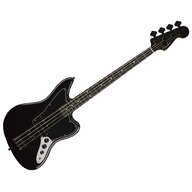
View attachment 5253096

… I can't think of a time when I'm ever up 50-50 on both pickups on my J-Bass, why would Fender lock me into just this?

That’s a P/J. I like the toggle on my P/J basses, some of which are Fender.

Totally wrong place for a switch though. Don’t like ‘em on the upper wing either.

In performances those would accidentally get toggled often. Switches belong out of the way, by the other controls.
 
My first choice is usually push-pull pots in a VVT config. I usually only add separate switches when I need more options or have an onboard preamp using up the room for pots. If there's a separate pickup selector switch located away from the main controls, I'll swap it for a 6 position. I don't think it hurts to have more tonal versatility on a bass. Simplicity is good too, which is one of the reasons I prefer push-pull pots. I wire them so that all pots pushed-down equals the standard configuration, and you only need to start pulling if you want to get more creative.
For a passive jazz with 2 single coils, I wire 3 push-pull pots - 1.Neck Vol/Both Pickups Series-Parallel, 2.Bridge Vol/Bridge Capacitor (like a RIC), and 3.Tone/Phase.
For a passive PJ, with 3 pots - 1.Neck Vol/Neck Pickup Series-Parallel, 2.Bridge Vol/Bridge Cap, and 3.Tone/Both Pickups Series-Parallel.
If you're really crafty, you can wire the bass so both volumes work in any configuration as well as eliminating the "double-loading" when running only 1 pickup. There's a lot of other options for the push-pull pots as well, like pickup loading caps, different tone caps, kill switches, etc. I'm a big fan for adding the RIC-style inline capacitor option on the bridge pickup. It offers a few extra usable tone options - takes the boom out of series mode, adds bass and punch in parallel like a RIC, and makes parallel out of phase much deeper down low but still funky up top.
 
Perfectly happy with switches or knobs.

upload_2023-11-16_21-25-24.png


St Blues Burst front body.JPG
 
  • Like
Reactions: HHudson
My preference is
1) fader knob
2) switch
3) two switches
4) two volumes

I'm almost all neck or all middle (neck/bridge). But the fader knob makes it harder for me to accidentally switch positions.
 
  • Like
Reactions: HHudson
I don't love or hate them.
Not really an important factor for me.
I loved the RIC scheme.
I love my jb as vvt.
I got a single mfd bass with a three way switch that's excellent.
I have a chambered semi hollow with a piezo and just a volume control (well there's a set and forget tone control barely accessible though the back panel.)
I get along great with all of them.
 
While I like both, I think passive blending is vastly overrated. Even if you want a range of ratios, passive blending works such that you don’t really get a smooth sweep of continuously variable and useful tones; you get 50/50, 100% of either, couple of sweet spots and that’s about it. Even if you want something in between 50/50 and a or b, you can just have a switching setup that includes a sweet spot or two.

of course, I’m also somebody who is enthusiastic and capable of modding their instrument themselves, so I’m free to design and choose as I wish
 
  • Like
Reactions: ToddB1963
I play guitar and bass. Sometimes you simply need to switch because of pickup selection. It's a nightmare! So on bass I adjust controls as closest as possible to a sound I need, and then just change my right hand position in order to get some more different colors of sound.
In conclusion - as less as possible switches and eq and tone and volume controls.
 
  • Like
Reactions: HHudson
I avoid this conundrum by playing a P.
Same! I also play Rickenbackers that have a V-T-V-T configuration and a pickup selector switch for Rick-O-Sound. In other words, I have the best of both worlds with my Rics.

That being said, I prefer a V-T-PS configuration on a Jazz Bass or Mustang Bass. I replaced the preamp in my Squier Jazz Bass with a preamp that has a V-T-PS configuration. The old one died after 14 years and it was simply time for an upgrade.
 
View attachment 5253096

This has been really really bugging me. I'm going to fix it on my own bass I got recently from Fender that has this configuration but I can't think of a time when I'm ever up 50-50 on both pickups on my J-Bass, why would Fender lock me into just this?

I see YouTubers are almost always on my side on this, but I do see a few people who do like it. All of this is preference, so I'm just curious, am I being a grumpy old man about this (very crotchity in my 40s)? Where does everyone fall on this switch-thing in recent years? Why does Fender seemingly keep either fader or V/V config on high-end Americans? Is this a cost thing, like is routing this switch cheaper than an additional CTS pot? Seems like it would be a tradeoff on the manufacturing side.

Last MIM I got was in 2003, a 2 year old used J-Bass, zero mods. This new MIM? I want to replace everything and things like this just annoy me.

Is there some, "you don't understand how preamp circuits work" reason for this?

Thanks, and I await to find out just how stupid I am :D
An Aria TSB 400 was my only switched bass, and a Tanglewood Rebel was my only VVT. The other Aria and all four Soundgears are or were VBT.
 
VBT, VVT, selector switch all rarely used by me. I just tend to stick to both pickups on full, tone wide open- most of the time anyway.

I know Tony Franklin has quite a strong preference for single VT with the three way switch for quick changes, which is why his signature bass is wired that way. But it’s way too easy to overthink this one, in my opinion.
 
View attachment 5253096

This has been really really bugging me. I'm going to fix it on my own bass I got recently from Fender that has this configuration but I can't think of a time when I'm ever up 50-50 on both pickups on my J-Bass, why would Fender lock me into just this?

I see YouTubers are almost always on my side on this, but I do see a few people who do like it. All of this is preference, so I'm just curious, am I being a grumpy old man about this (very crotchity in my 40s)? Where does everyone fall on this switch-thing in recent years? Why does Fender seemingly keep either fader or V/V config on high-end Americans? Is this a cost thing, like is routing this switch cheaper than an additional CTS pot? Seems like it would be a tradeoff on the manufacturing side.

Last MIM I got was in 2003, a 2 year old used J-Bass, zero mods. This new MIM? I want to replace everything and things like this just annoy me.

Is there some, "you don't understand how preamp circuits work" reason for this?

Thanks, and I await to find out just how stupid I am :D
Many a Strat has been sold with a pickup switch
 
  • Like
Reactions: HHudson
Let's see if I'm getting this right. You bought a Mustang, a SHORT scale bass most commonly used to wedge doors open in pawn shops on hot summer days, knowing that the switch wasn't going to meet your standards and then decided to complain about it? If I can make a call out to Corona and have that redesigned for you, what would you like on the head stock for a new model name?
 
Many a Strat has been sold with a pickup switch

'Tis true, but if you really want to get a Strat player's panties tied in a knot, tell them they *must* play the next song only using the Bridge & Neck PU together (the typical middle switch position on most 2 PU instruments) or all three PUs at once.

Unless they have tinkered with the circuit or have an extra switch, they will panic. A standard wired 5 way Strat switch offers:1 Bridge/2 Bridge+Middle/3 Middle/4 Middle+Neck/5 Neck.

I don't own a Strat, but converted a Nashville "Fender Modern Player Telecaster Plus" with a conversion neck to a Baritone. Nashvilles also have a 5 way Strat switch. The small switch between V&T is to add the bridge PU to the positions 4 &/or 5 (Caution to anyone who may wish to attempt this with that model, the neck pocket is not standard on these [is deeper, they did not use a FB overhang for the stock 22 fret neck, but a longer neck] and requires a bit of extra filling of the pocket].

Baritone Nashville tele:

fender_modern_player_tele_plus_tb.jpg
 
  • Like
Reactions: Robot.G
'Tis true, but if you really want to get a Strat player's panties tied in a knot, tell them they *must* play the next song only using the Bridge & Neck PU together (the typical middle switch position on most 2 PU instruments) or all three PUs at once.

Unless they have tinkered with the circuit or have an extra switch, they will panic. A standard wired 5 way Strat switch offers:1 Bridge/2 Bridge+Middle/3 Middle/4 Middle+Neck/5 Neck.

I don't own a Strat, but converted a Nashville "Fender Modern Player Telecaster Plus" with a conversion neck to a Baritone. Nashvilles also have a 5 way Strat switch. The small switch between V&T is to add the bridge PU to the positions 4 &/or 5 (Caution to anyone who may wish to attempt this with that model, the neck pocket is not standard on these [is deeper, they did not use a FB overhang for the stock 22 fret neck, but a longer neck] and requires a bit of extra filling of the pocket].

Baritone Nashville tele:

View attachment 5253879
I wouldn’t be that unkind to anyone.

I thought about going HS on my Strat copy. The scratchplate I bought was enough the wrong shape for me to make the old into HSH. Bridge is a standard H taken from an Ibanez. Middle is a Seymour Duncan single I've had in my toolbox for a while. Neck is an unbranded rails.

Someone I know has a push-pull for running her Strat in bridge-neck.
 
  • Like
Reactions: HHudson
I thought about going HS on my Strat copy. The scratchplate I bought was enough the wrong shape for me to make the old into HSH. Bridge is a standard H taken from an Ibanez. Middle is a Seymour Duncan single I've had in my toolbox for a while. Neck is an unbranded rails.

Someone I know has a push-pull for running her Strat in bridge-neck.

Yupp & push pull will get the job done as well (and can be for either the Bridge or Neck). The switch on mine was stock, originally for splitting the HB to S, so I just used that. Unless you have individual Vs for the PUs, getting a PU set which balances is important with these setups (if you are converting to HS you could also simply switch from the stock Strat VTT to a VVT layout without any problems, just a bit of rewiring). For two PUs You can also swap out the 5 way for a simple Tele 3 way switch, they are the same size...
 
Last edited:
Yupp & push pull will get the job done as well (and can be for either the Bridge or Neck). The switch on mine was stock, originally for splitting the HB to S. Unless you have individual Vs for the PUs, getting a set which balances is important with these setups (if HS you could also simply switch from the stock Strat VTT to a VVT layout without any problems, just a bit of rewiring).
The two Hs can be split but aren't. It would be more wiring and faffing about looking for the 'right' sound.

I hear you on the balance. I bought the SD when I still knew little about pickups. The pole pieces are wider than the strings, making me think that it's meant for the bridge. It's hotter than the H, which strengthens the thought. I don't mind; flicking the switch is like hitting an overdrive button. I record guitar in stereo. one channel has neck; the other has bridge and middle. There's also a kill switch.
 
  • Like
Reactions: HHudson

Latest posts