
Enjoy the benefits of a premium membership!
Upgrade Account
-
TalkBass has been independent since 1998. Add your voice.
Create a free account to reply to discussions, view embedded media, and browse with fewer display ads.
Join free Log in
Want zero display ads or expanded classifieds tools? Compare plans.
You are using an out of date browser. It may not display this or other websites correctly.
You should upgrade or use an alternative browser.
You should upgrade or use an alternative browser.
Why aren't medium scale basses (32") more popular?
- Thread starter Boneless
- Start date
-
- Tags
- medium scale
More options
Who Replied?What I don't get, is releasing a 32 inch scale bass as a budget bass but having nothing in a higher range with the same scale.
Looking at you, Ibanez and Fender. What if I want to upgrade from my Mezzo or Squier Affinity Jag within your brand? Maybe something with some nicer pickups or higher grade hardware, MIM or in the Premium range. But nothing.
The Squier CV Jaguar is a 32 inch scale, an excellent bass under $500 and just as good, if not better than any MIM Fender bass Ive owned or played. The CV line has gotten so good, paying near a grand for a MIM Fender is absurd. Unless of course you just need that name on your headstock...


My post (#9) has a different tone than I intended.
My post would have been better if I had started it with "My experience has been...".
I won't post on vacation again. lol
My post would have been better if I had started it with "My experience has been...".
I won't post on vacation again. lol

Yeah, that does seem a bit non committal. But those big brands have to concern themselves more with return for their investors more than some smaller boutique builders that are more passionate about the art. With Serek, you can get any one of their basses in 30.5", 32", or 34", none of which are considered budget basses.What I don't get, is releasing a 32 inch scale bass as a budget bass but having nothing in a higher range with the same scale.
Looking at you, Ibanez and Fender. What if I want to upgrade from my Mezzo or Squier Affinity Jag within your brand? Maybe something with some nicer pickups or higher grade hardware, MIM or in the Premium range. But nothing.
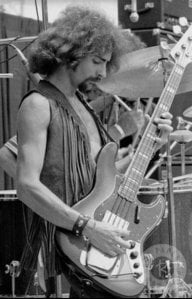
I’ve only owned one medium scale, (early 1980s Gibson Explorer) and although I did like it, it didn’t send me on a medium scale conversion quest.
I suppose the reason 32” scale basses aren’t more popular is due to availability. The reason why availability is limited is definitely up for discussion, but it’s probably the most common reason for anything to follow any path; $$$
You can bet if there were many dollars to be made building medium scale basses, 32” scales would be falling out of the sky. There’s nothing that says that won’t happen. 30” scale basses have certainly surged in availability in recent times, so 32” scale basses might be next. There would obviously be some point of diminishing return on this scenario, that is, it’s not likely that if 32” scales happen to take off in popularity, 31” & 33” scale basses will follow. The characteristics of musical instruments that set them apart from more common instruments almost has to be fairly significant, or the consumer takes a “why bother, it’s not different enough”attitude. 30” scale basses have the first claim on “easier to play”, so 32” can’t gain much there. Tone differences aren’t nearly “different enough”, so that’s not the one.
I don’t know anything else that is keeping 32” scale basses down, or elevating them, so their future is just as much a mystery to me as it is to anyone, but some of the probable reasons for their current status are for all to see.
I suppose the reason 32” scale basses aren’t more popular is due to availability. The reason why availability is limited is definitely up for discussion, but it’s probably the most common reason for anything to follow any path; $$$
You can bet if there were many dollars to be made building medium scale basses, 32” scales would be falling out of the sky. There’s nothing that says that won’t happen. 30” scale basses have certainly surged in availability in recent times, so 32” scale basses might be next. There would obviously be some point of diminishing return on this scenario, that is, it’s not likely that if 32” scales happen to take off in popularity, 31” & 33” scale basses will follow. The characteristics of musical instruments that set them apart from more common instruments almost has to be fairly significant, or the consumer takes a “why bother, it’s not different enough”attitude. 30” scale basses have the first claim on “easier to play”, so 32” can’t gain much there. Tone differences aren’t nearly “different enough”, so that’s not the one.
I don’t know anything else that is keeping 32” scale basses down, or elevating them, so their future is just as much a mystery to me as it is to anyone, but some of the probable reasons for their current status are for all to see.
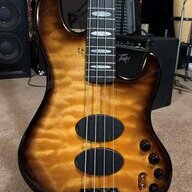
I would love to see what it would feel like playing a 4 string 24 fanned fret bass.They’re popular enough with me. The last couple of basses I’ve built/assembled have been medium scale and if I ever get some other projects done I’d like to make a fan fret 32”-30” 5 string. Ok the EB1 obviously isn’t a “build” but it is 32” scale and the one is an in progress shot. I also have an SD Curlee and a Hondo that are 32” scale. Just don’t have pics right now.
View attachment 4697227 View attachment 4697228 View attachment 4697229 View attachment 4697230 View attachment 4697231



 I currently own three Birdsongs (31" scale). I've own four others but sold them when I eliminated my fretted basses. They are my "go to" basses and I can get any sound I desire from them through my EA amp/cab combinations w/o effects. I also own a Roscoe 5 fretless, a Warwick Corvette 5 fretless, a home made Precision 4 fretless w/P-46 pups and an Azola BugBass so I am not w/o longer scale instruments. Sound wise I see no advantage to any of them. Each has his or her own voice (hope I got my pronouns correct). Adjusting to tension is a non-factor. Someone who is heavily into golf once asked me why I had so many basses. I asked him how many clubs he carried on the golf course. As with his clubs each has it's purpose.
Last edited:

Why did HDDvD lose to BluRay. Why did Betamax lose to VHS.
It’s more about branding, market penetration and name recognition than anything else. If Fender switched their entire line to 32” a ton of people would be playing 32” within 10 years. But they won’t.
It’s more about branding, market penetration and name recognition than anything else. If Fender switched their entire line to 32” a ton of people would be playing 32” within 10 years. But they won’t.
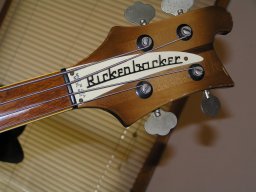
I think he means that an EB-0 with a mudbucker doesn't mimic a Stingray.I laughed out loud when I read this. I’m sorry (not sorry) for that. I’ll put money down against this - honestly. I’ve got $100 Canadian dollars that I’m willing to lose if there’s a way that we can test this theory and you can prove beyond a reasonable doubt that some rando at a club can tell the sonic difference between a 30” or 34” scale one, blindfolded and without prodding or some other kind of assistance.
Ford pared down its family of brands by shelving Mercury. The gap in the lineup is filled by gussying up plain Fords and offering a few new Lincolns. There are thousands of long and short scale basses that cover all of the ground sonically and much of it tactilely. The market for instruments that require special strings (not sure this applies to all of them) and a bit of a learning curve with little positive benefit is a niche at best. 34" scales are the standard size for basses. Lopping off a couple of frets shortens it down to 30" and change which makes a guitar sized neck and truss rod work for mass production. No need to retool for a shorty, just modify the existing parts. That keeps costs low and offers an alternative to long scale instruments. If the standard scale started out at 32" back in the early '50's, we'd be in a different place now.

I had a 32" scale Fender Telecaster bass. I thought it sounded more like a long scale that it did a short scale.
I felt there was nothing distinctive about the tone of the Telecaster so I returned it. To be honest the indistinctiveness of the tone could have simply been the bass. I've had numerous long and short scale basses that were also indistinctive.
It's a crapshoot.
I felt there was nothing distinctive about the tone of the Telecaster so I returned it. To be honest the indistinctiveness of the tone could have simply been the bass. I've had numerous long and short scale basses that were also indistinctive.
It's a crapshoot.

I’ve had a rapprochement w this scale lately, thanks to a Landing I couldn’t resist. I do notice the 2 inches vs short scale, my usual, but only bc I’m less able to cheat effectively … the stretch without my pinky in constant action is a hair too much to get away with it on medium. I like it; it makes me pay attention more but doesn’t limit what I can do.

ACG in Scotland will build you a 24 fret 32" as will Maruszczyk (the frog, paddock and sputnik) - both are custom made but not as expensive as many other custom builders.
I don't like the models of those. Not any production 32" basses with 24 frets (Besides The urge 1)?
Alembics are really nice but too expensive.
5-string Sisters, in 32" scale... (yeah, it works just fine)
View attachment 4697608
View attachment 4697609
4-string Sisters in 32" scale...
View attachment 4697610
View attachment 4697611
A pair of Old Dragons in 32" scale...
View attachment 4697613
View attachment 4697614
Then there's the Prodigal Son, also a 32" scale.
View attachment 4697617
So Anyway, if I ever get to actually see a Rick Turner Model 1, and it's for sale, and I've got a couple of beers in me, and I could figure out how to sneak it in the house past Mrs. Hurricane...

Would love to play one.

EdwardofHuncote
I Still Dream of Jeannie
- Aug 21, 2013
- 6,648
- 2
- 16,413
- Disclosures
- I privately own and operate a local musical instument repair shop.
So Anyway, if I ever get to actually see a Rick Turner Model 1, and it's for sale, and I've got a couple of beers in me, and I could figure out how to sneak it in the house past Mrs. Hurricane...
Would love to play one.
Mine is cleverly disguised in a guitar case. Jeannie is none the wiser.
Seriously, I got it secondhand from the original owner, paid less for it than the Model 1 guitars were going for at the time. Now that the silly-season has set in, all bets are off, but I think Rick's former staff is going to keep building under management of an existing Board of Directors. So at least for now, there is continuity of service and a supply of them. Keep your eyes open for a private sale. They really are special.

You have a bunch of Leo Fender worshipers here. They will tell you he did everything right. He used 34" scale, so there you go.
Market forces may also be at play. The bass market is tiny compared to the guitar market. Asking stores to carry anything other than a well established standard is too much. That's why the selection of strings, basses, and amps in stores are so lousy. Start throwing weird stuff like shorter scale lengths in there, which then need that string, and it becomes a hassle.
Personally I can't think of one good use for 32" scale. Loose strings are the enemy.
Market forces may also be at play. The bass market is tiny compared to the guitar market. Asking stores to carry anything other than a well established standard is too much. That's why the selection of strings, basses, and amps in stores are so lousy. Start throwing weird stuff like shorter scale lengths in there, which then need that string, and it becomes a hassle.
Personally I can't think of one good use for 32" scale. Loose strings are the enemy.
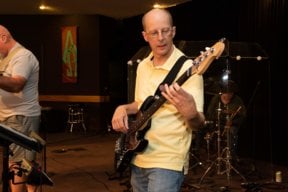
Two of my three basses are 32" scale. They are noticeably easier / more enjoyable to play than their 34" counterparts while delivering sound so close to a 34" 4-string that you can't hear the difference. They weight 6.7 and 7.2 lbs and balance better than any production bass I've ever tried.
String availability is less than ideal but there are enough choices to make it workable.
String availability is less than ideal but there are enough choices to make it workable.

I believe Brad Lowe AKA @BeeTL on here builds conversion necks. That’s what’s on the green headless SG I posted earlier. Very nice.
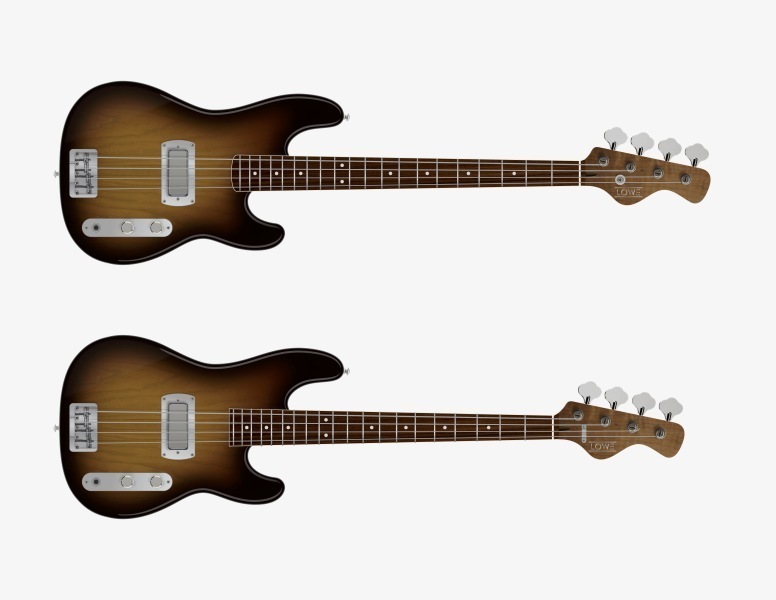
@Matt Liebenau Thanks for the mention! Yes, 32" scale conversion necks are becoming the core of what I do these days...I'm actually retooling for a brand relaunch with a primary focus on 32" scale. I'm currently sold out and I don't take deposits or pre-orders, so I'm sharing the following purely for information's sake.
As others have observed, a conversion neck is a pretty simple concept, just move the headstock and nut to the location of the first fret on a comparable 34” long scale neck and add an overhang with an extra fret at the bridge end of the fretboard.
This will produce a 32" medium scale, 20-fret neck that will convert a standard long scale bass to medium scale without any additional modification. Imagine de-tuning a bass one-half step and putting a capo on the first fret and you've got the idea.
This is an updated render by Chris Ferebee that clearly illustrates the concept:
Last edited:

You would have gotten the same results. However, you aren’t entirely wrong. Some folks feel 30” is too thuddy, and they go with 32 just because it’s got qualities of the long scale with a little shorter reach.My post (#9) has a different tone than I intended.
My post would have been better if I had started it with "My experience has been...".
I won't post on vacation again. lol
I'm a newby here and a beginner bass player again (returning after a 30 year absence from playing) so this question is for learning purposes only. I keep hearing that maybe the best sounding bass ever is an Alembic (for multiple reasons) and that a lot of Alembics are 32" scale, could there be some advantage or at least no disadvantages to that length sonically? I realize it's a hyper-elite bass, but it just seems that if 32" has some inherent disadvantage it would be eliminated in the very highest-end bass.My post (#9) has a different tone than I intended.
My post would have been better if I had started it with "My experience has been...".
I won't post on vacation again. lol


