
Enjoy the benefits of a premium membership!
Upgrade Account
-
TalkBass has been independent since 1998. Add your voice.
Create a free account to reply to discussions, view embedded media, and browse with fewer display ads.
Join free Log in
Want zero display ads or expanded classifieds tools? Compare plans.
You are using an out of date browser. It may not display this or other websites correctly.
You should upgrade or use an alternative browser.
You should upgrade or use an alternative browser.
Why cant we all read?
- Thread starter Jpeachbass
- Start date
- Status
- Not open for further replies.
More options
Who Replied?
Reading is needed for a career in music???
That's pure balderdash and poppycock.
Paul McCartney can't read a note, and last I checked, he seemed to be doing relatively well, career-wise.
Chris Squire of YES doesn't read at all, and yet music is his career.
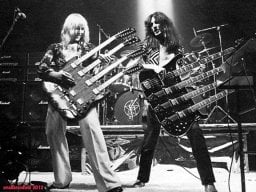
Geddy Lee doesn't read, and yet I haven't seen him having to clip coupons for this weekend's sale at Walmart.
There are way too many other examples as well. Saying that reading music is a prerequisite for a career in music is utter nonsense.
I must say your argument is utter nonsense. Yes there are and always will be huge stars that don't possess all the tools, that cannot read music. Add Carlos Santana to the list. That stardom, however, is not always based on talent or skills. The VAST MAJORITY of musicians that make a living at it read music. If Yes or Rush or the Beatles had not "made it" do you think that any of these guys could have sustained themselves and their families as session players. Do you think they would be the first call for a Steve Vai tour?
There are many cats who make a very good career in music that you have and will never hear of. They're bringing home 200 to 300K per year doing everything from studio work to tours. Perhaps at one time they wanted/needed that fame- most likely they are really happy - or as Liberace once said, "laughing all the way to the bank."

That's an excellent point, Brad. I could be a bit off base here, but it is my perception that focusing on reading music for bass would help those interested in a career as an on-call "session" musician in recording studios, and for those more interested in making it REALLY big, the focus should be more on writing good songs and playing bass notes that fit the song the best, like Paul Mc does.....which is pure talent!!
Yep.
It can also help open up your mind to new musical concepts. No doubt about any of that. But there are so many genres in which you could be highly successful without reading than those that really require it. I think some people lose sight of that... on a regular basis.

My gig tonight will be with four or five pros. No setlist, no sheet music, no doubt lots of improvisation and on the fly arrangements. The songs I will be playing (if they're even pre-existing songs) were learned without sheet music. This kind of gig with these types of players are an example of when reading might not be that big of a leg up.

Learning the scales and modes via the clefs has been incredibly useful in working out an understanding and translating to the fretboard but not completely necessary to enable learning.
Ah yes, the practical approach. Works for me.
I suppose a lot of this is difficult because "reading" is defined somewhat differently by many. I can 'read' music, note for note, but for what I do, I don't. Many, including me, use charts and 'read' for the changes and general form, this is more common than sight reading notes, at least in a popular/improvisational music context. RE the OP, I 'read' in this way when I don't know a tune. I, like many, drop the chart as soon as I can remember the tune musically (knowing the melody/lyrics really helps).
I can sight read a solo (not so well anymore), but I'm not doing session jingles or am in a position where I'd need to, but that could change.
What Ed (pointbass) posted makes a whole lot of sense, and he's right on the mark about the doors it opens. Understanding how music works from a technical standpoint will make clear some of the conclusions many of us have come to, but haven't had the vocabulary to state. There is a reason why things sound the way they do, and that is explained. That said, knowing theory in and out doesn't automatically make a musician, IMHO. Theory gives us a common language, a way to impart information in an efficient and standard way. It's a way to notate the music, but it isn't the music itself.
I like playing with lots of musicians, and they don't all have to be educated or 'understand' what they are doing for it to be fun. In certain situations, though, some fundamental understanding of the...uh...fundamentals is necessary, and you just can't get around it.

Yep.
It can also help open up your mind to new musical concepts. No doubt about any of that. But there are so many genres in which you could be highly successful without reading than those that really require it. I think some people lose sight of that... on a regular basis.
My gig tonight will be with four or five pros. No setlist, no sheet music, no doubt lots of improvisation and on the fly arrangements. The songs I will be playing (if they're even pre-existing songs) were learned without sheet music. This kind of gig with these types of players are an example of when reading might not be that big of a leg up.
I've done gigs like that, and sometimes they're the most fun because nobody's reading from charts. Ideally, in a performance setting like you're talking of, music is never read on the gig. I've also walked home with a few benjamins for showing up to read Real Book charts all night. Guess it depends on what your gigs are.
I must say your argument is utter nonsense. Yes there are and always will be huge stars that don't possess all the tools, that cannot read music. Add Carlos Santana to the list. That stardom, however, is not always based on talent or skills. The VAST MAJORITY of musicians that make a living at it read music. If Yes or Rush or the Beatles had not "made it" do you think that any of these guys could have sustained themselves and their families as session players. Do you think they would be the first call for a Steve Vai tour?
There are many cats who make a very good career in music that you have and will never hear of. They're bringing home 200 to 300K per year doing everything from studio work to tours. Perhaps at one time they wanted/needed that fame- most likely they are really happy - or as Liberace once said, "laughing all the way to the bank."
Well he couldn't really mention people who aren't famous... who'd know who he was talking about?

I know lots of full time musicians who don't do sessions and aren't reading on their gigs. It happens more often than just with supertstars.
I've done gigs like that, and sometimes they're the most fun because nobody's reading from charts. Ideally, in a performance setting like you're talking of, music is never read on the gig. I've also walked home with a few benjamins for showing up to read Real Book charts all night. Guess it depends on what your gigs are.
That's the point I've been harping on all along. It depends.
I guess I have a more strict definition of reading because I don't consider doing chord chart Realbook gigs reading... I do those and get paid well too. My idea of reading is being able to flawlessly sight read several lines above the staff the first time through.
I must say your argument is utter nonsense. Yes there are and always will be huge stars that don't possess all the tools, that cannot read music. Add Carlos Santana to the list. That stardom, however, is not always based on talent or skills. The VAST MAJORITY of musicians that make a living at it read music. If Yes or Rush or the Beatles had not "made it" do you think that any of these guys could have sustained themselves and their families as session players. Do you think they would be the first call for a Steve Vai tour?
There are many cats who make a very good career in music that you have and will never hear of. They're bringing home 200 to 300K per year doing everything from studio work to tours. Perhaps at one time they wanted/needed that fame- most likely they are really happy - or as Liberace once said, "laughing all the way to the bank."
Actually, being able to read doesn't insure success either.
I've been a working musician my whole life and found having a good ear -- which isn't important in set bands -- is more important in the gigging world. .
I can read -- but I never got great at it, even though I've worked hard at it. It's a right brain thing and some guys are better than others at it. A lot of great readers are uninteresting players.
Reading is also boring to practice.
This isn't an excuse. EVERY musician should be able to at least have fundemental reading ability. EVERY musician should understand chords and theory. EVERY musician should have an understanding of all types of music.
And to a previous poster who said he also had no reason to play drums...WRONG. EVERY musician should play some drums.
But at some point, you're going to be better at some things than others. And THOSE are the things you should do.

Reading is needed for a career in music???
That's pure balderdash and poppycock.
Paul McCartney can't read a note, and last I checked, he seemed to be doing relatively well, career-wise.
Chris Squire of YES doesn't read at all, and yet music is his career.
Geddy Lee doesn't read, and yet I haven't seen him having to clip coupons for this weekend's sale at Walmart.
There are way too many other examples as well. Saying that reading music is a prerequisite for a career in music is utter nonsense.
you're talking about rockstars. everyone else here is talking about musicians.
btw, louis armstrong also couldn't read.
edit- i'm in no way implying a lack of musicianship in any of the above mentioned. just pointing out that the way a legitimately world-famous musician has the ability to work, doesn't requite them to read.
non-applicable. you're not doing any of those other things.
point rejected.
But they would be of great benefit to me. I, from time to time, require physical repair. I consume food. I play music. All applicable and all analogous to the OP's point.
rejection rejected

I'm determined to become a good sight reader, but it is a very rote process. At times I get to a piece of music that I really struggle with and it discourages me for a bit and I put it down and start focusing on other stuff more like theory.
But ultimately, I think being musically literate is going to make me a more effective communicator on my instrument and allow me to see a broader view of what music consists of. I really can't see any downside to it, other than the initial tedium of learning it.
It's also nice when learning a piece of music to have it all laid out on the sheet there for me instead of having to sound it out myself. Then I can make any changes to it after the fact if I'd like to.
But ultimately, I think being musically literate is going to make me a more effective communicator on my instrument and allow me to see a broader view of what music consists of. I really can't see any downside to it, other than the initial tedium of learning it.
It's also nice when learning a piece of music to have it all laid out on the sheet there for me instead of having to sound it out myself. Then I can make any changes to it after the fact if I'd like to.
ever notice that the only people on earth who say the costs outweight the benefits are non-readers? i've already browbeaten people enough over being too lazy to learn how to read so i'll refrain in this thread, but never in a million years will you hear a reader say the costs outweigh the benefits. and there are way more benefits to learning how to read than merely being able to read a sheet of music. even if you never read on a gig in your entire life, the benefits greatly outweigh the costs, and the only people you will ever hear say the opposite are non-readers.
Um, yeah, because readers determined that, for their personal situation, the benefits outweighed the costs!
Ever notice that the only people on earth who say the benefits outweigh the costs are readers? This type of reasoning is meaningless... A logical fallacy... It's like saying "ever notice the only people who don't think guacamole is delicious are people who don't eat guacamole?" Well YEAH, OF COURSE!!!! It would be illogical for someone who determines that reading music would not be worthwhile to learn to read music, just as it would be illogical for someone who determines that reading music would be worthwhile to not to learn to read music!
Western musical notation is only one musical language. And musical notation is not the same thing as music theory. One can grasp theory concepts without knowing how to read written notation, and vice versa. Knowledge of one doesn't necessarily mean it will be easier or harder to grasp the other. It differs from person to person. It's up to each person to determine, for what they want to do or are interested in pursuing as a musician, whether it would be worthwhile to them.
Paul McCartney can't read music, but that never stopped him from being a brilliant musician and composer!
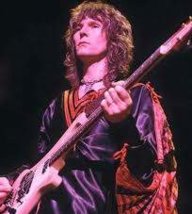
A lot of great readers are uninteresting players.
LOL!
Can you imagine the Stones coming out on stage, the crowd cheering wildly, and then all of the Stones take a seat at each of their stations with their sheet music right in front of them, and open up with Brown Sugar?
What a show, huh?

I've never been handed a sheet of music, so why would I need to know how to read music?
Is it possible that the reason that you have never been handed a sheet of music is because you don't read, rather than the other way around?
Is it possible that the reason that you have never been handed a sheet of music is because you don't read, rather than the other way around?
No. That doesn't even make any sense.
Oh, wait... Y'all are talking about paying gigs playing other people's music, huh?

*imagines Mick doing the rooster, seated*.
LMAO! Too perfect!!!!!
EDIT: There is a very small rooster symbol placed at the proper location on the sheet music that instructs Mick to do the rooster at the correct moment.
Musicians don't read for the same reason that you cook your own food but aren't a degreed culinary chef. It simply isn't necessary. It is going backwards for many people.
It takes much discipline, time, etc, and some people just want to get to the point. They are making music and that's enough for the majority.
It takes much discipline, time, etc, and some people just want to get to the point. They are making music and that's enough for the majority.
I can read, but I have never professionally (read, for money) had a reason to. Not once in 25 years of playing. Still glad I can, but I can certainly see why someone might not want to.
- Status
- Not open for further replies.


