
I thought "fast" was a term borrowed from the shredder e-gtr world. Thin necks are "fast". I have no idea why. I think the term is silly and using it smacks of "beginner". If you're using it, I suggest you drop it fast (pun intended)! 

TalkBass has been independent since 1998. Add your voice.
Create a free account to reply to discussions, view embedded media, and browse with fewer display ads.
Join free Log in
Want zero display ads or expanded classifieds tools? Compare plans.



A thinner neck may be easier to get around on depending the individuals physical make up. That can be perceived as being faster.
I like most Jazz necks but the really small ones feel cramped. The larger necks I'm okay with but that really depends on the shape and radius. It's more complicated than just skinny or thick I think. For me it's a comfort thing.

Measurements of course. But, then there's the finish of the neck also. Gloss tends to stick, where nice sanded wood with oil just glides. Smooth, "fast" neck. Regardless of the size."Skinny" to me usually refers to the width of the neck at the nut and relates to the taper of the overall neck. Jazz necks are skinnier (1.5") than a P-bass (1.62").
"Thin" to me means the thickness front-to-back of the neck. I would consider Ibanez SR series necks to be thin in comparison to their Talman necks. Consider these measurements for an SR300E vs Talman100.
SR300E
Scale : 864mm/34"
a : Width 38mm at NUT
b : Width 62mm at 24F
c : Thickness 19.5mm at 1F
d : Thickness 21.5mm at 12F
Radius : 305mmR
Talman100
Scale : 864mm/34"
a : Width 41mm at NUT
b : Width 62mm at 20F
c : Thickness 21.5mm at 1F
d : Thickness 24.5mm at 12F
Radius : 240mmR
View attachment 2993991
Some of the dimensional differences might appear small on paper, but in my hand they feel radically different. The SR neck feels like there is less material in my hand when fretting thus makes it faster to maneuver. A chunky neck to me is not as comfortable or "fast". It has to do with the size and shape of my hand.
I'd say that neck radius is also a significant and relevant factor: flatter is considered "faster" by some.
As usual, it comes down to what works for you.
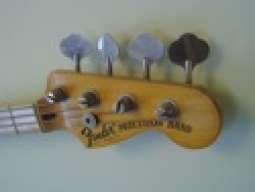
"Fast" is a meaningless adjective when applied to a bass or guitar neck, as far as I'm concerned. May as well say "sweet". Absolutely no descriptive value.


It’s a good question. I assume it’s mainly from Guitar talk. Guitar players that play technical music tend to prefer flat fingerboards with super low action. My dingwall “feels” really fast. But it’s neck isn’t particularly thin or flat. I can play faster on it than anything else I’ve tried. Granted I play hard rock and nu metal so I’m not playing progressive metal with fast sweeping and stuff . It feels fast to me because of the string tension on the low B and E strings, maybe the tiny frets have something to do with it.I can fret just as fast on a p bass as a jazz?
I feel like skinnier necks are actually slower for me



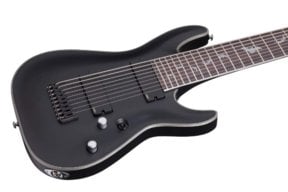



If your reference is Fender basses, you don't know fast necks. Try an Ibanez SR or a Status Series III for a change.I can fret just as fast on a p bass as a jazz?


Not really. That's the same as saying jumping over 8 feet is the same as jumping over 9 feet if your technique is good.Substitute easy for fast.
If you have a good technique then all necks work at the same speed. If you don't then size matters.


