There's a fallacy here. I'd wager that the number of players who don't use their lowest string is probably close to the number of players who do. I'm sure that for every video you could find where a player doesn't use that string, I could find a video where they do. Your sample size for this assumption is grossly inadequate - two examples of bass players playing in a solo context. (Not trying to be harsh, but I'd definitely find the conclusion unwarranted.

)
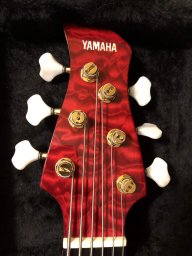
That said - there are reasons not to use the B string. I used to use it a lot in fifth position and higher and I feel as though I use it less now - possibly because I've been playing different basses, and actively working on position shifts. (That said, I still do use it quite a bit.) Some people may be in that same situation, or they may be coming from a four-string - or maybe they generally use a four-string but they're using a five for a gig that needs it for a few songs. Strings also have different timbres and some players incorporate that into their playing; especially in a solo context, the smaller strings are snappier and can give more "sparkle" depending on the strings and the bass, and they of course do have a higher note range. Finally, depending on the neck taper, playing the B string may take more of a stretch after a certain fret range.
When I'm playing anything on the E string, I definitely like having the option to go down when I have to, even if it's for something like a Latin groove where I want the fifth below. It's just a really nice option to have, and if I'm hanging out on the B string, I don't really have that anymore.
Hope this helps!