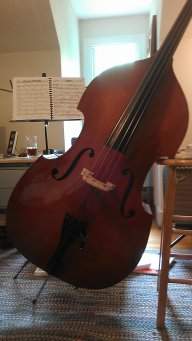
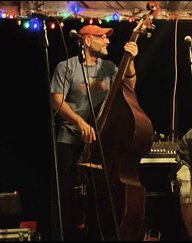
I've gotten used to "playing in the dark," sonically speaking. Good monitoring of bass, particularly upright bass, is a tough order in many clubs. As such, I keep my stage volume to an absolute minimum, and listen more to the house PA and room more than any monitors for what I need. There are times when you can have your cake and eat it too, but as a working musician playing in all kinds of rooms with all kinds of systems, here are a few things that I find to be true about 95% of the time in club gigs with a house PA and dedicated engineer:
1. You have to give FOH the best possible signal. That means owning your own DI, and pre-EQing it for your specific instrument so that the FOH engineer can slot it into the room mix.
2a. Most stage monitors, with the exception of a drum monitor, have a high pass filter on them rolling out frequencies below 100Hz and possibly higher. They can be good for pitch recognition, but awful for providing you with punch in your tone. They're often too loud, and blasting a lot of midrange frequencies into the top of your bass is a recipe for feedback. For a club of ~150, I can't really see any reason why you would need anything other than vocals in the wedges. Any other stage monitoring should be handled by the band, IMO.
2b. Most stage monitors are rung out, and have ONE EQ applied to all across the board. Any changes made for one musician affects everyone else.
3a. You can have great/loud/comfortable sound on stage, and this requires you to bring an amp big enough to compete with the FOH PA.
3b. Bringing an amp/speaker big enough to compete with the FOH PA typically means that you hold the FOH engineer hostage. They can't slot you where you need to go.
3c. Many times, what feels good sonically from a players perspective isn't what is needed 20 or more feet out into the house.