• TalkBass has been independent since 1998. Add your voice.
    Create a free account to reply to discussions, view embedded media, and browse with fewer display ads.
    Join freeLog in
    Want zero display ads or expanded classifieds tools? Compare plans.

Why have a nice rig just to be run direct? PART 2

Status
Not open for further replies.
Maybe you should think about looking into a rig that has one of these:

Link Removed

I hear it takes care of all the problems you seem to be having with this concept.

Do you have an off switch pic too? :D

Stephen-Colbert-Popcorn.gif
 
Obviously there are two parties, on the one hand those players who prefer IR-synthesis, and on the other hand those players who prefer a mic.

Who is right? Everybody is right!
Everybody plays different, everybody has got its own personal needs and very very likely everybody feels different to different sounds.

IR-synthesis of a cab,
IMO this application fits best to applications were there is no desire to reproduce 'additional' Harmonic content.
Once a IR-model of a cab is adapted then the response model which feeds FOH stays steady. The model stays for a certain number of cab input power and crest.

mic,
as far as an amplifier does never distort nothing at all (sufficient headroom all along the line even on transients) then a IR-model provides a nearly identical response. Condition, the same amp was used for IR-synthesis with same EQ settings and same mic position to the speaker and identical mic as well.
The situation may become different on stage or rehearsal room. That is when a (tube) amplifier may very easy run transients into power amp saturation, frequently a distorted content which have not to be clear audible by necessity.
The more a amp is cranked to the limit limit the more a amp gets lost of its ability to control the speakers.
I.e. the negative feedback loop is cropped and therefore Ri will increase.
In extreme example a cab system resonance may become noticeable. Thus the number of Ri, which is an essential parameter that impacts transfer characteristic, becomes a time related number in this case.


Amp modeling:
IMO managing a nearly exact copy of an amp demands way more knowledge about what is going on under the hood then the amp designer itself may probably will ever know.
If I was asked doing a amp modeling of my SVP-Pro I would ask the question:
"what do you mean, modeling the pre like it stays as a part of a head or do you mean a amp model as it as 1HE preamp with a jack for AC supply?"
The answer could be like:
"no, I want to have a amp-model that is software based, no head and no 1HE and no line socket"

Seriously, if the amp model for the SVP Pro would be based on the 1HE variety leads to a significant different model in opposite to the model as it was as a part in a head. The model as a part in a head is much more complex because the transfer function for the pre becomes very dependent on power amp strain.
As the SVP-Pro consists of a Drive Stage the amp-model demands for additional implementation to cover some kinds of those NOT time invariant transfer functions.

For sure. likely the most tricky thing in amp-modeling is the power amp section. As usual in the business, sometimes modeling engineers ask advice from custom amp designers like Reinhold Bogner in a hope to address a transfer function at it's right place.
Sometimes I'm thinking about a fellow who does a custom guitar-amp boutique. Honestly, those guys doe not bother too much on a science like signal and system theory. They are skilled to argue any detail why they do something in particular but they can't tell how a related transfer function looks like, or at least would be effected.

Ideal amp-modeling:
Just this moment I try to imagine the sound of an 'ideal' modeling of amp+speaker which is necessarily reinforced by an additional system which again consists of amp+speaker.
At least the directivity of the modeled speaker will be lost.

just my 2cent:)
 
The answer is easy/simple, any DI and IR-modeling can't divine to the future and thereby compute specific parameter numbers because the origin system itself already is less time-invariant (more or less).

OK....:confused:.......:D

Just to be clear, my answer here was to say, "you are getting over my head with that time-invariant stuff".

Wasn't an insult, or an endorsement, of any of you guy's ideas on what makes a good emulator. :)
 
Ideal amp-modeling:
Just this moment I try to imagine the sound of an 'ideal' modeling of amp+speaker which is necessarily reinforced by an additional system which again consists of amp+speaker.
At least the directivity of the modeled speaker will be lost.

Ideal = amp+spearker+mic+room.

EDIT: PS, FWIW - personally, I'm okay playing with either amp or ampless.
 
Players only need enough amp volume to keep up with a drummers stage/room volume - anything more is just overkill and to LOUD. Most everyone here knows how loud drums are, and it really doesn't take a huge overkill bass rig to keep up with drums. ALWAYS bring a huge overkill bass rig that's capable of interfering with small outdoor concert subs, make peoples ears bleed, and tick off soundmen to little postage stamp size bar/venue gigs is ridicules.

Oh Joe how narrow minded you are.

I bring a rig that meets all of my volume needs, and sounds good. I have never had anyone ask me to turn down, regardless of where I am playing or what type of music.

I feel sorry for you that you seem to lack the awareness of how to use an amp bigger than a tiny combo.

Maybe you should think about looking into a rig that has one of these:

Link Removed

I hear it takes care of all the problems you seem to be having with this concept.

That has more than an on and off option. Might confuse some people around here.
 
Oh Joe how narrow minded you are.

I bring a rig that meets all of my volume needs, and sounds good. I have never had anyone ask me to turn down, regardless of where I am playing or what type of music.

I feel sorry for you that you seem to lack the awareness of how to use an amp bigger than a tiny combo.


That has more than an on and off option. Might confuse some people around here.

Grow up and stop with the childless insults already.

Since you insist on making this personal with you - with my statement in mind, let talk about your bass rig.
Originally Posted by Joe Louvar
Players only need enough amp volume to keep up with a drummers stage/room volume - anything more is just overkill and to LOUD. Most everyone here knows how loud drums are, and it really doesn't take a huge overkill bass rig to keep up with drums. ALWAYS bring a huge overkill bass rig that's capable of interfering with small outdoor concert subs, make peoples ears bleed, and tick off soundmen to little postage stamp size bar/venue gigs is ridicules.

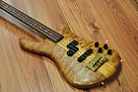
BurningSkies, you might as well jump in on this and answer now too.

1) Please tell how big your bass rigs are?

2) Why do you need so much just to keep up with a drummer?
 
Status
Not open for further replies.