• TalkBass has been independent since 1998. Add your voice.
    Create a free account to reply to discussions, view embedded media, and browse with fewer display ads.
    Join freeLog in
    Want zero display ads or expanded classifieds tools? Compare plans.

Why have a nice rig just to be run direct?

Status
Not open for further replies.
Also if your cab is mic'd you can bet the sound guy is going to EQ that mic. If for no other reason than that mic does NOT have a flat response.


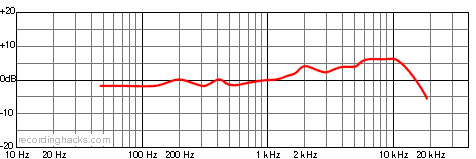
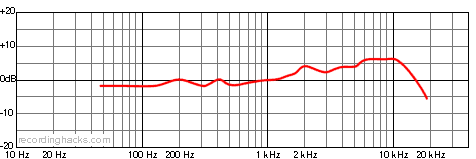
My AKG P2 is :D

(or as close to flat as makes no matter)

1879.png
 
i think all musicians should have at least a basic understanding of how a sound system works. for instance, we had a guitar player who would constantly turn up his guitar amp. that is a big no no as most of us know but he didn't and would not listen so we canned him. hated to do it because the guy was a natural at sounding heavy but oh well. i even let him borrow my wireless and stand out front during sound check and he seemed to "get it" but 10 minutes into the first set he was turning up and i could hear his guitar coming from his amp and his monitor from where i was in front of my bass amp. i think he was half deaf. yes, what a great world it would be if we all knew how a board operates and what works and what doesn't. it is one of the main reasons i got interested in learning how to mix live sound myself.

He probably turned up because all he could hear onstage was the bass. SVT for the fail.
 
My AKG P2 is :D

(or as close to flat as makes no matter)
1879.png

I wouldn't call a 6dB boost between 6 and 10KHz to be anywhere near flat but whatever works for ya. :D

Flattest instrument/vocal mic I've ever seen is the EV RE-20, and you can use that on almost anything but you really have to take the time to position it right.

Flat isn't even necessarily a good thing, sometimes you want a built-in curve, but other times it can really give a wild interpretation of what it's picking up.
 
I wouldn't call a 6dB boost between 6 and 10KHz to be anywhere near flat but whatever works for ya. :D
I was thinking the same thing. Also considering that the lows look to be -2dB, along with a sharp roll off at 10khz down to -5dB, it all gives the mic a +/- 15dB variance between 20-20khz, hardly flat by any stretch. That won't mean it can't be used and work great, but it'll hardly be useful for accurately reproducing anything faithfully without some skillfull EQ adjustments at the desk.

Still, I understand his point. He uses it and likes it. That makes perfect sense. Same as someone else using a DI. So we're still down to personal preference on how to approach a situation to get the right sound. A lot of the pushback for the use of mic's in this thread had more to do with the issues it can cause in the house, and guys who prefer mic's for tonal reasons get offended at that. I can see both sides, as there are pros and cons to just about everything in life. Simple matter of the fact is that if mic'ing a cab was the end all, be all for getting a great, no-fuss bass tone in the mix, then scores of sound engineers wouldn't be so shy about using them. Simply blaming it on laziness as has been done a bit in this thread is a bit disingenuous IMHO. I do think that mic'ing cabs has kind of taken on a reputation perhaps that it isn't always deserved, both positive and negative. Like most things in music, it's just another tool that can be used.
 
Any mic'd cabinet is being mic'd in the near-field and as such will have many nulls in the response due to the size of the driver and close location of the microphone.* For example a 10" speaker with the mic' located at the center of the cap the nulls would be around 740 Hz, 2.2 kHz, and so on.

Now add to that the reflections from the floor, walls and ceiling, and the sources from the other drivers in the cabinet, also the response of the mic itself including proximity effect. It is not pretty and is not representative of the cabinet in free or any other kind of measurement space. That is why the freq resp plots I posted earlier look as lousy as they do. They show what a cab's response looks like once you stick a mic in front of it. You know what? It doesn't matter - they sound great! We should be careful not to overthink this.

* Invalid Link Removed.
 
Honestly I was just being flip, I know that it's not perfectly flat response. The reason I like it is that it doesn't have that huge mid scoop that the kick mic's have, and it has a good deal more low-end than an SM57. A lot of the high end in that plot will be rolled off by the cab, so it's one of the more neutral mic's I've heard, and costs a third of what an RE-20 will run you.

But regardless, the mic is just a means to an end, which is that I really don't like playing without amp drive and a cab roll-off. I could probably get through a set just fine using my power soak as my amp load and putting a decent speaker sim on it. I'm actually pretty flexible as long as the sound guy is willing to meet me halfway and help me get the dirty sound my band is used to.
 
You know what? It doesn't matter - they sound great! We should be careful not to overthink this.

You're right. I think they can sound great, and don't need to be overthought too much. For consistency, you have to make sure you know the mic you are using, and that you put it in the same spot often enough to reproduce the expected result. Then be extremely careful that neither you nor anyone else bumps it during the gig, or inbetween breaks, etc. Those are some of the complaints that have been logged against mics, and they are extremely valid.

Another complaint against them is that they do not faithfully reproduce the amp/cab's sound through the PA, which some people are arguing is why they want use them. Granted, they can sound great, and you might like them better than a DI. That's completely valid. Liking something however doesn't mean you can make up something about its use that isn't true, so some of have pushed back on that in this thread with some very good supportive argument. People who insist on using a mic have pushed back at this themselves.

I still gotta say, in the end, use what you like if the sound guy will let you. Demand it if you want also. There are all kinds of ways to get a good tone going in the PA, and each has drawbacks to it that you are at risk of being exposed to. Just because someone hasn't ever experienced the drawback of one method doesn't mean it isn't real or that it doesn't exist. Sooner or later, if you do one thing long enough, the unexpected happens.

I'm not really sure how this thread could have gone on as long as it has honestly. Both mic'ing cabinets and running DI's are pretty common approaches and fairly easy to implement with great results.
 
Any professional sound engineer is still virtuall guaranteed to compress and limit your bass signal individually before sending it to the mains. And it'll sound much better in the PA after he/she does that also. Just sayin'. :D


There's a huge difference to compression as applied to the mixing stage of sound vs. applied at the amplifier/effects loop stage. Again, good compression should be 'invisible' to the listener. Its not an effect. I see and hear my recorded tone fairly regularly, and of the instruments in our band that need compression the least, my bass is it. It already has some compression from my tube preamp then my bass also tends to be more compressed than many. I'm usually more concerned with things like snare and kick and guitars where players' 'dynamics' are fine in the moment but sound unbalanced once you hear it back. Live and in the moment, that's not always the hugest problem
 
Any mic'd cabinet is being mic'd in the near-field and as such will have many nulls in the response due to the size of the driver and close location of the microphone.* For example a 10" speaker with the mic' located at the center of the cap the nulls would be around 740 Hz, 2.2 kHz, and so on.

Now add to that the reflections from the floor, walls and ceiling, and the sources from the other drivers in the cabinet, also the response of the mic itself including proximity effect. It is not pretty and is not representative of the cabinet in free or any other kind of measurement space. That is why the freq resp plots I posted earlier look as lousy as they do. They show what a cab's response looks like once you stick a mic in front of it. You know what? It doesn't matter - they sound great! We should be careful not to overthink this.

* Invalid Link Removed.

My old soundguy side wants to ask you how you came up with those figures for the nulls on that 10" speaker because there is a point where the mic is close enough to the source that any reflections are effectively ruled out because the of the magnitute (or lack thereof) of the reflections. I use a Galaxy pop-checker to verify correct and identical polarity ANY time a speaker cabinet (PA, bass, guitar, or what have you) is serviced and/or a driver is replaced. It's crucial to have the pop-checker very close to the center of the driver to avoid reflections from the adjacent driver(s) contaminating the DUT (device under test).

However, my newly-revived bass player side wholeheartedly and happily agrees with your last 3 sentences!!...:D

Geri O
 
Happy P2 user here. My sound has sod all above 5k in it.

I'm lucky if the soundguy doesn't boost my sub end by at least 6db on the best of days from DI, so the -2dB is nothing but gravy, even if it was significant.

As mics go, it's pretty darn flat! As cheaper mics go, it's outstanding!
 
Often times players get confused when it comes to compression and dynamics. Compression often can give the appearance of dynamics to players but in fact, true dynamics of un-compressed tone are not what that player REALLY wants. Its one of the reasons that tube amps are popular with guitar players.

The truth of perceived dynamics vs. the real thing can be a surprise to some. Often times, needing loads of compression may be the sign that a player needs to work on their technique.

I tried to tell something different.
The players intention did not fit the sound engineers imagination.
Sorry if the story is misunderstood.
 
Properly used compression in the house makes for a better sound...every single time. No if's, and's, or but's about it. To argue otherwise is really...a whole 'nother can of worms. Anyone care to start a thread? (I won't be participating in it.) :D
No, but I will say I don't believe it for a second.
 
He probably turned up because all he could hear onstage was the bass. SVT for the fail.
Yeah, we should all have a plinky plink sounding bass and run it through a plinky plink sounding DI and no amp so our bands can sound as inoffensive and ball-less as possible. Winny Puhh blows their noses in your general direction.

Invalid Link Removed
 
Yeah, we should all have a plinky plink sounding bass and run it through a plinky plink sounding DI and no amp so our bands can sound as inoffensive and ball-less as possible. Winny Puhh blows their noses in your general direction.

Invalid Link Removed

Never said that. If the guitar player has to turn down and be in the PA then the bass player should have to also. Otherwise if his bass rig is suppose to carry the room then it will probably be a lot louder than the guitar amps onstage. BTW if I wanted to get loud my Genz Benz Uber stack would leave your SVT/fridge in the dust. On paper it is almost twice as loud.
 
Never said that. If the guitar player has to turn down and be in the PA then the bass player should have to also. Otherwise if his bass rig is suppose to carry the room then it will probably be a lot louder than the guitar amps onstage. BTW if I wanted to get loud my Genz Benz Uber stack would leave your SVT/fridge in the dust. On paper it is almost twice as loud.

There's a difference between sounding loud and being loud, and guitar amps can sound really freakin' loud without a lot of effort.
 
Status
Not open for further replies.